When Commander etiquette fails at Pride 2026 table politics unfold
Pride’s any-two-commanders celebration met a Bracket 3 pod, and the real fight was over expectations, not legality.
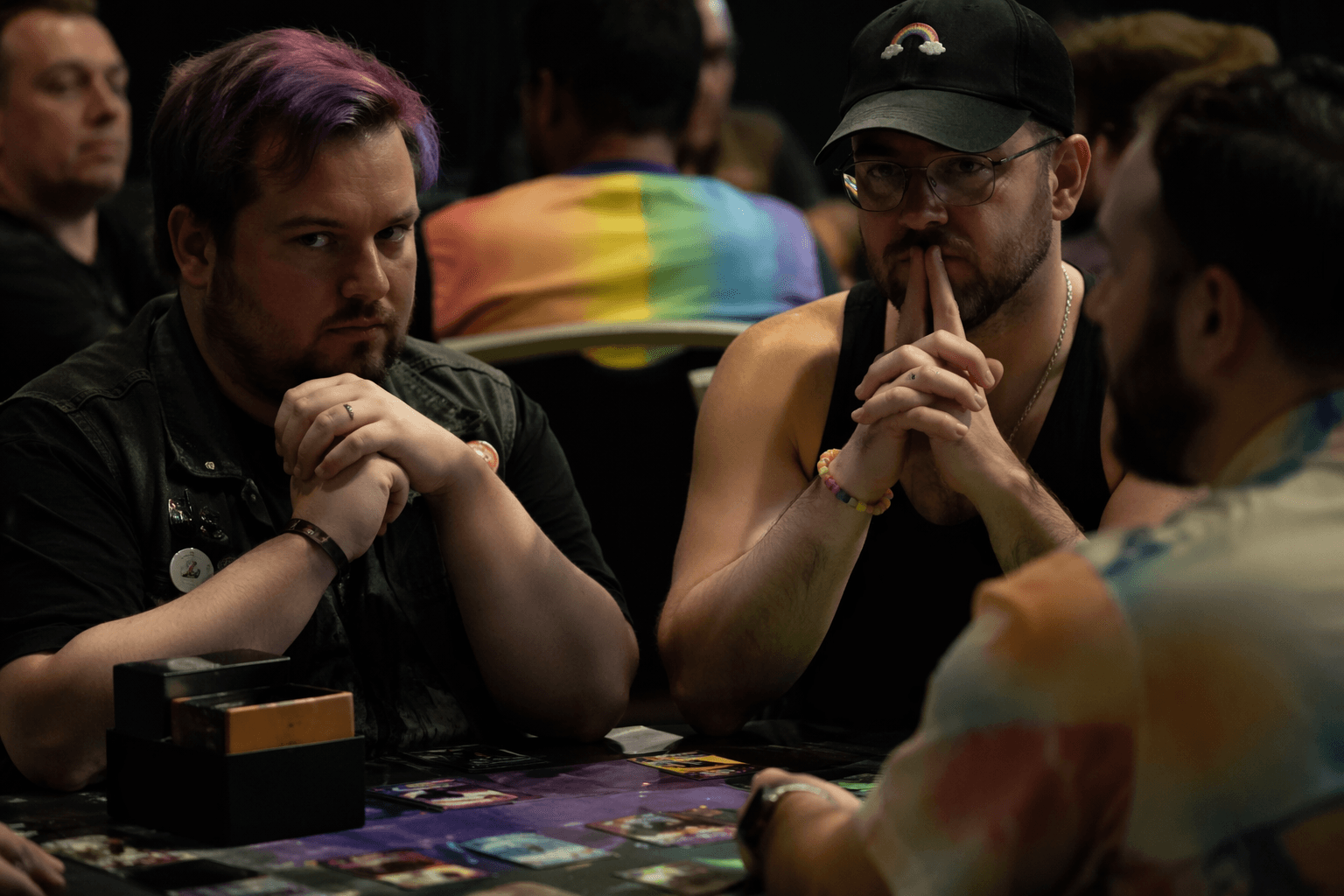
The Pride table was supposed to feel loose, joyful, and a little weird. Instead, it showed exactly how Commander falls apart when everyone assumes the same unwritten rules without ever saying them out loud. A legal pod can still turn ugly fast when a celebratory event, a bracketed deck check, and a quiet grudge about power level all collide.
The Pride event set the stage for a classic Commander misunderstanding
Magic Presents: Pride 2026 ran from June 5 to 14 at local game stores, with Wizards framing the event around the line that every commander has partner and telling players to pick any two legal commanders. The event was open across the United States, Canada, Australia, New Zealand, and many other regions, and participants were promised a traditional foil Gilded Lotus promo card plus an enamel pin while supplies lasted. That matters because the whole promotion invited creativity first and optimization second, which is exactly where Commander tends to get beautiful, messy, and hard to police.
At one store, though, the event was run as a paid tournament with a $10 entry fee, a Bracket 3 or lower rule set, no two-card infinites, and no more than three Game Changers. That is already a lot of table language to hold in your head before a single land drop. When the room is told to celebrate flexibility but the pod is also told to treat the round like a constrained tournament, somebody is going to walk in expecting a vibe that somebody else never agreed to.
What actually broke was not legality, but expectation
The flashpoint in Cas Hinds’s account comes from a table where one player sat down with The Unbeatable Squirrel Girl and Chatterfang, Squirrel General, then aligned with the rest of the pod against Hinds’s deck and sat on a combo line that was not technically infinite but was still lethal. Hinds eventually left the game, and that exit says more about the real problem than any deck list could. Nobody had to violate the written event rules for the experience to feel bad.
That is the first failure point Commander keeps repeating: a deck can be legal for the event and still be out of bounds for the room. The Unbeatable Squirrel Girl had 1,636 Commander decks in EDHREC’s database at the snapshot, which is a useful reminder that popularity does not equal clarity. A familiar commander pairing can still create an unfamiliar social situation, especially when the table’s idea of “fun” is not the same as the store’s idea of “allowed.”
Commander only works when the social contract is spoken aloud
Wizards defines Commander as a 100-card multiplayer format, typically for four players, and the company has spent the last year plus trying to give players a common language for power conversations. Commander Brackets beta was announced on February 11, 2025 as a matchmaking system meant to replace the old, fuzzy 1 to 10 power talk with something the whole room could use. Wizards also said Rule Zero still matters and that no system can stop bad actors or prevent people from gaming it.
That last point is the heart of the etiquette problem. Brackets can help you start the conversation, but they cannot force honesty, and they cannot read the room for you. By October 21, 2025, Wizards said that after three MagicCons and nine months of use, brackets had been a success overall because they created more pregame conversations than ever, while also needing clearer emphasis on intent and clearer heuristics. In other words: the framework works best when the people using it actually say what they want the game to be.
The exact failure points are the ones players keep skipping
The Pride table went sideways because the game never got a clean pregame translation. One player may have heard “any two legal commanders” and thought of playful chaos, while another heard “Bracket 3 or lower” and thought of a tighter, more managed game where everyone would be conservative with lines and power. When those assumptions never get checked, a legal play can feel like a betrayal.
The second failure point is public pressure. Once a pod starts trying to out-politic one another midgame, the conversation shifts from “what kind of game did we agree to?” to “how do I make this person look unreasonable?” That is where Commander etiquette gets toxic, because the social contract stops being about shared expectations and becomes about winning the room.
The third failure point is poor conflict handling. If a combo is legal but feels too sharp for the table, the answer is not to stew in silence until somebody concedes in frustration. The answer is to pause early, state the issue plainly, and either reset expectations or end the pod before resentment hardens.
The language that prevents the blowup is plain, not clever
If you want Commander to stay social instead of ceremonial, the fix is usually a few blunt sentences before shuffling up:
- “I’m treating this as Bracket 3. No two-card infinites, and I’m not looking for fast mana explosions.”
- “My deck is legal for the event, but it can win through a combo. Are you all good with that kind of finish?”
- “What’s the strongest thing you expect to do in this pod, and what do you not want to see?”
- “If somebody feels the game is getting away from the stated bracket, let’s say it immediately instead of playing passively and resenting it.”
- “I’m here for the Pride event vibe, so if this pod wants a more cutthroat game, I’d rather reset than force it.”
Those lines are not about being polite in a vague, performative way. They are about making sure the table agrees on the same definition of acceptable pressure before anybody starts applying it.
Cas Hinds’s perspective gives the piece its shop-floor realism
Hinds’s voice lands because it sounds like somebody who has spent time in a store, not somebody theorizing from a distance. EDHREC says Hinds started playing Magic in 2016 while working at a CoolStuffInc LGS and began writing articles in June 2024, which helps explain the practical tone here. The story is not really about one Pride pod, or one squirrel combo, or one bracket label. It is about how often Commander asks players to trust an unwritten agreement, then punishes them when nobody spells the agreement out.
That is the loop Pride 2026 exposed so cleanly: a celebration built on flexibility can still sour if the table never names its limits. In Commander, legality starts the game, but shared language keeps it playable.
This article was produced by Prism’s automated news system from verified source data, official records, and press releases, then run through automated quality and moderation checks before publishing. The system is built and supervised by the people who set the standards it runs under. Read our full AI policy.
Know something we missed? Have a correction or additional information?
Submit a Tip