Magnet fisher's revolver find raises questions about ownership and preservation
An antique revolver from the Sackville River became a test of what magnet fishers do next: handoff, preservation, or police custody.

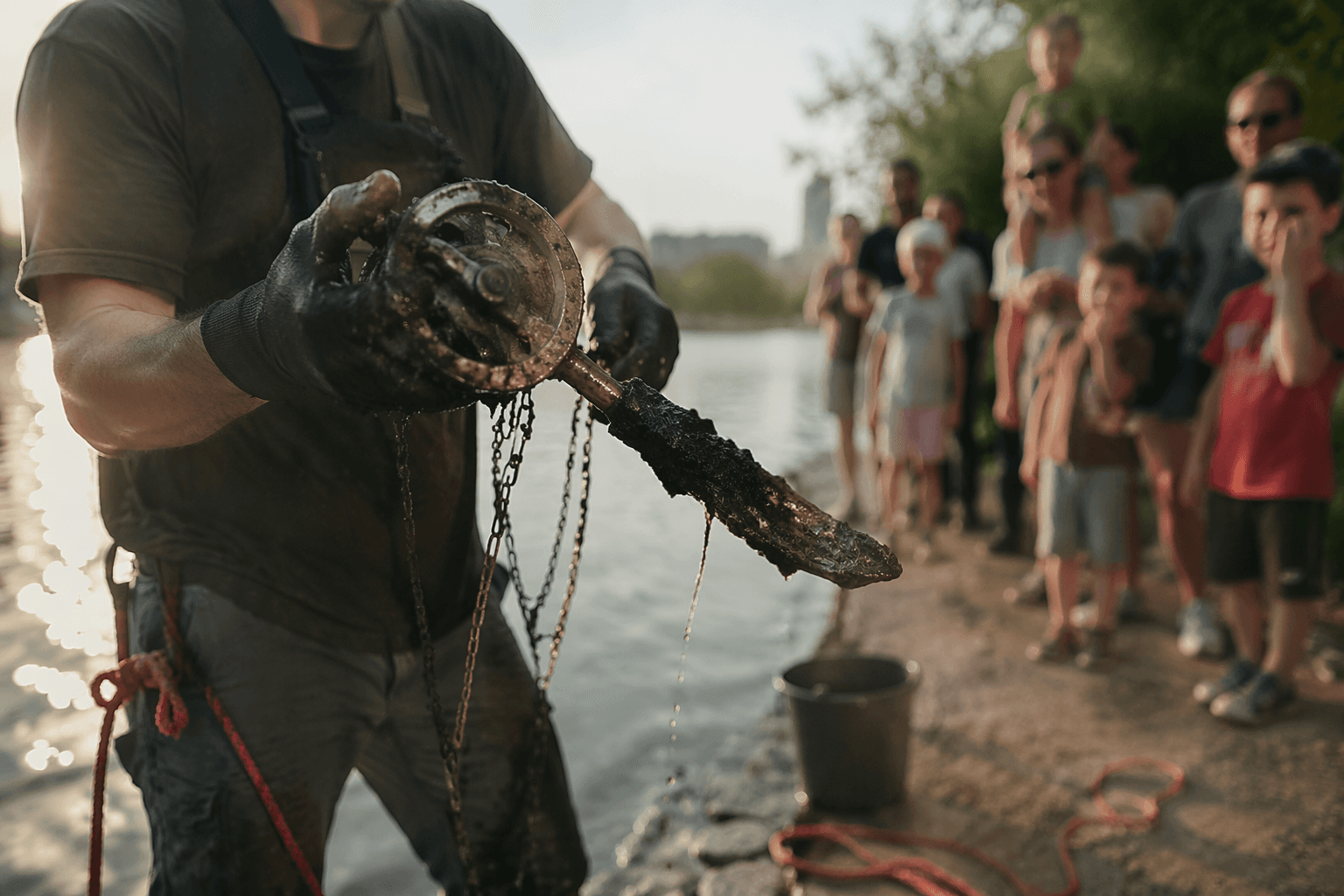
The real question is not what came up on the magnet, but what happens next. When Ian Cooper hauled an old revolver out of the Sackville River, the pull turned from a hobby win into a familiar magnet-fishing dilemma: a find that looks historic, carries obvious safety concerns, and does not neatly belong in anyone’s hands. Cooper’s case shows how a riverbed discovery can move straight from the thrill of retrieval into the harder work of protecting people, respecting the law, and deciding whether an object belongs in a museum, a private collection, or police custody.
When a river find stops being a trophy
Cooper has spent years working the Sackville River in Sackville, the Halifax-area community in Nova Scotia, treating magnet fishing as both cleanup and historical hunting. That long-term rhythm matters because it is what separates a seasoned river regular from a one-time curiosity seeker: the ordinary scrap, the repeat visits, the patience, and the occasional object that makes everyone stop and rethink the rules. The revolver, described in the audio as “an antique revolver,” was one of those finds, the kind that instantly raises the stakes for preservation and ownership.
What makes Cooper’s story useful to the wider magnet-fishing community is the tension around the artifact itself. He struggled to find the revolver a home, and a museum turned it down. That leaves the object in an awkward place, historically interesting but difficult to place cleanly, because the moment a recovered item looks like heritage, the question changes from “What did I find?” to “Who is responsible for it now?”
Why ownership is never simple
Magnet fishing surfaces everything from bent rebar to the odd piece of local history, but a waterlogged firearm sits at the intersection of several systems at once. It is a physical object, a possible piece of evidence, and potentially a collectible with provenance questions that matter as much as the object’s age or condition. In a province like Nova Scotia, where the museum system describes itself as a family of 16 sites with more than one million artifacts and specimens, fit matters. A museum is not just a place with display space. It is a steward with collections rules, conservation limits, and questions about whether an item belongs in a public trust at all.
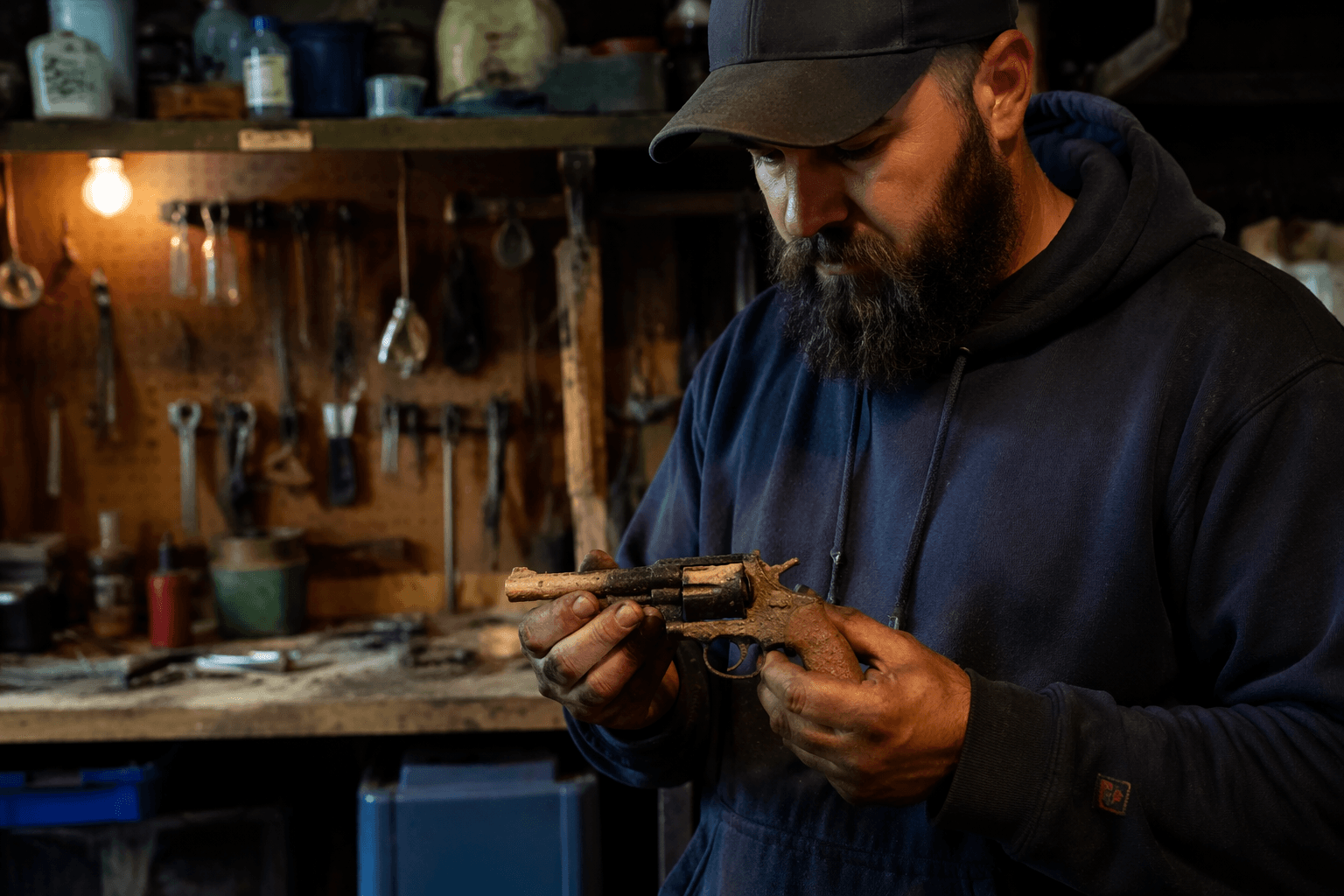
That is why the museum refusal in Cooper’s case is so revealing. A revolver pulled from a river may be fascinating, but fascination alone does not solve condition, documentation, or institutional responsibility. The artifact may have local historical value, but if no institution can accept it, the finder is left holding a piece of history that still needs a lawful and responsible destination.
What to do when the magnet brings up a possible weapon
A possible firearm changes the job immediately. The Department of National Defence warns that magnet fishing can turn up firearms, knives, sharp metal, and even unexploded explosive ordnance, which means the safest mindset is to treat any suspicious recovery as a hazard first and a collectible second. The same river that yields old hardware can also yield objects that are dangerous to touch, move, or try to clean up casually.
1. Stop the recovery and treat the item as potentially dangerous.
2. Keep people clear of the spot and avoid unnecessary handling.
3. If the object appears to be a firearm or anything that could be ordnance, contact police rather than trying to assess it yourself.
4. Preserve the basic context, including where it came from, because location and condition help later with safety, history, and any documentation.
That is the practical side of responsible magnet fishing. The hobby rewards patience, but it also rewards restraint. A good pull is not always a clean keep.
The legal layer behind the hobby
Canadian firearms law makes the revolver question even more serious. The Royal Canadian Mounted Police says firearms in Canada remain regulated by the Firearms Act and Part III of the Criminal Code. On the museum side, federal rules say a museum that wants to hold a firearms licence must be a non-profit, publicly open institution whose purpose includes collecting and preserving objects of educational and cultural value.
Those rules explain why a find like Cooper’s does not automatically slide into a display case. A museum has to be the right kind of institution, with the right mandate, before it can take custody of a firearm. So when a magnet fisher pulls up an antique revolver, the path forward is not only about curiosity or even local pride. It is about whether the object can be lawfully held, properly preserved, and responsibly interpreted.
Where magnet fishing meets heritage rules
There is also a bigger land-and-water context to this hobby. Parks Canada says magnet fishing is prohibited in historic canals it administers because it can disturb habitats, stir up contaminated sediments, and damage canal structures. That warning fits neatly beside the revolver story because both point to the same truth: magnet fishing is not just treasure hunting. It is an activity that can affect safety, ecology, infrastructure, and heritage all at once.
Cooper’s revolver is memorable because it lands right in that overlap. It is a local find from the Sackville River, a piece of metal with a past, and a reminder that the strongest magnet-fishing stories are not always about what the magnet lifts. They are about the decision that follows the lift, when the hobby becomes a matter of law, care, and public responsibility.
This article was produced by Prism’s automated news system from verified source data, official records, and press releases, then run through automated quality and moderation checks before publishing. The system is built and supervised by the people who set the standards it runs under. Read our full AI policy.
Know something we missed? Have a correction or additional information?
Submit a Tip