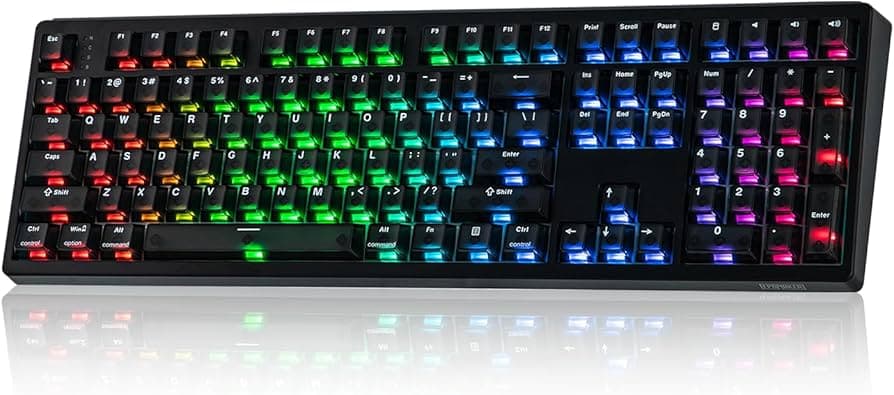
ASUS ROG Falcata blends split ergonomics, magnetic switches, esports speed
ASUS turns a split board into a serious esports tool, pairing 8K magnetic-switch speed with enough comfort and adjustability to challenge the old TKL default.

The split-keyboard idea just got a lot more competitive
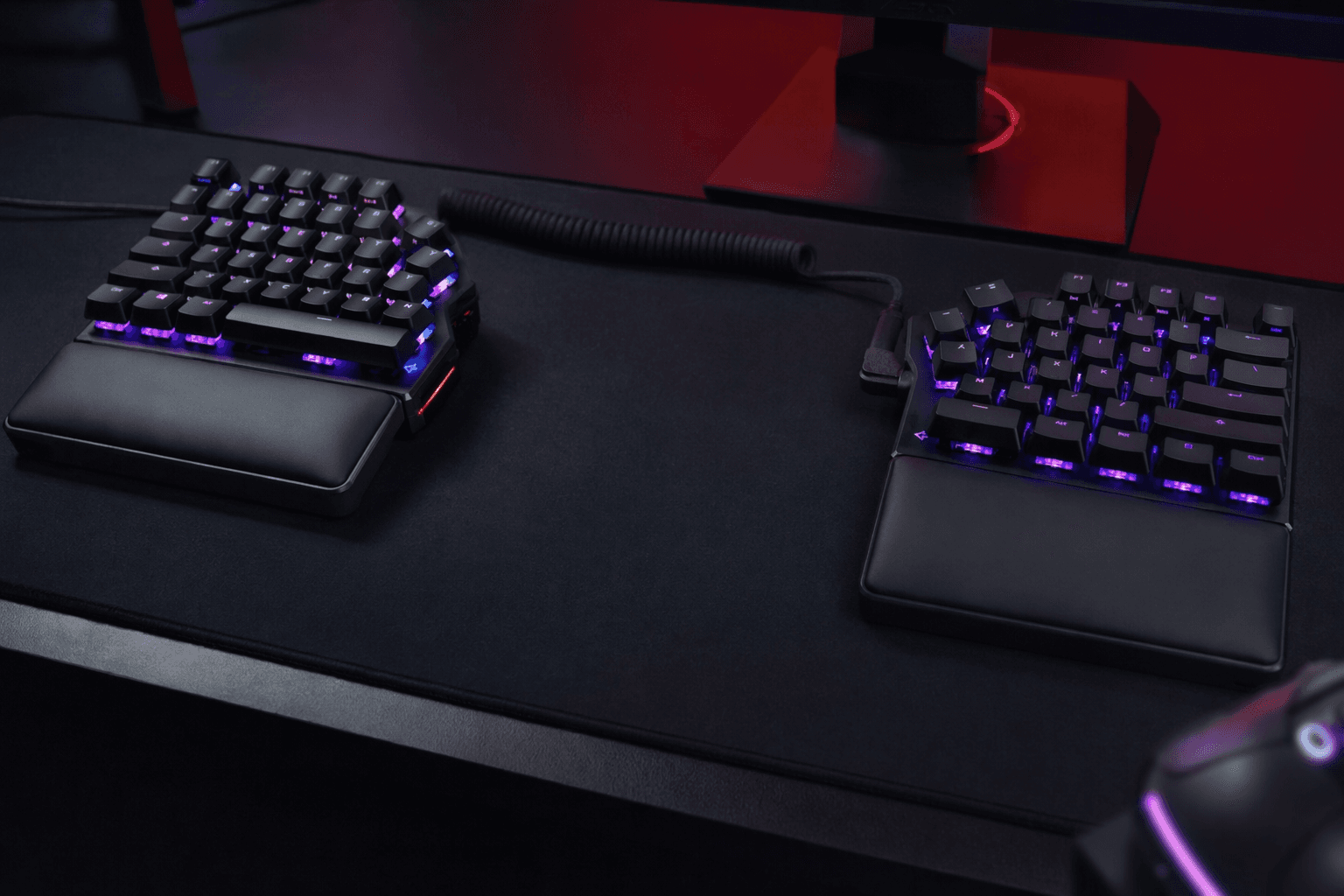
The ASUS ROG Falcata is not trying to win on novelty alone. It takes the split layout that custom-board fans have used for comfort and mouse space, then wraps it in the kind of rapid-fire hardware competitive players usually expect from a straight-up gaming TKL. That is the real story here: ASUS is betting that split ergonomics can be sold not as a niche wellness upgrade, but as a performance feature.
At 389.99 euros, the Falcata is priced like a premium weapon, not an experiment. ASUS introduced it at Computex 2025 as a 75% split gaming keyboard in the ROG Ace ecosystem, alongside other esports gear, and the message was clear from the start: this board is built for precision, flexibility, and a tighter competitive setup.
What ASUS actually built
The Falcata’s defining trick is that it can function as a split board or, when you want, as a more traditional compact gaming keyboard with the left half alone freeing up desk space for the mouse hand. That alone makes it feel different from most gaming boards, including the familiar TKL shape that still dominates esports desks. A TKL gives you a cleaner layout and more room than a full-size board, but the Falcata goes further by letting you separate the halves and actively tune your posture and mouse room.
Under the hood, ASUS did not stop at a clever shape. The board uses hot-swappable ROG HFX V2 magnetic switches with a ROG Hall Sensor, customizable actuation from 0.1 mm to 3.5 mm, and 0.01 mm step tuning. ASUS’s own keyboard tech material says Rapid Trigger resets with just a 0.1 mm lift of a finger, which is exactly the kind of input behavior FPS players chase when they want repeated movement and fast counter-strafing to feel instant.
A few hardware details make the Falcata feel more like a polished enthusiast build than a bare-bones speed board:
- ROG SpeedNova 8K wireless, wired USB, and Bluetooth connectivity
- Support for up to five devices
- Up to 8K polling in wired and wireless modes
- Four-layer dampening system
- Aluminum top frame
- Detachable silicone wrist rests mounted on steel plates
- Two link cables, a USB-C to A adapter, an Allen wrench, a keycap puller, eight keyboard feet, and a spare Ctrl keycap in the box
- 327 mm x 127 mm x 38 mm dimensions, and 968 g before cable and wrist rests
That bundle matters because it signals ASUS is not treating this as a stripped gaming accessory. It feels closer to a premium enthusiast purchase that happens to be tuned for esports.
Why the switches and polling rate matter more than the split alone
The gaming case for the Falcata rests on speed first and ergonomics second. Rapid Trigger and 8K polling are the measurable, technical parts of the pitch, and they are the pieces that separate this board from a standard mechanical TKL. ASUS also says its HFX magnetic switches are rated for 100 million keypresses, while the HFX V2 design reduces total travel from 4.0 mm to 3.5 mm and lowers force compared with the original HFX switches.
That shorter travel is not just a spec sheet brag. In practice, it means the board is built to feel faster and lighter under the fingers, which can reduce fatigue over long sessions. Combined with the wrist rests and the split design, ASUS is clearly trying to cover both the competitive and comfort arguments at once, instead of asking buyers to choose one.
The battery story is part of the appeal too. PCMag called the Falcata an Editors’ Choice winner and described it as a supremely comfortable, extensively adjustable ergonomic split keyboard, while reporting battery life of up to 200 hours with RGB off. That is a serious number for a board this ambitious, and it helps the Falcata avoid the usual compromise feeling that sometimes comes with feature-heavy wireless gaming gear.
How it stacks up against a TKL and an enthusiast split board
Against a traditional gaming TKL, the Falcata’s advantage is not that it is smaller or simpler. It is more adjustable, more radical in its layout, and more tailored to players who actually want to move the keyboard out of the way of the mouse hand. A TKL still wins for easy plug-and-play familiarity, a single rigid chassis, and a lower buy-in. If your current setup already feels roomy and comfortable, the Falcata may deliver more change than you need.
Against enthusiast split boards, though, ASUS is doing something rare. Custom split keyboards often excel at comfort and layout experimentation, but they usually ask you to give up the gaming-first features that matter in fast shooters: magnetic switches, Rapid Trigger tuning, 8K polling, and a polished wireless stack. The Falcata tries to bridge that gap with the kind of accessory bundle and finish you would expect from a major brand trying to land one foot in the custom scene and the other in esports.
That crossover is what makes the board notable. It is not the first Hall-effect gaming keyboard ASUS has made, either. The ROG Falchion Ace HFX already delivered Rapid Trigger and 8000 Hz polling in a 65% format, so the Falcata reads as the more ambitious next step: same speed obsession, but with a split chassis and a much stronger ergonomic story.
Who should make the jump, and who should keep the money
The Falcata makes the most sense if you are already sensitive to wrist, shoulder, or upper-back comfort, or if you keep wishing a TKL gave your mouse hand more room. It also fits players who like tuning actuation aggressively, because the 0.1 mm to 3.5 mm range and Rapid Trigger behavior are the sort of controls that reward muscle memory and competitive habits. If your daily routine involves long FPS sessions and you care as much about posture as performance, this is one of the few boards that tries to improve both at once.
If you mostly want a reliable gaming keyboard and do not plan to exploit split spacing, adjustable actuation, or Rapid Trigger, a good TKL will still make more financial sense. The same goes for buyers already deep into custom split keyboards who value layout purity over turnkey esports features. ASUS has made a persuasive hybrid, but the Falcata is best viewed as a specialized premium tool, not a universal upgrade.
This article was produced by Prism’s automated news system from verified source data, official records, and press releases, then run through automated quality and moderation checks before publishing. The system is built and supervised by the people who set the standards it runs under. Read our full AI policy.
Did this article answer your question?