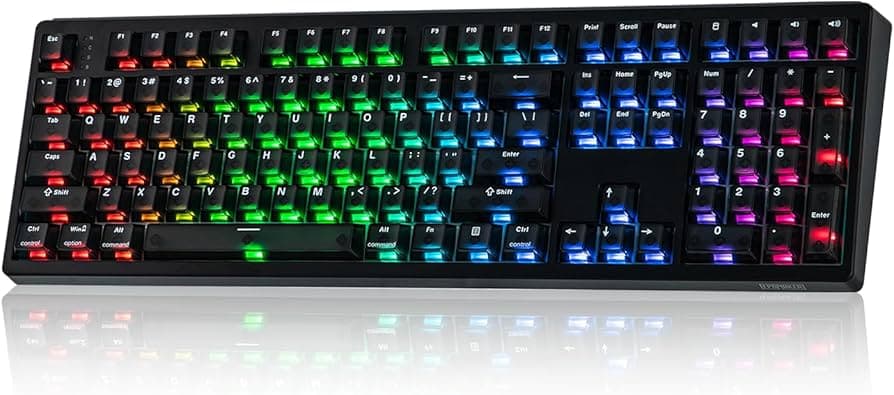
Asus ROG Falchion Ace 75 HE Review, Hall Effect Still Not For Everyone
Asus' Falchion Ace 75 HE proves Hall effect can be polished, but the real question is whether it’s a better keyboard or just a faster one. For many, it still reads as a gaming-first buy.
A Hall-effect board that makes a clear argument, then complicates it
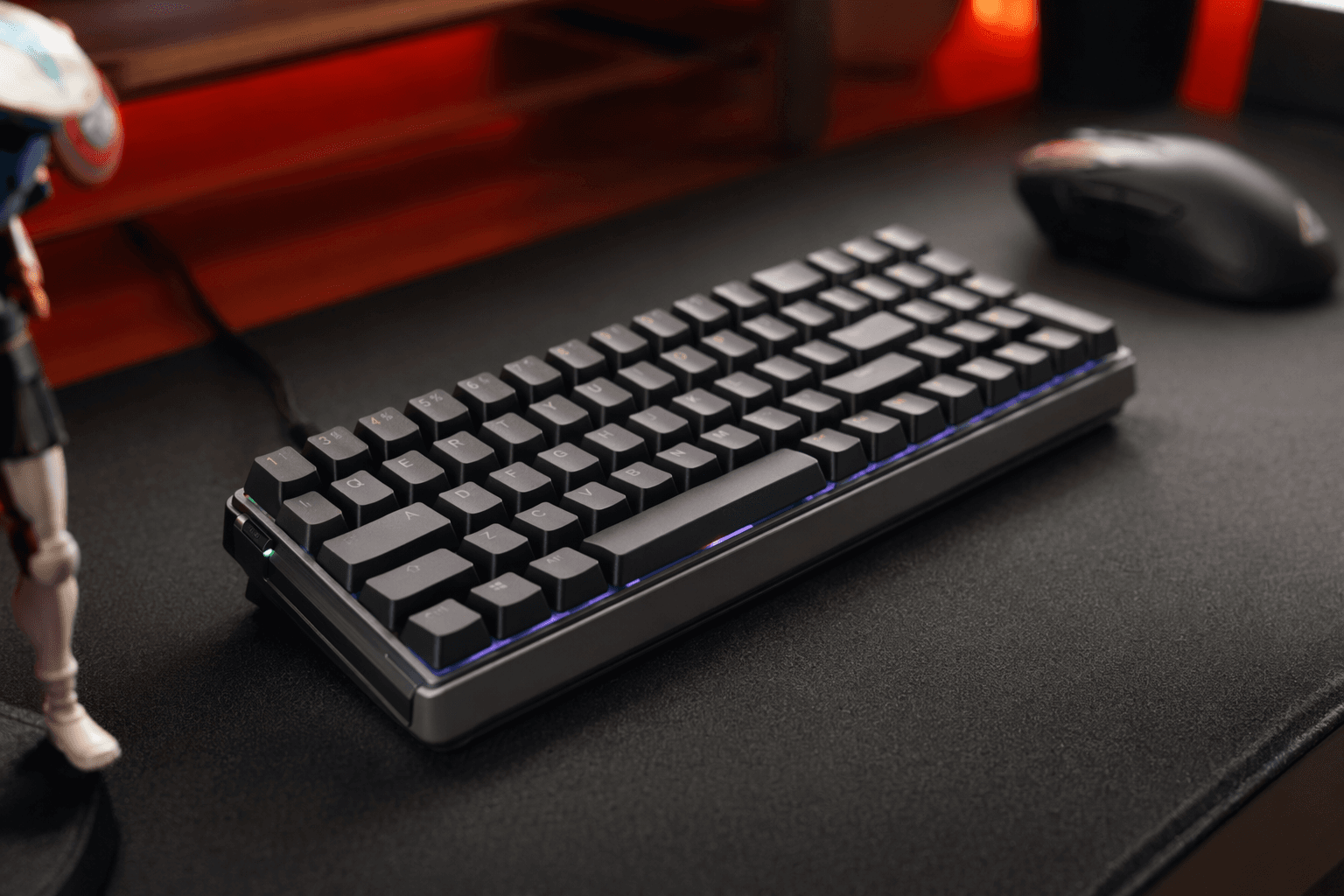
The Asus ROG Falchion Ace 75 HE lands with all the ingredients that have pushed magnetic keyboards into the spotlight: 8,000 Hz polling, adjustable actuation from 0.1 to 3.5 mm, 0.01 mm fine-tuning, and rapid-trigger support built around HFX V2 and V2X magnetic switches. It also arrives in a 75% layout, which keeps the function row and trims the footprint enough to leave more room for mouse movement, a balance a lot of desks can actually use.
That is why the review matters. The board is clearly aimed at competitive speed, but its biggest takeaway is not that Hall effect is impressive. It is that Hall effect still has to earn its place against the rest of a keyboard’s experience, especially when the price is $219.99, with a temporary promotional price of $186.99 on the US store listing.
What Asus packed into the Falchion Ace 75 HE
Asus has given this board the sort of spec sheet that looks designed to answer every first-round criticism of magnetic keyboards. Alongside the new ROG Hall Sensor, the Falchion Ace 75 HE includes an adjustment wheel, an interactive touch panel, a Rapid Trigger toggle, six-layer dampening, three adjustable tilt angles, doubleshot PBT keycaps, a detachable USB-C cable, programmable keys, and five customizable profiles.
That combination is important because it shows where the category has moved. Hall effect is no longer being sold as a single trick for gamers who want faster key reset, it is being wrapped into a more complete desktop product with tuning tools and onboard controls. The touch panel can handle volume, media, brightness, or scrolling, while the adjustment wheel gives on-the-fly access to fine-tuning without burying everything in software.
For day-to-day use, the 75% layout is probably the board’s smartest decision. It stays compact enough to preserve mouse space, but it does not force the same compromises as smaller layouts that drop the function row entirely. That makes it easier to imagine on a normal desk, not just in a tournament setup.
Why the review takes a skeptical line
Dot Esports’ review, published on April 30, 2026, lands on a point the Hall-effect hype cycle often skips past: fast switches do not automatically make a better keyboard. The Falchion Ace 75 HE is described as a strong gaming device, but also as a harder sell for general use, and that is the tension that defines this whole category right now.
The reason is simple. Enthusiast keyboard buying is not just about raw speed, it is about the total experience at the desk: sound, feel, software, repairability, and how much freedom a board gives you to make it your own. Asus does address some of that here with six-layer dampening and PBT keycaps, but the overall message is still clear. This is a purpose-built gaming keyboard first, not a broad all-rounder trying to win over every typist and builder.
That makes the review more useful than a simple spec celebration. It asks whether magnetic switches actually improve everyday enthusiast use, or whether they are still mostly the answer to a competitive-gaming problem. For many readers, that is the real comparison that matters, because a keyboard can be technically advanced and still not feel like the best buy for typing, sound, or long-term ownership.
The Falchion line shows how quickly the category is evolving
The Falchion Ace 75 HE is not Asus testing the water for the first time. The earlier ROG Falchion Ace HFX was announced on September 18, 2024 as a 65% analog wired keyboard with HFX magnetic switches, 8,000 Hz polling, Rapid Trigger, Speed Tap Mode, and five-layer dampening. It also used 0.1 to 4.0 mm adjustable actuation and dual USB-C ports, which makes the new 75 HE look less like a one-off experiment and more like a roomier, more refined successor.

That progression says a lot about the current state of the Hall-effect market. Asus has clearly kept the core formula, then added more of the features buyers now expect from a premium magnetic board: better tuning controls, a more usable layout, stronger acoustics, and a more polished shell of convenience features. In other words, the company is not just chasing latency numbers anymore. It is trying to make a magnetic keyboard behave like a serious daily driver.
The problem, of course, is that every extra feature also raises expectations. Once a board costs more than many high-end mechanicals, the bar is no longer “is it fast?” It becomes “is it actually better to live with?”
Hall effect is growing up, but it still has limits
RTINGS has noted that rapid-trigger keyboard technology has improved over the last few years, and that Hall effect is now part of a broader mix that includes optical, TMR, and inductive designs. That lines up with what the broader keyboard press is showing as well: Tom’s Hardware, PC Gamer, and The Verge all reflect a market where magnetic-switch keyboards are no longer a single novelty item, but a crowded segment with multiple choices.
That crowded field is good news for buyers, because it means Hall effect is finally being judged like any other keyboard category. The pressure is shifting from novelty to nuance. Buyers are comparing sound, tuning software, layout, switch feel, and value, not just actuation speed and polling rate.
The community reality check is this: the Falchion Ace 75 HE looks like a very strong answer for competitive play, and a thoughtfully packaged one at that. But the more the Hall-effect boom matures, the more obvious it becomes that speed alone does not win over the mechanical-keyboard crowd. For a lot of desks, 2026’s hottest keyboard trend still fits best as a specialist tool, not the default recommendation.
This article was produced by Prism’s automated news system from verified source data, official records, and press releases, then run through automated quality and moderation checks before publishing. The system is built and supervised by the people who set the standards it runs under. Read our full AI policy.
Did this article answer your question?