AULA launches AG63 Hall-effect keyboard with 32K polling rate
AULA’s AG63 pushes a 63-key Hall-effect board into premium territory with 32K polling, 0.001 mm rapid trigger claims and a compact layout.
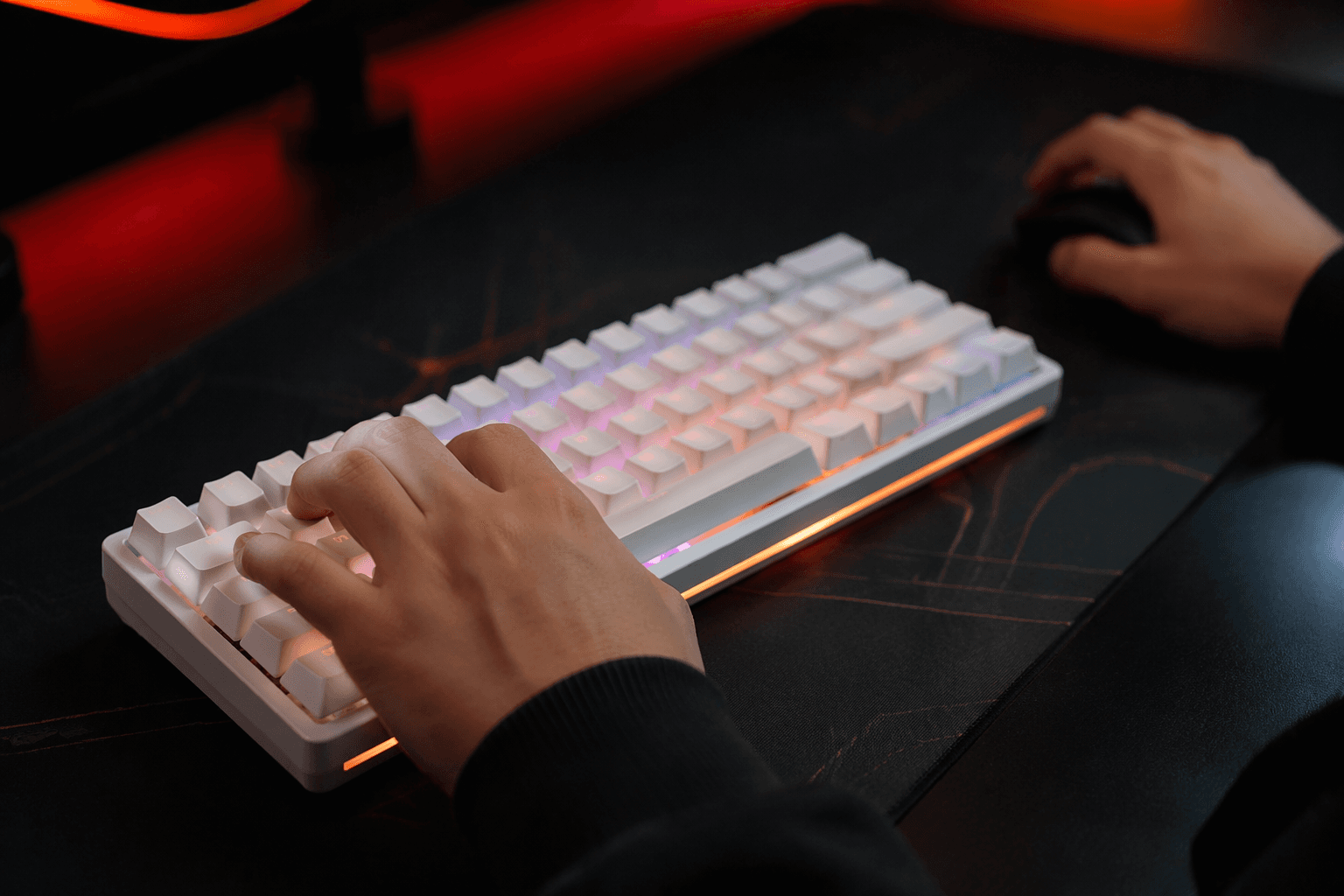
AULA is pushing the AG63 far beyond a standard compact gaming board. The 63-key Hall-effect keyboard, introduced on June 11, leans hard on premium performance claims, including a 32K polling rate, a 256KHz scan rate, 0.001 mm rapid-trigger precision and a 0.03 ms latency figure that puts it in the same conversation as the fastest magnetic boards on the market.
The hardware story is just as aggressive. AULA says the AG63 uses fourth-generation Hall-effect technology, a dedicated MCU, nine independent ADC processors and an aerospace-grade controller system built to support that speed target. The company also says the 32K polling rate requires USB 3.0, a detail that signals how much processing headroom the board is expected to need. On top of that, AULA lists a premium aluminum chassis, a four-layer PCBA design, Adaptive Calibration 2.0, onboard profile storage and ARGB lighting with roughly 16 million colors.

For enthusiasts, the most interesting part is not just the raw numbers. It is the way AULA is bundling those numbers into a compact 63-key layout that forces a real tradeoff between space savings and workflow flexibility. The board includes Hall-effect features such as RS, SOCD, MT, TGL, DKS, MPT and END, which makes it look less like a generic magnetic switch debut and more like a tuning-heavy board aimed at players who want to shape actuation and reset behavior to match specific games or typing habits.
That positioning matters because AULA has been building momentum in Hall-effect models already. Its news center highlighted the F75 HE and AG60 in June, and the AG60 line was previously framed around third-generation Hall-effect sensors, 8K polling and 0.1 ms latency. The AG63 is a clear step up from that earlier pitch, with AULA moving from 8K to 32K and from 0.1 ms to 0.03 ms in its public claims.
AULA’s broader background also helps explain the launch. The company says it was founded in 2002 and is headquartered in Shenzhen, China, and its catalog still spans mainstream gaming keyboards alongside newer magnetic models. The AG63 fits that strategy neatly: small footprint, aggressive specs and enough controller and tuning language to suggest AULA wants more than a budget HE badge. If the execution matches the spec sheet, the real appeal is not simply that the AG63 is another Hall-effect keyboard, but that it is trying to make the compact 63-key format feel like a serious performance platform.
This article was produced by Prism’s automated news system from verified source data, official records, and press releases, then run through automated quality and moderation checks before publishing. The system is built and supervised by the people who set the standards it runs under. Read our full AI policy.
Know something we missed? Have a correction or additional information?
Submit a Tip