comGateway Advises Dutch Buyers to Use US Freight Forwarding for Mode Designs Tempo
Mode Designs' Tempo is on its final in-stock run, and EU buyers face cancelled orders and 21% VAT on top. Here's the exact freight-forwarding playbook to land one.
The Tempo is on its final in-stock run. That single line on Mode Designs' product page is enough to send collectors into action, and for buyers outside the United States, that urgency immediately collides with a wall of checkout friction, cancelled orders, and import costs that can meaningfully change the value equation of any boutique board purchase.
comGateway, a US-based freight-forwarding and BuyForMe service, published an advisory on March 29, 2026 specifically addressing this collision point for Dutch and broader EU buyers, explaining why they should use US purchasing channels and freight-forwarding services to secure the Mode Designs Tempo during limited drops. The post maps out a concrete workflow to get around them. It's a useful document on its own terms, but it also surfaces something the hobby has been quietly grappling with for years: the boutique keyboard supply chain was built for North American buyers, and everyone else is improvising.
The Tempo: What Makes It Worth the Logistics Headache
Mode Designs built the Tempo around a genuinely distinctive technical idea: a lattice block mount that uses Carbon's DLS printing process and Voronoi lattice geometry to create a flexible, tunable typing experience. Unlike fixed mounting approaches, the system ships with interchangeable blocks in multiple configurations (solid, half-lattice, and full lattice) across materials including polycarbonate, POM, FR4, aluminum, carbon fiber, and copper, letting you meaningfully change sound profile and flex character without buying a different keyboard.
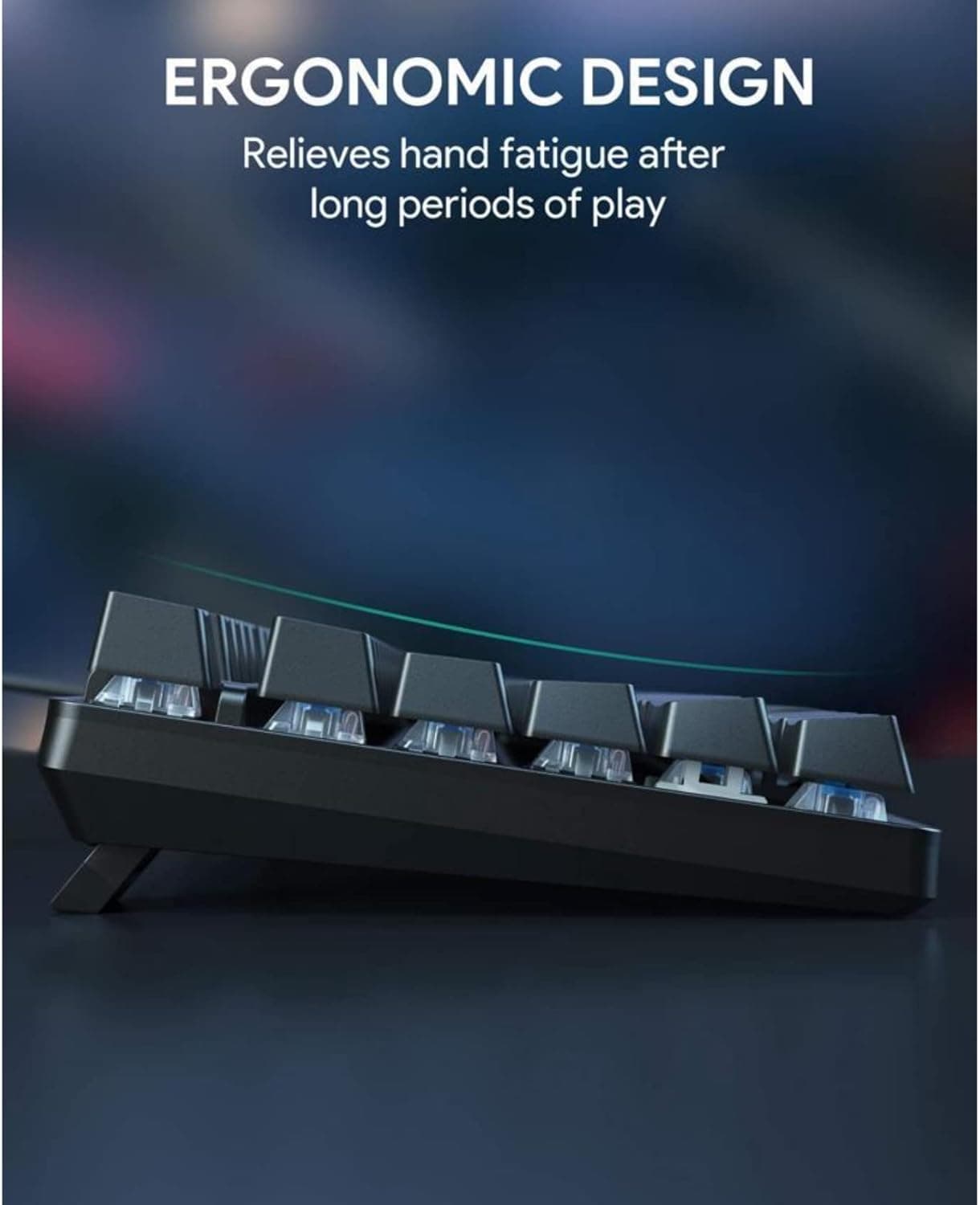
The rest of the spec sheet is clean: symmetrical 60% layout, 5.8° typing angle, 19mm front height, and full QMK/VIA support. comGateway's advisory argues that the Tempo's distinctive mounting system and finished aesthetic make it a high-priority buy for collectors, and therefore subject to the same order-cancellation and stock issues other boutique kits have faced.
Three Barriers Between You and Your Board
comGateway identifies three specific friction points that affect EU buyers trying to purchase the Tempo directly.
The first is colorway and stock scarcity at the regional level. Boutique keyboard runs are inherently limited, and allocation that reaches European distributors, when it arrives at all, is typically a fraction of what is available on the US vendor side. Specific colorways vanish first; regional buyers often face a choice between second-tier options or secondary-market prices.
The second problem is checkout failure. US retailers frequently flag and cancel orders that appear to be cross-border purchases, whether based on billing address mismatch, card country of origin, or IP-based detection. A buyer in Amsterdam placing an order through a US storefront with a Dutch card is a near-automatic cancellation in many vendor systems, even when the buyer is entirely legitimate.
The third is the markup and delay spiral: when regional stock does appear, it arrives through import chains that build cost into the price well before the end buyer sees it, before accounting for local VAT and customs. In the Netherlands, the standard VAT rate on electronics sits at 21%, applied on top of any regional pricing premium.
The comGateway Workflow: Step by Step
The solution comGateway proposes is a two-stage approach that routes the purchase entirely through US infrastructure before forwarding internationally.
1. Identify and locate the Tempo through a US channel (Mode Designs directly or a US-based vendor carrying the drop) while stock is available.
This is time-sensitive during high-demand drops; the advisory's urgency framing is not rhetorical.
2. Initiate a BuyForMe request through comGateway.
The service purchases the item on your behalf using a US-based payment method, bypassing the billing-country detection that causes order cancellations. The package ships to comGateway's US warehouse address.
3. Once received, comGateway consolidates and prepares the shipment for international forwarding.
Carrier options include DHL international for speed or FedEx for alternatives. Transit time from the US to the Netherlands runs from a few days on express services to two or more weeks on economy tiers, and the Tempo is the kind of high-value item where a longer transit window carries meaningful risk.
4. Select shipping insurance.
For a boutique kit at this price point, the advisory explicitly flags order insurance as a consideration, not an afterthought.
What It Actually Costs: A Dutch Buyer Scenario
This is where the math gets real, and where the comGateway advisory earns its place as a genuine buyer guide rather than marketing copy.
The BuyForMe fee is 10% of the combined total of the item cost and any domestic US shipping charge. Add the international freight rate (which varies by carrier and service tier), then apply Dutch import VAT at 21% on the declared value of the goods plus shipping at the customs border. Run the full stack on a boutique kit and the landed cost in the Netherlands is typically 30% or more above the US retail price, before any secondary-market premium.
There is also a looming regulatory change that sharpens this calculation. The EU is removing the €150 customs duty exemption threshold for e-commerce imports in 2026, a change originally planned for 2028 but significantly accelerated. Under the interim framework beginning July 2026, all imported parcels will be subject to a simplified €3 flat-rate customs handling fee per consignment regardless of value, in addition to import VAT. For a boutique keyboard already sitting above the old ceiling, the fee is modest but the direction is clear: importing electronics into the EU is getting more expensive this year, not next.
If the Kit Arrives Damaged or Missing Parts
The advisory's guidance on insurance is not incidental; it reflects a real friction point unique to forwarded purchases. If a direct order from a vendor goes wrong, warranty and return logistics are relatively straightforward. In a forwarded purchase, the return path is longer and more complicated: the package must travel back to the US, re-enter the vendor's return system, and any resolution runs through both the vendor and the forwarding service.
Vendor warranty policies on electronics frequently specify the original buyer country or require return to the original shipping address, which a forwarding arrangement complicates. Before placing a BuyForMe order for the Tempo, check three things specifically:
- Mode Designs' warranty and return policy for international buyers
- Whether the vendor's return label coverage extends to the forwarding warehouse address or only to the end destination
- comGateway's declared-value and insurance options, and what claim documentation is required in the event of transit damage
For a kit whose entire value proposition rests on precision-printed lattice blocks and tight internal tolerances, careless repack at a forwarding warehouse is a legitimate concern. Verify explicitly that the board will be prepared for international transit rather than forwarded in its original vendor packaging alone.
Freight Forwarding as Hobby Infrastructure
comGateway's advisory reflects a structural shift in how boutique keyboards reach international buyers: freight-forwarding services have evolved from pure transit providers into active purchase facilitators, capable of handling payment, compliance, consolidation, and insurance in a single service relationship, effectively positioning themselves as essential infrastructure in the hobby rather than a workaround.
Mode Designs, like most small-batch US keyboard makers, optimizes its inventory, payment processing, and vendor relationships for a North American customer base. That is not a criticism; it is a market-size reality. What the advisory makes plain is that BuyForMe services mitigate the risk of cancelled orders but add service fees and handling steps, and buyers need to weigh vendor shipping policies, potential warranty limitations, and customs handling on electronics before proceeding.
For the Tempo specifically, the argument is straightforward: this is a final in-stock run of a keyboard whose mounting system represents a genuine engineering differentiator in the 60% market. The freight forwarder is no longer the exotic edge case. For international boutique keyboard buyers ordering into an increasingly taxed EU import environment, it is the method.
This article was produced by Prism’s automated news system from verified source data, official records, and press releases, then run through automated quality and moderation checks before publishing. The system is built and supervised by the people who set the standards it runs under. Read our full AI policy.
Did this article answer your question?