Greenkeys Says NuPhy Node Series Deserves More Than Entry-Level Label
NuPhy’s Node series looks like a starter board on paper, but Greenkeys argues it behaves more like the office upgrade enthusiasts actually keep. The real test is whether its calm design and flexible layout justify skipping pricier custom builds.
Why the Node series changes the entry-level conversation
NuPhy’s Node series earns its strongest argument when you stop treating “entry-level” as a warning label. Greenkeys’ May 2, 2026 review says the line is the least expensive model in NuPhy’s keyboard lineup, but the bigger point is that it lands in the space where a lot of office buyers actually shop: around 17,600 yen, tax included. That matters because it is cheap enough to be approachable, yet polished enough to feel like a deliberate upgrade instead of a compromise you tolerate.
The timing also shows how NuPhy is pushing this idea into the mainstream. The Node series first went on sale on November 10, 2025, through NuPhy’s official site, with Japanese preorders following on December 30, 2025 through DIGIART. Greenkeys frames that rollout as part of a broader shift: this is not just a hobby board dressed down for the office, but a bridge product for people who want better typing, better looks, and easier configuration without jumping straight into a full custom build.
A restrained design that looks at home on an office desk
The Node series is trying to win on calmness. Greenkeys points to the simple color scheme and says the board has the kind of quiet presence that fits an office desk instead of demanding attention from it. The comparison to Dieter Rams is telling: the appeal is not flash, but restraint, the sense that the keyboard is designed to get out of the way while still feeling intentionally made.
That restraint also makes the launch details easy to understand in practical terms. Forbes described the Node 75 at launch as an affordable mechanical keyboard under $100, and it shipped in Ink Gray, Light Pink, and Lunar White. Those colors do not turn the Node into a showpiece, but they give it enough personality to feel more considered than a generic office slab.
What NuPhy is actually selling here
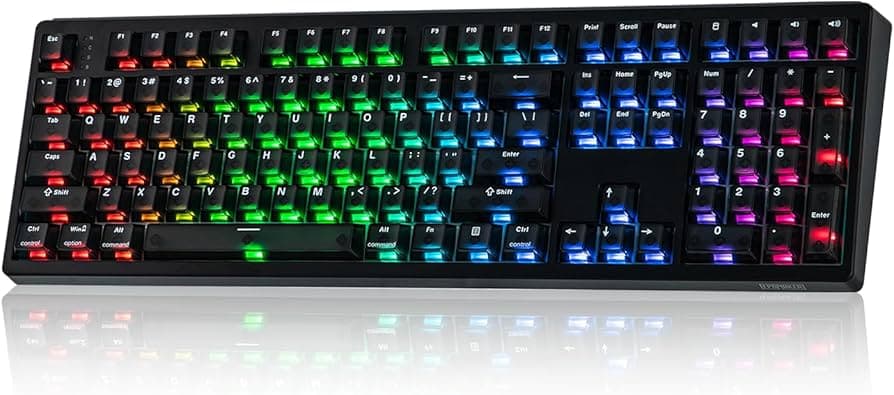
NuPhy’s official product pages make clear that the Node line is more than a single layout or a single typing feel. Node 75 and Node 100 are positioned as tri-mode wireless keyboards, with 75% and 100% layouts, hot-swappable switches, gasket mount construction, RGB backlight, and NuPhyIO cloud configuration. The boards are also listed as compatible with Mac, Windows, and Linux, which widens the appeal beyond the usual enthusiast setup.
The Node 75 low-profile page adds a few of the details that matter most once the board is on your desk. It lists a 1000Hz polling rate and tri-mode connectivity through 2.4G, Bluetooth, and wired USB-C. NuPhy also says in-stock Node orders ship in 1 to 2 business days, and the official store lists the Node 75 at $99.95 for both low-profile and high-profile versions, backed by a 1-year warranty. That combination makes the product feel unusually easy to buy for a mechanical keyboard, especially for someone who does not want to spend weeks comparing parts.
Why the profile choice matters more than the spec sheet
Greenkeys’ most useful point is not about switches or shell material. It is about fit. The Node series lets you choose between normal profile and low profile, which makes it easier to match travel distance and typing feel to habits you already have. That is the kind of decision that can matter more than a spec list, especially if you are moving from a basic office keyboard and want a mechanical board without a long adjustment period.
The review also praises the flexibility of keycap choices and the web-based keymap changes through NuPhy IO 2.0. In plain terms, that means the board is trying to stay friendly to users who want to tune the experience without diving deep into custom software or hardware. The Node 75 touch-zone page goes a step further, saying the touch zone supports slide, tap, and double tap actions. That is a small feature, but it adds the kind of workflow convenience that can make the board feel smarter than its price suggests.
Where the Node still reads as an entry-tier board
The Node series does not escape its materials. Greenkeys says the typing feel and sound are still clearly plastic-bodied, and RTINGS.com backs up that impression by describing the series as a plastic-chassis, gasket-mounted wireless mechanical keyboard line with a softer, slightly cushioned typing feel. That is good news if you want something quieter and less harsh than many budget boards, but it also means the Node is not trying to imitate the dense, premium feel of a metal-heavy board.
There are also practical tradeoffs in the profiles. Greenkeys notes that the low-profile stroke can feel deeper than expected, which is the kind of detail that can surprise people who assume “low profile” automatically means short and immediate. The review also says the hi-profile version may not suit every keycap arrangement, especially for Windows users who want more dedicated keycaps. That is the clearest reminder that the Node is a carefully targeted product, not a universal answer.
Who should buy the Node instead of stretching higher
This is where the Node series makes the most sense: you want something better than an ordinary office keyboard, but you do not want to commit to full custom-building. The board is aimed squarely at people who care about comfort, usability, and a clean desktop presence more than they care about chasing a boutique sound profile or an all-metal case. If that sounds like the goal, the Node’s mix of hot-swap support, tri-mode wireless, keymap customization, and restrained design is unusually complete for the price.
The broader market context supports that positioning. A 2026 market report says office and professional use remains a major application segment for mechanical keyboards, and it projects growth from about $3.21 billion in 2025 to $7.08 billion by 2035. That does not guarantee success for any one model, but it does show that there is real room for products like the Node Series, keyboards that are not just for enthusiasts chasing novelty, but for buyers looking for a meaningful daily-driver upgrade.
NuPhy did not build the Node series to impress people who already own a drawer full of custom boards. It built it for the much larger group that wants comfort, flexibility, and a calm desk presence without paying premium-board money. On that standard, Greenkeys is right: the Node Series deserves more than the entry-level label.
This article was produced by Prism’s automated news system from verified source data, official records, and press releases, then run through automated quality and moderation checks before publishing. The system is built and supervised by the people who set the standards it runs under. Read our full AI policy.
Did this article answer your question?