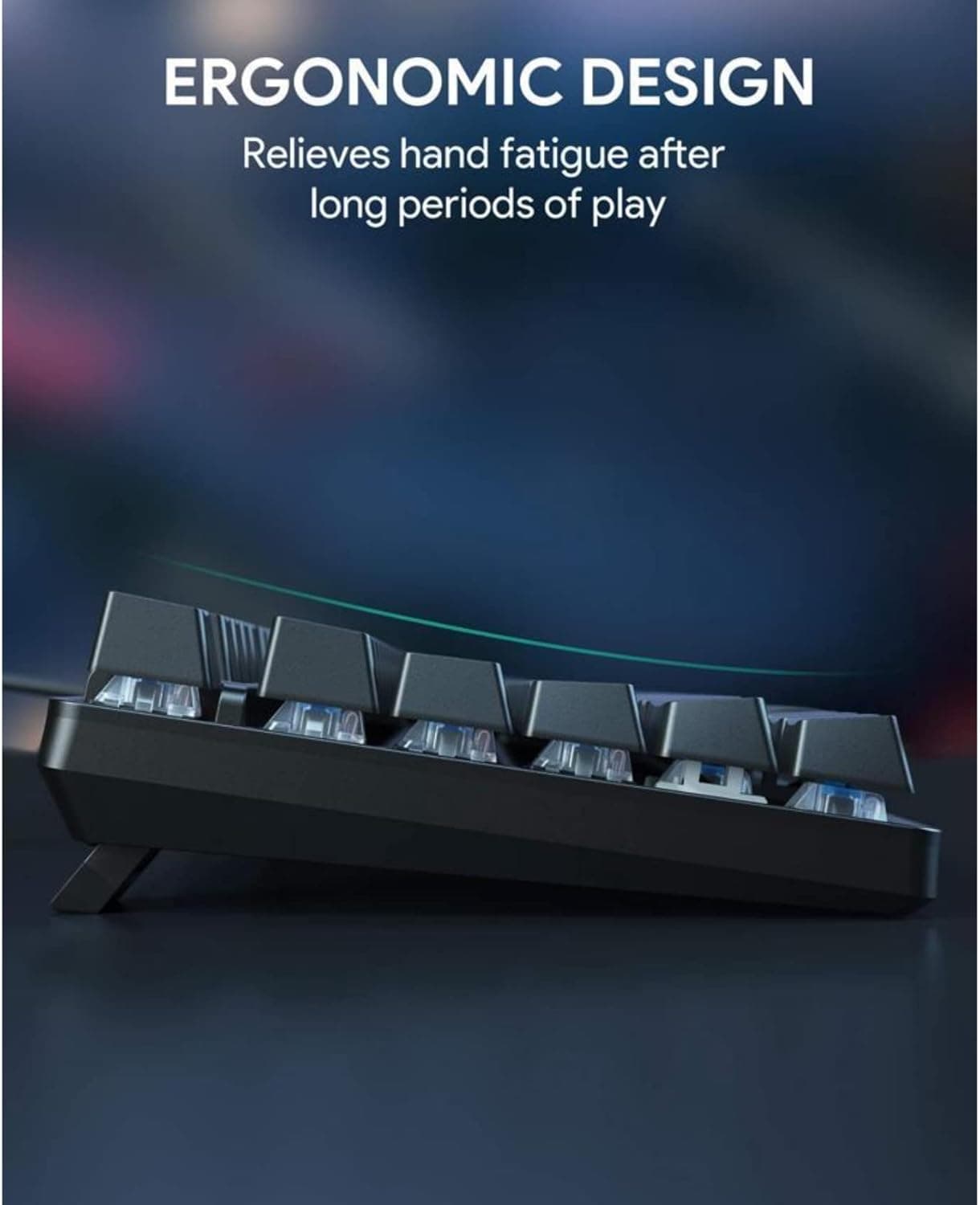
Hall-Effect Keyboards Explained: Science, History, and What Gamers Should Know
Hall-Effect science is 145 years old, but the Rapid Trigger feature reshaping competitive FPS play was invented by a Dutch startup in 2019, not a gaming giant.
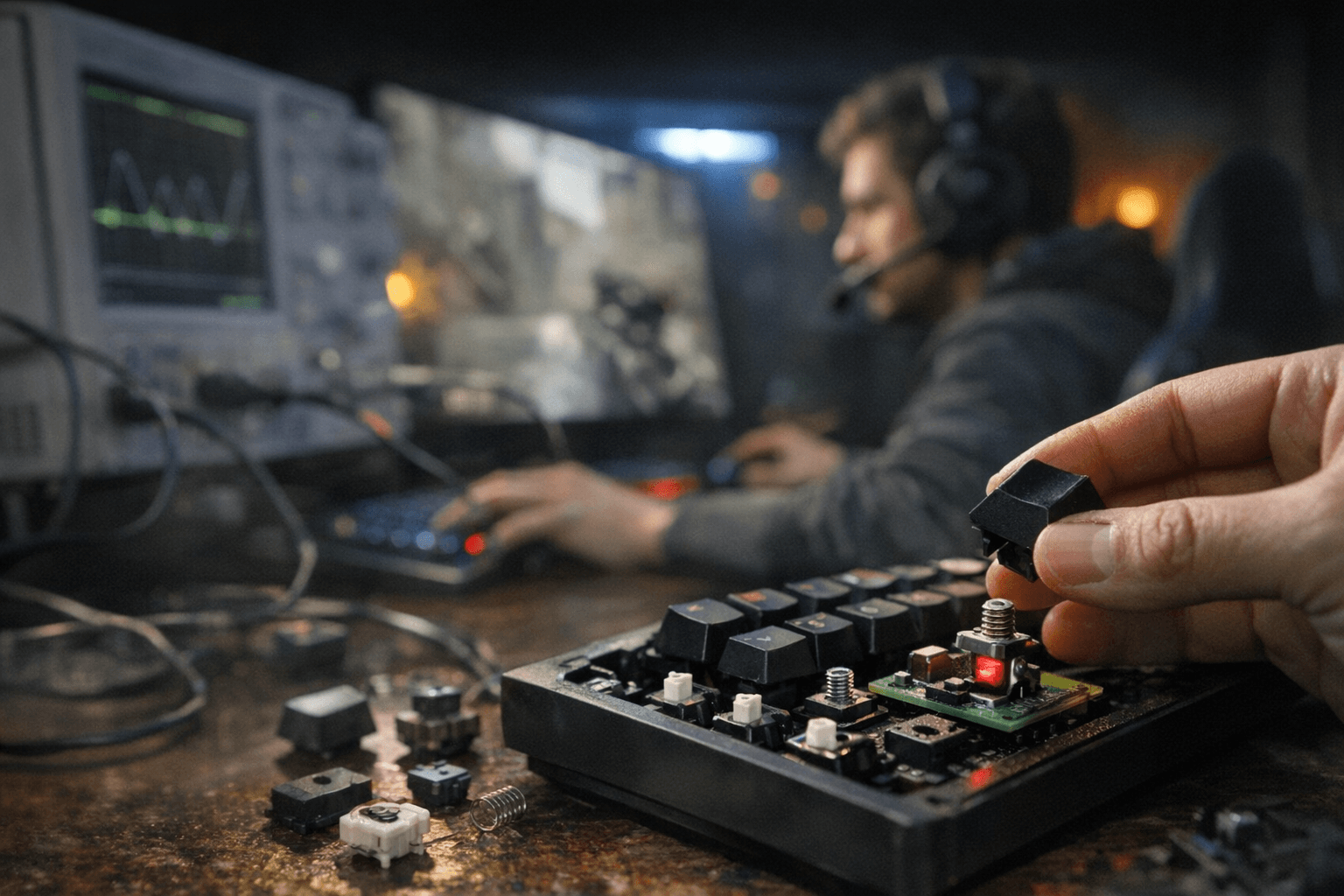
The principle powering today's most competitive gaming keyboards was first described in 1879. Physicist Edwin Hall discovered that applying a magnetic field to a current-carrying conductor produces a measurable voltage difference perpendicular to both the current and the field. That phenomenon, the Hall Effect, spent most of its history in physics textbooks and industrial equipment. Honeywell filed a patent for magnetic switches based on this principle in 1969, establishing the foundational architecture that modern Hall-Effect keyboard switches still draw from.
Applying it to gaming peripherals took another half-century. But once the industry committed, it moved fast.
How Hall-Effect Switches Actually Work
A Hall-Effect keyboard switch embeds a small magnet inside the key stem and positions a Hall-Effect sensor on the PCB beneath it. As the stem travels downward, the magnet moves closer to the sensor, which continuously reads the shifting magnetic field as a precise positional value. Unlike a traditional mechanical switch, which simply closes a metal circuit at a fixed actuation point, a Hall-Effect switch reports the exact depth of every keypress in real time. That continuous position data is the foundation for everything else that makes HE keyboards interesting: adjustable actuation, analog input, and Rapid Trigger.
The History: From Wooting's Workshop to Every Major Brand
Wooting, a Dutch peripheral maker, is widely credited with bringing Hall-Effect technology to gaming keyboards starting around 2017. For years, the company operated almost entirely within the enthusiast community, known to competitive FPS players and keyboard hobbyists but largely invisible to the mass market. That changed in 2019 when SteelSeries launched the Apex Pro with its proprietary OmniPoint Hall-Effect switches, the first mass-market gaming keyboard to offer per-key adjustable actuation. A major brand had committed to the technology at scale, and the industry paid attention.
Corsair entered the space in 2023 with the K70 Max, confirming that Hall-Effect was no longer a specialty category but a genuine product line. Switch manufacturers moved in parallel: Kailh released its Source Series Magnetic Hall-Effect Switches, and Gateron introduced its Double-Rail Magnetic Switches, expanding the ecosystem available to keyboard builders and OEMs alike. By 2024, Razer, Corsair, and SteelSeries had all shipped competing HE products, and a market that once had a single serious player now had several fighting for shelf space.
Rapid Trigger: The Feature That Changed Everything
The same year SteelSeries launched the Apex Pro, Wooting quietly introduced a feature called Rapid Trigger with the Wooting Two Lekker Edition keyboard. It remained a niche capability for several years, understood by dedicated enthusiasts but not yet a mainstream selling point. Today it is the primary reason competitive players choose Hall-Effect keyboards over traditional mechanical alternatives.
Here is the core problem Rapid Trigger solves: conventional mechanical switches use a fixed reset point. A key must physically travel back past a specific threshold before the game registers it as released and ready to re-actuate. In a fast FPS, that dead zone is not theoretical; it is the gap between a clean counter-strafe and a character still sliding when you need to stop. Rapid Trigger eliminates that dead zone. Rather than waiting for the stem to return to a preset position, it resets the actuation point the instant the key begins moving upward, regardless of where the stem currently sits. A key re-actuates after a fraction of a millimeter of re-press, not several millimeters of full return travel.
For CS2 and Valorant players, where character movement stops only when the game registers a key release, this translates to measurably tighter movement control. Wooting describes it as "the feature we pioneered, and changed the peripheral landscape." That framing holds up: Rapid Trigger is now considered standard equipment in the competitive gaming keyboard segment, and the term itself, originally coined by Wooting, has been adopted across the industry by brands that had nothing to do with its invention.
The Specifications Worth Understanding
Current top-tier Hall-Effect keyboards have reached technical specs that justify close attention. The Wooting 80HE supports an 8kHz (8,000Hz) polling rate, communicating with the host system 8,000 times per second for an input cycle of approximately 0.125ms. Actuation points can be configured to 0.1mm precision, enabling genuine fine-tuning rather than rough approximations. Published figures for Rapid Trigger effective latency, measured from sensor to output under typical polling conditions, sit at approximately 7.7ms, though this varies by firmware implementation.
These numbers matter precisely because marketing language has grown inconsistent. "Rapid Trigger," "analog input," and "adjustable actuation" are now being applied across the industry with varying degrees of accuracy. Evaluating HE keyboards rigorously means testing actuation range and reset depth with consistent measurement equipment, verifying polling rate performance under actual load, and confirming that advertised features hold up in a real session rather than just a spec sheet. A keyboard that claims Rapid Trigger support but implements it poorly is not the same product as one that does it right.
Durability: The Real Longevity Picture
Hall-Effect switches carry ratings of 50 to 100 million keypresses, which is on par with quality traditional mechanical switches. The critical difference is in what wears out. In a conventional switch, metal contacts degrade through friction and oxidize over time; that degradation is the primary electrical failure mode. In a Hall-Effect switch, the magnet and sensor never physically touch, so the electrical sensing element is effectively immune to contact wear.
That said, as one technical analysis puts it, "contactless does not mean indestructible." The stem and spring still experience mechanical stress across 100 million cycles, and the more realistic longevity constraint on a Hall-Effect keyboard is the supporting PCB electronics and firmware rather than the switch itself. This shifts the durability question: the sensing mechanism is close to indefinite, but the surrounding hardware is not, and long-term support from the manufacturer matters more than it does with a purely mechanical product.
The 2026 Market and How to Buy
Industry observers described 2025 as the year Hall-Effect keyboards went mainstream among gaming peripheral brands, with 2026 expected to be the year the technology fully flourishes. The numbers reflect that momentum: the Asia Pacific Hall-Effect gaming keyboard market was valued at approximately $420 million in 2024 and is projected to grow at a compound annual rate of 21.3% through 2033.
The 2025 to 2026 product cycle brought meaningful hardware upgrades. SteelSeries released the Apex Pro Gen 3 TKL, Logitech entered with the G Pro X TKL Rapid, and Corsair launched the Vanguard Pro 96 at $229.99 with upgraded MGX Hyperdrive V2 switches, a measurable improvement over the original MGX switches in the K70 Pro TKL. Reviewers have noted real generational gains even within short product intervals, which means relying on older review data can leave performance on the table.
For players chasing responsiveness above all else, the combination of 8kHz polling, sub-millimeter actuation tuning, and a properly implemented Rapid Trigger feature represents a ceiling that traditional mechanical switches simply cannot reach. For typists drawn to consistent, contact-free sensing over a long keypress lifecycle, the durability case is compelling on its own terms. And for keyboard builders, the arrival of dedicated Hall-Effect switch lines from Kailh and Gateron opens the door to custom builds that were not commercially viable even two years ago.
One consistent caveat applies across all three buyer types: hardware without mature software is a frustrating experience. Before committing to any Hall-Effect keyboard, verify that its companion software supports full per-key actuation remapping, individual Rapid Trigger configuration, and a firmware update track record that suggests the manufacturer is still invested in the product. The best sensor in the market is only as capable as the interface that controls it.
This article was produced by Prism’s automated news system from verified source data, official records, and press releases, then run through automated quality and moderation checks before publishing. The system is built and supervised by the people who set the standards it runs under. Read our full AI policy.
Did this article answer your question?