How mechanical keyboard switches are made, and why tolerances matter
A switch’s feel starts in the mold, the spring line, and the QC bin. Tiny tolerance swings can change wobble, sound, and whether two MX-style packs feel identical.

In an MX-style design, the top housing, bottom housing, stem, spring, and metal contact leaf all have to land within tight tolerances or the same model can wobble, sound hollow, or return with a different force from batch to batch.
Inside the switch
A modern MX-style switch is built from a small stack of parts with very different jobs. The housings and stem are typically made by injection molding, which makes mold precision one of the biggest factors in how the switch feels in hand. The spring starts as metal wire and is heat-treated so it can return consistently over thousands or even millions of presses, while the contact leaf is stamped from metal and often gets a plated contact surface because the whole point is dependable electrical contact.
That architecture puts tolerances, batch consistency, quality control, and assembly at the center of switch manufacturing. If the stem dimensions drift even slightly, the keycap can pick up more wobble. If the housing walls are loose, the switch can sound uneven or hollow. If the spring weight varies between runs, two packs of the same switch can feel like they came from different product lines.
Where the desk feel really changes
Typing exposes the results of those factory details. Injection molding affects how smoothly the slider moves through the housing, and even tiny variations can change whether a switch feels polished or scratchy. Spring production has its own impact: a spring that is heat-treated well gives a consistent return, while a weak or inconsistent spring can make the whole switch feel off rhythm.
The contact leaf matters too, even though it is easier to ignore when a switch is new. Cherry’s Gold Crosspoint contacts are designed to ensure consistently reliable electrical contacts. When the contact side is well controlled, the switch registers cleanly; when assembly or stamping drifts, enthusiasts notice the difference as noise, inconsistency, or a less confident actuation.
For buyers, the practical test is simple:
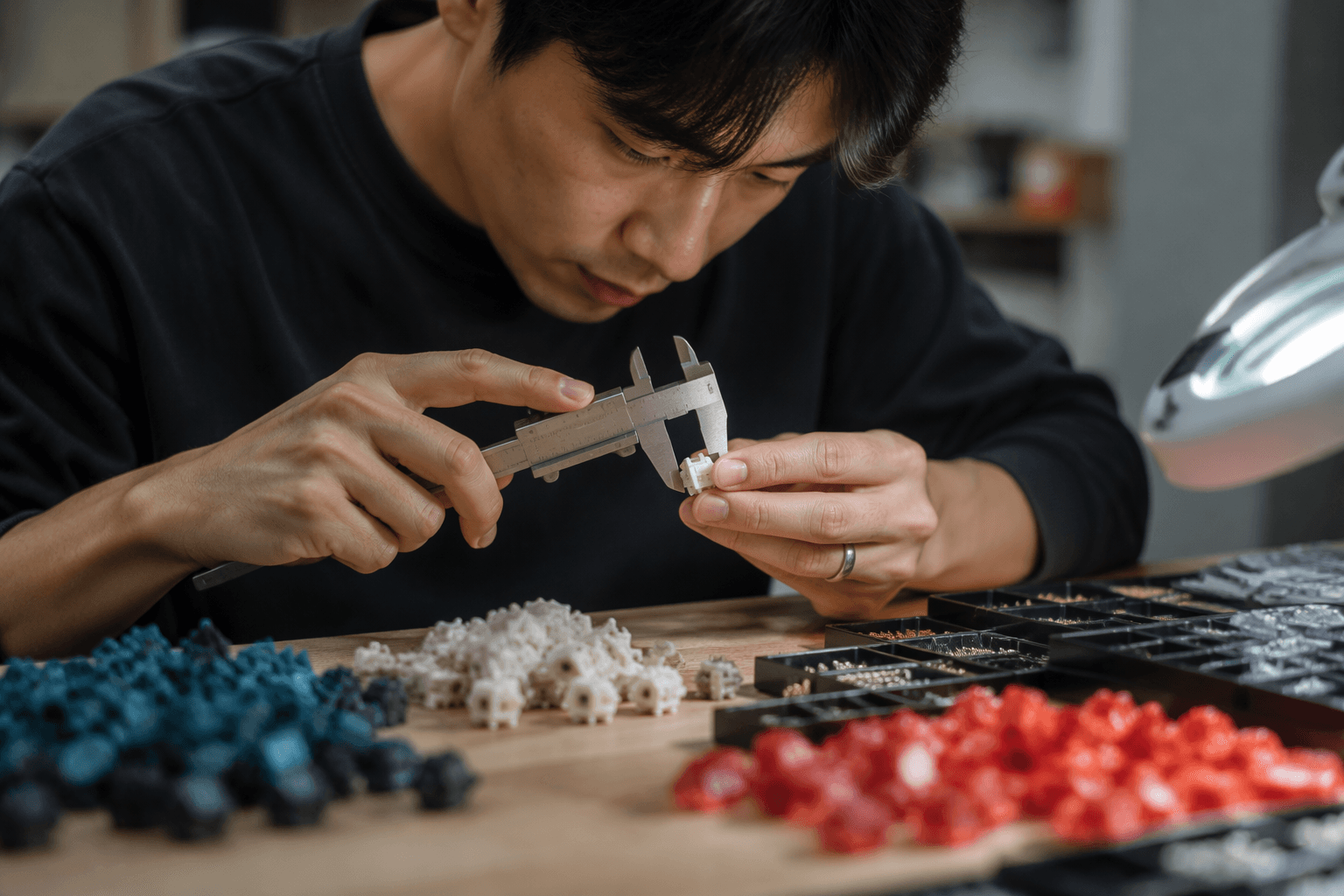
- Does the stem wobble more than expected in the keycap?
- Does the switch sound tight and even, or hollow and uneven?
- Do the switches in the same box feel matched, or does the spring weight wander?
- Does the return feel consistent after repeated presses?
Why MX-style switches became the baseline
Cherry’s original CHERRY MX switch design was protected by a patent from 1984 that has since expired, and once that protection lapsed, the market flooded with switches that resembled the original MX. Cherry said in 2019 that new switch variants were appearing almost daily, which made the choice harder for customers even as it gave the market room to branch out.
MX became the common language of the enthusiast scene. MX switches are a widely used mechanical keyboard switch technology, and Cherry’s MX STANDARD switches are manufactured entirely in Germany. Cherry’s Gold Crosspoint contacts deliver reliably consistent electrical contact.
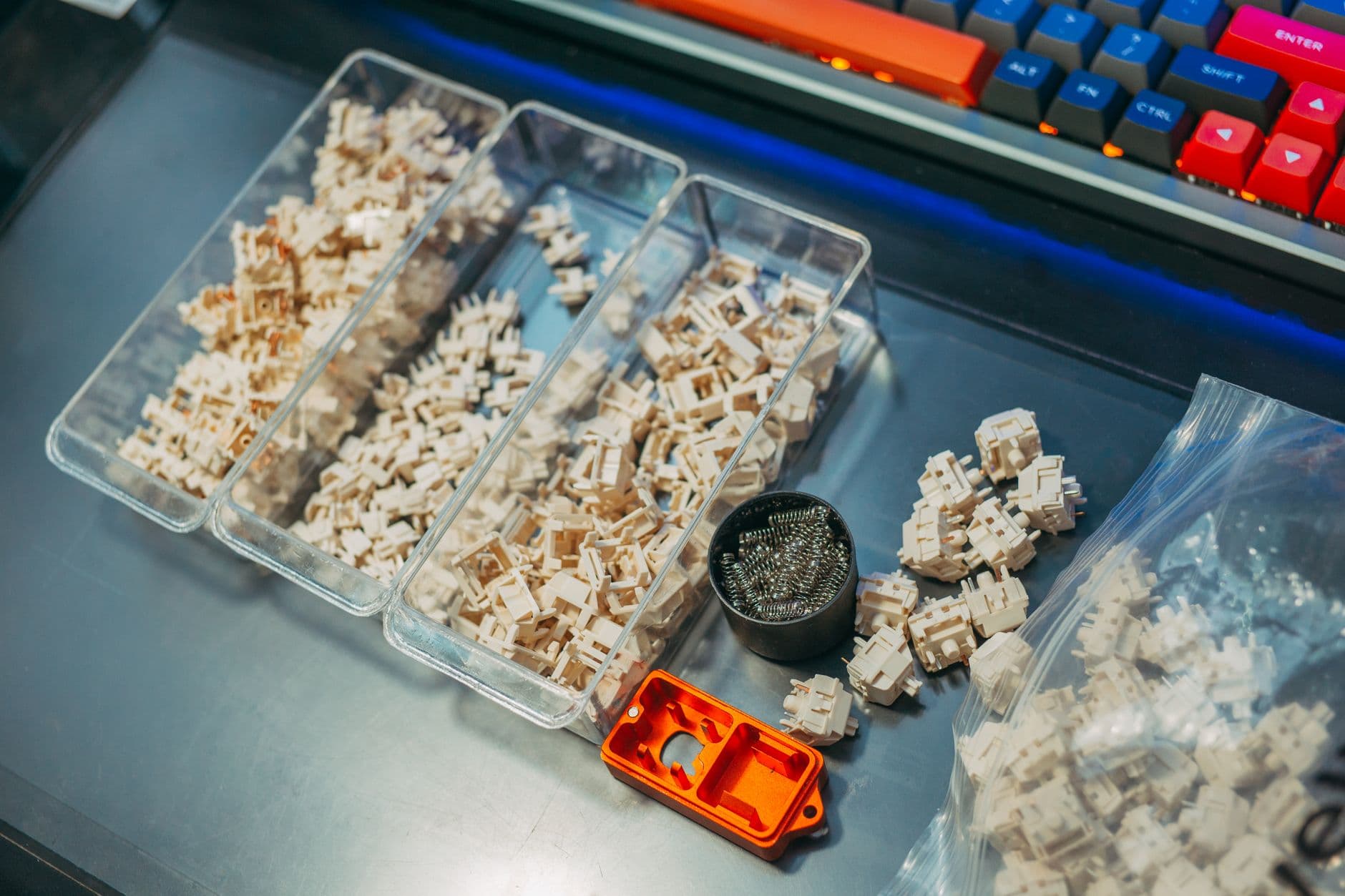
Once the patent wall came down, other makers could work within the same basic form factor while pushing different materials, tooling choices, lubrication approaches, and inspection standards. Two switches that both look “MX-style” can still land at very different points on the smoothness, sound, and consistency spectrum.
What MX2A says about a mature category
Cherry announced MX2A in August 2023 as an evolution of its MX full-size switch family aimed at enthusiasts, gamers, and professionals. The company also described it as reflecting “meticulous German engineering” and “superior quality.”
In this market, premium labels are often attached to process control: better molds, tighter housing fit, steadier spring production, more careful stamping, more deliberate lubrication, and stronger final inspection. Those steps decide whether a switch line earns a reputation for consistency.
The part enthusiasts actually feel
Switch talk gets specific around factory lube, spring ping, leaf noise, and long-pole stems. Those terms all point back to the same manufacturing chain: plastic precision, metal formation, assembly quality, and the final QC check that decides whether hundreds or thousands of switches feel like one family or a pile of near-misses.
When a switch feels unusually smooth, when one box sounds quieter than the next, or when two MX-style packs from the same model behave differently, the answer usually starts in the mold, the spring line, the stamped contact, and the tolerance window that holds them together.
This article was produced by Prism’s automated news system from verified source data, official records, and press releases, then run through automated quality and moderation checks before publishing. The system is built and supervised by the people who set the standards it runs under. Read our full AI policy.
Did this article answer your question?