IQUNIX Magi75 review praises premium feel in a compact low-profile board
Magi75 tries to end the low-profile compromise: a 75% board with real premium materials, full navigation keys, and travel-ready hardware.

The low-profile problem IQUNIX is trying to solve
Low-profile boards usually ask mechanical keyboard people to give something up. You get the clean silhouette and easier portability, but the shallower caps and shorter switch travel can make the whole board feel less tactile, less settled, and less satisfying for fast typing. IQUNIX’s Magi75 is interesting because Wccftech’s May 16 review says it is trying to make compact typing feel genuinely premium, not merely smaller.

That matters in a category where slimness alone is no longer enough. Buyers spending in the $139 range want a board that looks intentional on a desk, survives travel, and still feels like a serious mechanical keyboard instead of a clever workaround. The Magi75’s pitch is simple but ambitious: keep the low-profile form, keep the footprint compact, and remove as many of the usual enthusiast compromises as possible.
A 75% board that behaves like a fuller layout
On paper, the Magi75 is sold as a 75% keyboard, but the review notes that it actually carries 84 keys. That distinction is important because it keeps the board compact without turning it into a layout puzzle, and it preserves navigation keys that many compact boards push into layer gymnastics, including Home, End, Page Up, and Page Down. For anyone who spends the day hopping between text, code, spreadsheets, or game menus, that’s the difference between “small” and “annoying.”
IQUNIX also appears to understand that one size will not suit every low-profile buyer. The review says the Magi75 family includes a Pro version and even a 96% form-factor variant, which suggests the company is treating low-profile keyboards as a proper product line rather than a single experiment. That is a smart move in a segment where users want different balances of size, function, and desk presence.
What makes the Magi75 feel more premium than the category norm
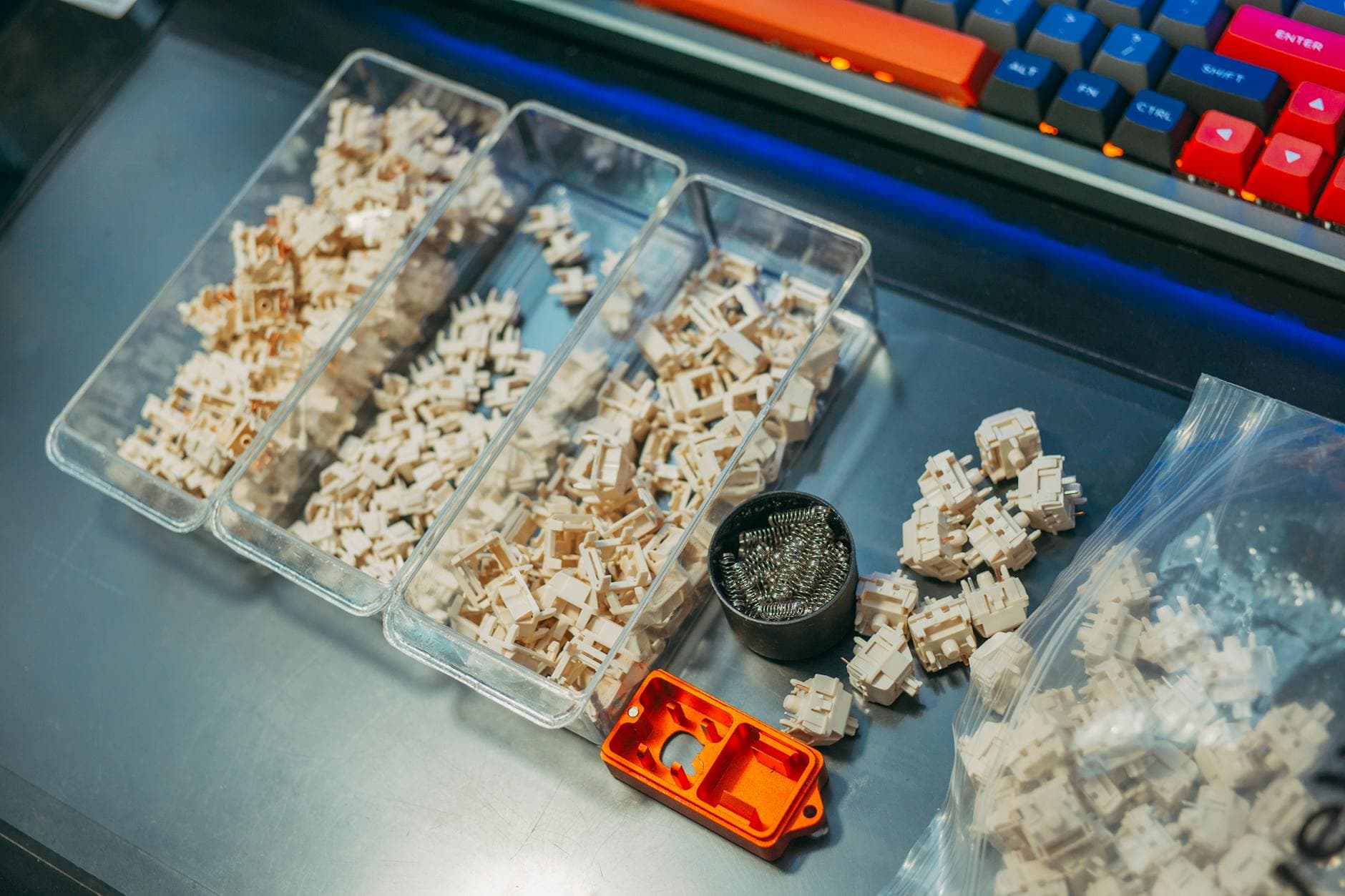
The Magi75’s hardware reads like a checklist of enthusiast-friendly decisions. It uses a CNC aluminum case with an anodized and e-coated finish, PBT keycaps with an anti-oil coating, hot-swap support, Bluetooth 5.1, 2.4 GHz wireless, USB-C, and a 4000 mAh battery. That combination is doing a lot of work here: it gives the board the build credibility of a premium desktop keyboard while still keeping the wireless flexibility expected from something you can throw in a bag.
The unboxing reinforces that portable identity. IQUNIX ships the Magi75 in a compact carrying bag that holds the cable, dongle, keycap puller, switch puller, extra keycaps, and manual, so it feels more like a complete kit than a naked slab of aluminum. That presentation matters because low-profile boards often live or die on whether they feel thoughtfully assembled. Here, the accessories and case treatment make the board feel ready for work, travel, or a quick swap between setups.
The review’s most useful point is also the most honest one: the Magi75 is not meant to be treated like a conventional mechanical keyboard. Its shallow profile and compact footprint change the typing rhythm, and that can be either a benefit or a hurdle depending on what you are used to. If you want the immediacy of a low-profile board without feeling like you stepped down a rung in quality, that is exactly the tension IQUNIX is trying to resolve.
Why the wider low-profile market matters here
The Magi75 does not exist in a vacuum. Keychron now markets several low-profile lines, including the K1, K1 Pro, K1 Max, K3, K5, and K5 Pro families, and positions them as ultra-slim wireless mechanical keyboards with Bluetooth, wired connectivity, and in some cases QMK/VIA support and low-profile hot-swap options. That breadth shows how far the segment has moved from novelty status. Low-profile is now a real lane, not just a design flourish.
NuPhy is pushing the same lane from a slightly different angle with the Air75, which it presents as an innovative 75% ultra-slim wireless mechanical keyboard with low-latency 2.4G wireless, hot-swappable switches, and Mac and Windows compatibility. The brand’s own design notes also underline one of the hidden engineering problems in this category: it used a gap in the aluminum frame and a translucent plastic bottom shell to avoid Bluetooth interference and battery-life issues. That is the kind of tradeoff most buyers never see, but it explains why premium low-profile boards have taken so long to feel properly mature.
Keychron’s original K1 helped popularize the space with an ultra-slim body, Gateron low-profile switches, wireless support, USB-C wired mode, and an 18 mm body. That history matters because it shows how the category started with thinness as the headline, then gradually moved toward better wireless performance, more capable layouts, and stronger build quality. The Magi75 arrives in that second phase, where the real competition is not who can make the thinnest board, but who can make the thinnest board that still feels worth living with.
Who the Magi75 is really for
The strongest case for the Magi75 is that it reduces the number of reasons to reject low-profile boards outright. It keeps the footprint civilized, keeps the nav cluster practical, and backs the look with a CNC aluminum body, PBT caps, hot-swap support, and a serious wireless setup. That makes it a strong fit for anyone who wants one board that can move between desk, travel, and gaming without feeling flimsy or like a compromise.
What makes it stand out is not that it invents a new category. It is that it pushes low-profile closer to the feeling enthusiasts already expect from premium boards, while still preserving the slim aesthetic that pulls people toward the form factor in the first place. That is the gap the Magi75 is trying to close, and for this corner of the keyboard world, that is the story that matters most.
Know something we missed? Have a correction or additional information?
Submit a Tip