Keyboard Market Tokyo 2026 Brings Hall-Effect Boards and Artisan Keycaps Together
Hall-effect boards took center stage at Kiket 2026, Tokyo's third keyboard market, drawing hobbyists and collectors to Hamamatsuchō for hands-on demos.

Hall-effect switch technology has been generating significant buzz online, but at Kiket 2026 attendees finally got to put their hands on the hardware. The third Keyboard Market Tokyo, held March 28 at the Tokyo Metropolitan Industrial Trade Center in Hamamatsuchō, brought magnetic and HE board demos together with artisan keycap sellers and boutique keyboard builders in one of the hobby's most tactile annual events.
The show floor mixed small-batch manufacturers, modders, and prototype builders alongside limited keycap set vendors. Machined aluminum and gasket-mounted boards sat beside low-profile and split keyboard prototypes, many of them bootstrapped runs from regional vendors who rarely surface outside Japanese hobbyist circles. Several of those builders were presenting designs at a public event for the first time.
The presence of HE and analog keyboards as a distinct category at Kiket signals where vendor attention is moving in 2026. Unlike linear or tactile switches, Hall-effect boards offer analog actuation and adjustable trigger points controlled through firmware, making hands-on comparison especially relevant. Attendees used the show to evaluate how different HE implementations feel at various actuation depths, a distinction that spec sheets simply cannot convey.
Sound testing drew its own crowd. Swap tables and acoustic comparison setups let builders and buyers test gasket compression, plate materials, and case resonance side by side, with firmware discussions covering QMK and proprietary vendor tooling running alongside those listening sessions. For small producers, that kind of immediate, in-person feedback compresses iteration cycles in ways that Discord threads and group buy forms cannot replicate.
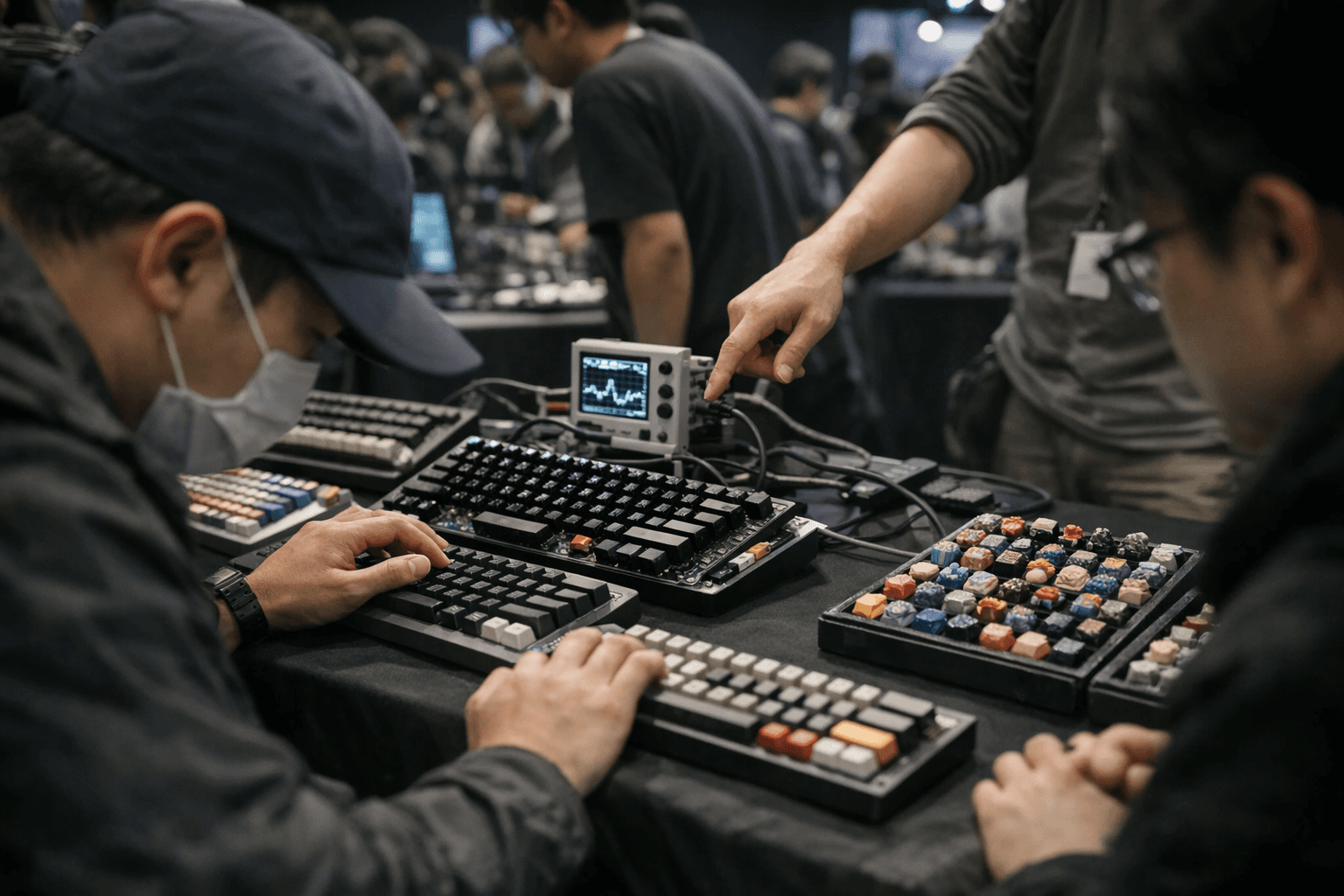
Collector activity ran throughout: limited-run keycap colorways changed hands at vendor tables, and the swap format gave attendees a chance to move sets they had been sitting on while picking up pieces from artisans who typically sell through online drops only.
Kiket's third edition confirmed that demand for in-person testing has not softened despite the hobby's largely online infrastructure. Tokyo remains one of the few cities where a single event can sustain strong attendance across a range that spans hobbyist split kits and premium OEM limited runs simultaneously, and the Hamamatsuchō turnout showed the community's appetite for variety is nowhere close to peaking.
This article was produced by Prism’s automated news system from verified source data, official records, and press releases, then run through automated quality and moderation checks before publishing. The system is built and supervised by the people who set the standards it runs under. Read our full AI policy.
Did this article answer your question?