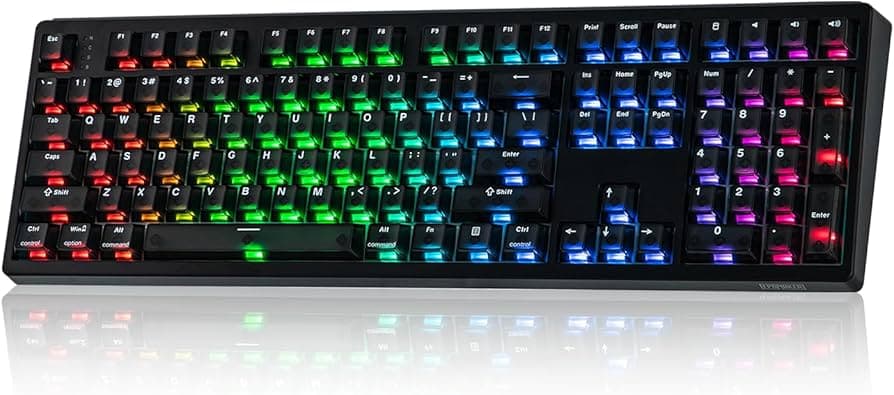
Keychron launches K3 HE and K3 Ultra 8K low-profile 75% keyboards
Keychron split the K3 line: K3 HE uses low-profile Hall-effect magnetic switches for adjustable actuation, while K3 Ultra 8K pushes 8,000 Hz wireless and a claimed 0.125 ms response.

Keychron launched two new low-profile 75% K3 keyboards on Kickstarter that deliberately split their hardware priorities: the K3 HE centers on magnetic Hall-effect actuation and per-keystroke customization, while the K3 Ultra 8K chases ultra-low-latency wireless with an 8,000 Hz polling claim. The campaign went live February 17, 2026, with PRWeb noting a general “starting at $109.99” backer tier and Notebookcheck reporting first-day funding that exceeded a $10,000 goal and raised over $55,000; both boards are projected to begin shipping in May 2026.
The K3 HE is billed as the first K3 magnetic-switch keyboard and ships with Keychron “Ultra-fast Lime Low-Profile” magnetic switches and an HE PCB, according to PRWeb and Notebookcheck. Keychron positions the HE for gamers, programmers, and power users who want finer control over actuation behavior; Notebookcheck lists an early-bird Kickstarter price of $115 for the HE and shows color variants in white and black in PRWeb’s image captions. No numeric actuation-adjustability bands were published in the launch materials.
Keychron’s K3 Ultra 8K targets latency-sensitive workflows with an 8,000 Hz wireless polling headline and a specific input-response claim of “as low as 0.125 milliseconds,” a figure reported by Forbes. Forbes also quotes an endurance claim of up to 550 hours on a single charge in 2.4 GHz mode when using ZMK firmware; Notebookcheck’s spec table lists a 2600 mAh battery capacity for the K3 family but does not map that capacity to the hour figure. Notebookcheck identifies the Ultra’s default low-profile mechanical options as Keychron Milk POM Red (linear), Brown (tactile), and Banana (sharp tactile), noting those Milk POM switches are pre-lubed, and lists a hot-swap PCB supporting 3-pin and 5-pin Gateron Low-Profile 2.0 switches for the mechanical model.
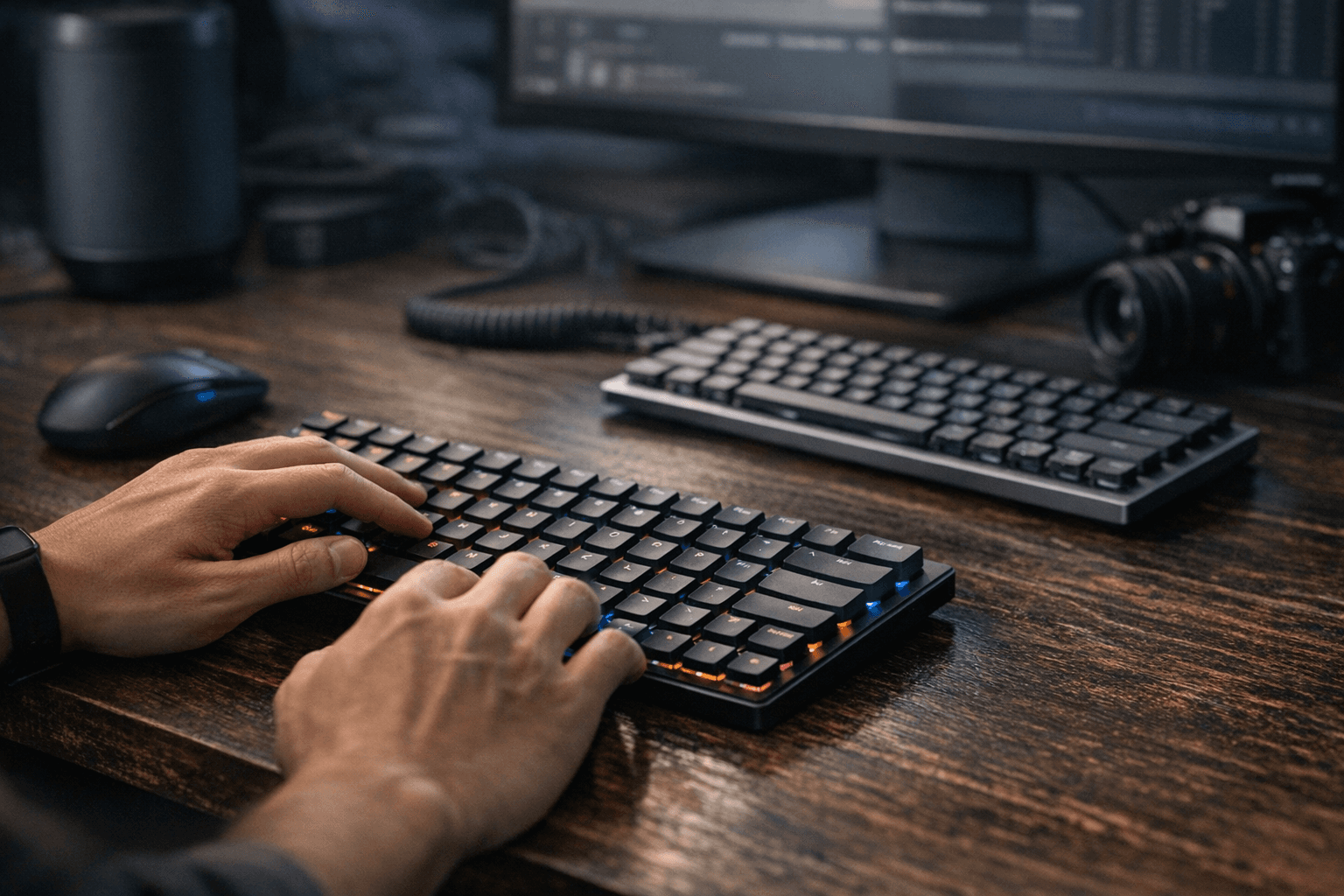
Both models share a travel-ready slim 75% layout and a minimalist metal chassis with natural rosewood endplates, PRWeb and Notebookcheck state. Notebookcheck’s technical table records an aluminium plate, ABS bottom case, aluminium rails, dimensions of 126 × 318.62 mm with a 20.5 mm front height, weight of 575 g, double-shot PBT LSA-profile non-shine-through keycaps, and typing angles of 2°, 4.5°, and 7.5°. Connectivity includes USB Type-C, 2.4 GHz wireless, and Bluetooth 5.3, and Keychron Launcher is cited as the web-based customization UI.
Community reaction surfaced immediately: a Reddit r/Keychron thread captured a buyer weighing HE rapid-trigger tuning versus the Ultra’s plug-and-play 8K latency for casual CS2 play, asking whether HE yields noticeable in-game gains or causes mis-presses in daily use. Keychron co-founder Paul Tan framed the product split in the launch: “Our goal with these releases is to reduce friction between intent and action. Input can be tuned for precision or respond with ultra-low latency during extended wireless use, depending on how the keyboard is configured.” Notebookcheck also reported prospective retail MSRPs near $110 for the HE and $120 for the Ultra, while Kickstarter early-bird tiers were reported at $105 for the Ultra and $115 for the HE; backers and reviewers will see whether the May 2026 shipments validate the 8K latency and 550-hour endurance claims.
This article was produced by Prism’s automated news system from verified source data, official records, and press releases, then run through automated quality and moderation checks before publishing. The system is built and supervised by the people who set the standards it runs under. Read our full AI policy.
Did this article answer your question?