Keychron Q16 HE 8K Review: Ceramic Case Meets Hall-Effect Switches
Keychron's Q16 HE 8K puts a ceramic case and ceramic keycaps on a Hall-effect board — and somehow, it works.
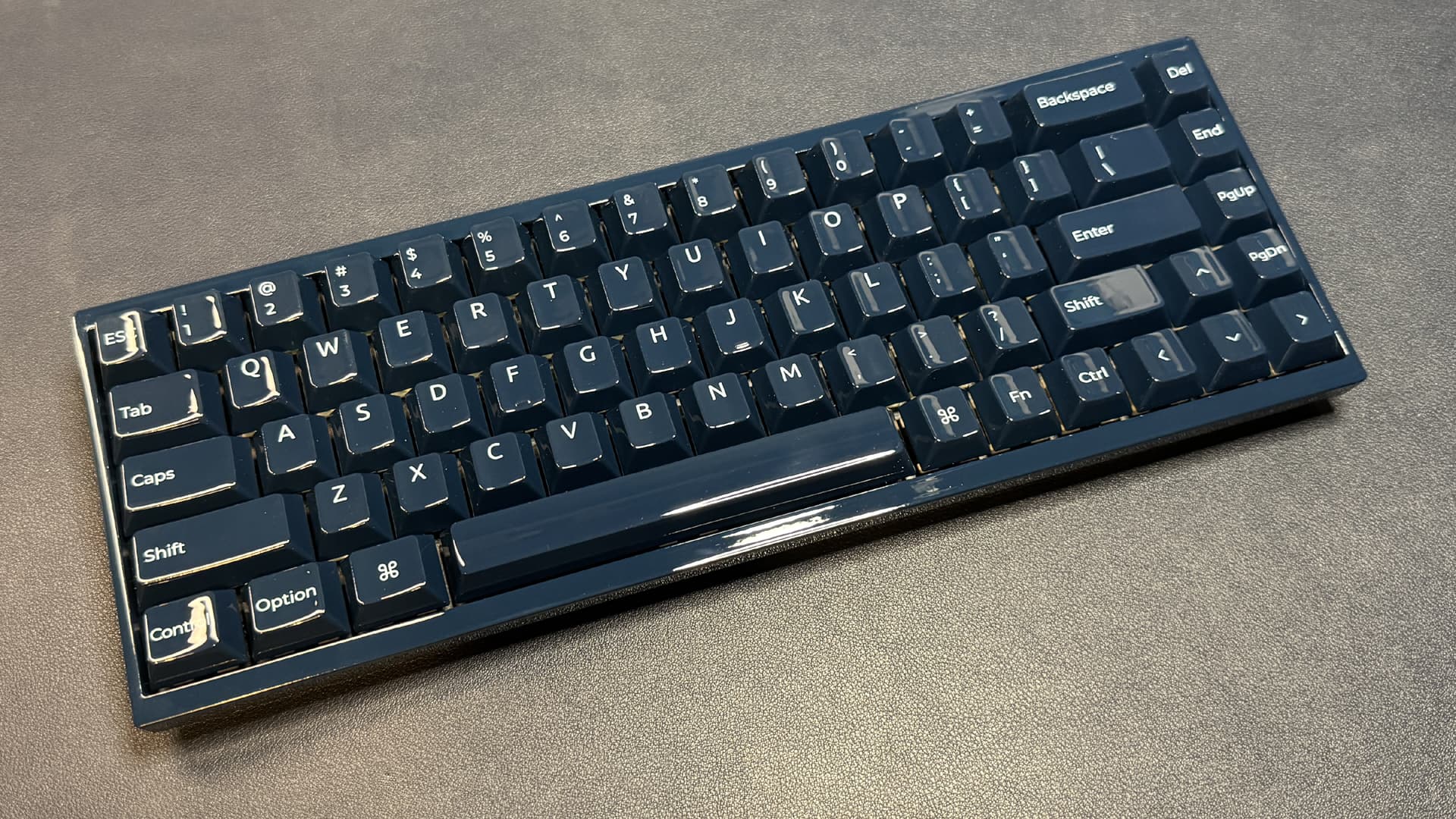
Ceramic is not a material you typically associate with keyboards. It belongs in the world of coffee mugs, floor tiles, and high-end audio equipment, not 65% wired boards sitting on a desk next to a gaming mouse. That's precisely what makes the Keychron Q16 HE 8K such a strange and compelling proposition: a precision-engineered 68-key layout wrapped entirely in ceramic, paired with Hall-effect switches running at an 8,000 Hz polling rate, priced at $229.99. It shouldn't make sense, and yet every person who has spent real time with it seems to walk away converted.
What Keychron is actually claiming
Keychron markets the Q16 HE 8K as "the world's first ceramic keyboard," and that claim is, as Tom's Guide put it, "half true." Ceramic keycaps have existed for a while now — that part isn't new. What is genuinely novel, as far as anyone can confirm, is the ceramic case itself. Keychron appears to be the first manufacturer to ship a board with a full ceramic case combined with ceramic keycaps, making the entire external structure of the keyboard a single unified material. It's a meaningful distinction, even if the marketing line oversimplifies it.
The board comes in two colors: Light Green and Navy Blue. The light green variant, photographed repeatedly against a stone surface in early coverage, is the one catching the most attention, and it's easy to see why. The ceramic finish carries a glossy sheen that reads as simultaneously minimalist and premium. Keychron's own product copy describes it as offering "minimalist elegance and distinct acoustic signature," which is marketing language, but the independent impressions from reviewers and users suggest the visual promise holds up in person.
Specs at a glance
The Q16 HE 8K is a wired-only 65% layout board with 68 keys, measuring 12.4 x 4.36 x 1.5 inches and weighing 2.33 lbs. Given that ceramic is a dense material, some users expected it to be heavier; one Reddit reviewer specifically noted "the lighter than expected weight" as a stand-out characteristic. It uses a tray mount design and ships with Cherry profile ceramic keycaps, per-key RGB and Mix RGB backlighting, and full NKRO (N-Key Rollover). Connectivity is wired exclusively; the product page lists wireless working time as N/A and Bluetooth device name as N/A, confirming there is no wireless mode. The board supports macOS, Windows, and Linux.
Switches are Keychron's Ultra-Fast Lime Magnetic, a Hall-effect design using TMR sensors. The adjustable actuation range runs from 0.1 to 3.35 mm, and Rapid Trigger is supported, though Keychron notes compatibility is limited to the Ultra-Fast Lime Magnetic switch only. The board also features Dynamic Keystrokes with 4-in-1 action keys. The hot-swappable designation does appear on the product page, though it's worth noting that the board currently ships in only one switch configuration; whether buyers can swap to other switch types beyond what Keychron provides remains a detail worth confirming directly with Keychron.
The ceramic typing experience
The most discussed aspect of the Q16 HE 8K is what it sounds and feels like. Keychron's own marketing promises "a strikingly thocky typing sound" and pitches the ceramic construction as "a new sensory standard." The editorial assessments land in a nuanced but largely positive place. Tom's Guide called the acoustics "loud and a little unrefined" while still describing the keyboard as "a joy to type on" and the design as "gorgeous" and "utterly adorable." The review's final verdict is emphatic enough to quote in full: "I love this little keyboard... it's also a monster for gaming, thanks to the compact layout, Cherry profile keycaps and enormous roster of magnetic gaming goodies. Consider me converted to ceramic."
The Reddit community impressions push the acoustic assessment a step further. One user who waited through shipping delays before writing a detailed review noted something important: "It also sounds very different from Keychron's official sound tests. In person, it is fuller, cleaner, and more refined than the demos suggest." That's a meaningful data point for anyone who watched Keychron's promotional videos and came away uncertain. The actual product, at least according to hands-on experience, sounds better than the marketing clips imply.
The typing feel extends well beyond acoustics. The stabilizer implementation drew particular notice: "Stabilizer performance deserves special mention. None of the larger keys tip or sway, which genuinely surprised me. Even some of my 300 dollar boards do not have stabilizers this well tuned. Everything returns cleanly, feels controlled, and stays level, which contributes a lot to the overall typing experience." For a board in this price range, that's a significant callout.

Hall-effect performance and gaming chops
The Ultra-Fast Lime Magnetic switches and 8,000 Hz polling rate are the other side of the Q16 HE 8K's identity. Hall-effect boards have been gaining serious traction in the enthusiast and competitive gaming space, and Keychron is leaning into that fully here. The combination of the TMR sensor-based switches with 8K polling and Rapid Trigger support puts the Q16 HE 8K in direct conversation with boards like the Wooting 60HE and other top-tier HE options.
The user impressions on responsiveness are unambiguous: "With the Ultra Fast Lime magnetic switches and the 8 kHz polling rate, inputs feel immediate and precise. There is no mushiness or delay, whether typing or gaming. It feels fast without feeling unstable." Tom's Guide reinforced this from an editorial standpoint, calling the board "a tiny powerhouse" and praising its "complete roster of elite magnetic gaming features."
Software and customization
Keychron routes all configuration through the Launcher Web Configurator, a browser-based tool that handles key remapping, actuation adjustment, RGB profiles, and access to features like Rapid Trigger and Dynamic Keystrokes. For users who prefer not to install software locally, the web-based approach keeps things portable and accessible across operating systems. The board also carries 1MB of onboard storage, allowing profile data to live on the device itself. A dedicated user guide covers shortcuts, HE mode configuration, factory reset, and other firmware-level functions.
The honest limitations
Tom's Guide was direct about where the Q16 HE 8K falls short: "It's expensive and limiting — only available in a single layout, a single connectivity configuration and with a single set of switches." At $229.99, it sits at a price point where buyers expect options. The wired-only connection will rule it out for anyone invested in wireless, and the single-layout 65% form factor won't suit everyone. The acoustics, while praised overall, are characterized as "loud" even by fans of the board, which matters in shared spaces or offices.
Availability has also been a friction point. Keychron's product page currently shows the board as unavailable, and at least one user flagged shipping delays in their review. Whether that reflects high demand, constrained production, or a temporary supply issue isn't confirmed, but it's worth keeping an eye on stock status before planning a purchase.
None of this undermines what the Q16 HE 8K accomplishes. As the Reddit reviewer put it: "Everything about the typing experience feels intentional. Nothing feels experimental or unfinished, even though the idea itself is new." For a first-generation product built around a material no one has shipped in a keyboard case before, that's a remarkable result. Ceramic hasn't just arrived in the keyboard space; it's made a convincing case for staying.
This article was produced by Prism’s automated news system from verified source data, official records, and press releases, then run through automated quality and moderation checks before publishing. The system is built and supervised by the people who set the standards it runs under. Read our full AI policy.
Did this article answer your question?