MelGeek Expands Beyond Keyboards With Horus, First Lightweight Esports Mouse at $119
MelGeek unveiled Horus, its first lightweight esports mouse priced at $119, marking the Austin-based keyboard maker’s push into a broader peripheral ecosystem.
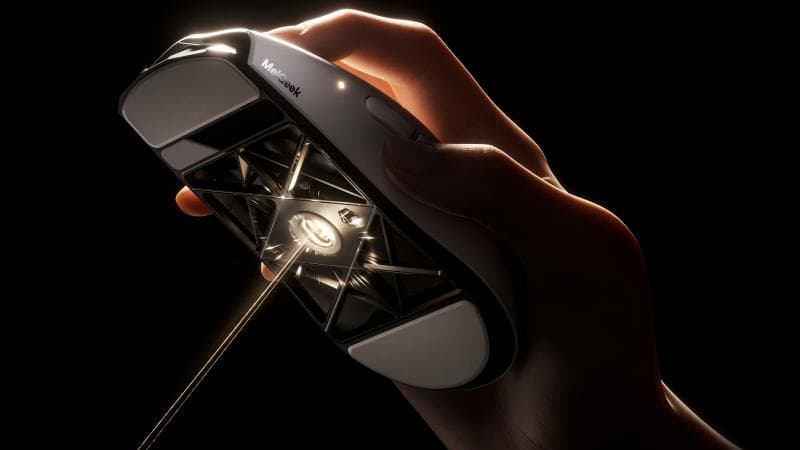
MelGeek has launched Horus, its first lightweight esports gaming mouse, expanding the Austin-based brand beyond its design-forward mechanical keyboards. Priced at $119 and slated to be available starting late January 2026, Horus arrives as the company positions itself to build an integrated peripheral lineup that pairs keyboards with mice and future headsets.
The company issued a press release dated February 01, 2026, 10:00 ET announcing the model and framing the launch as a strategic milestone. MelGeek, founded in 2014, cites a product history that includes the MADE68 Ultra, MOJO, Centauri, and the Pixel series, a run of design-forward keyboards that set expectations for Horus’s aesthetic as well as its performance ambitions.
MelGeek’s announcement emphasizes competitive input reporting and wireless engineering. The company writes that Horus “supports a true 8000Hz polling rate in both wired and wireless modes, enabled by MelGeek’s proprietary NullSync wireless technology, delivering ultra‑low latency and stable signal performance.” That claim is central to MelGeek’s esports positioning and will be a key metric for players and reviewers to validate in hands-on testing.
Design-oriented coverage highlights Horus’s physical feel and visual treatment. Geardiary describes the mouse as “conceived as both a performance tool and a piece of desktop art” and reports a listed weight of 49 grams with a “carefully engineered 50:50 balance” that “provides immediate control during gameplay.” The same coverage calls out an Egyptian-mythology influence: the mouse “features subtle references to Horus and Bastet hidden within its structure,” and its pyramid-shaped receiver “transforms a functional dongle into an intentional design object.”

MelGeek frames Horus as strategic as well as stylistic. The company says Horus “represents the second core pillar in its product lineup and reflects the company’s long‑term vision of creating an integrated peripheral ecosystem encompassing keyboards, mice, and future headset products.” For the mechanical-keyboard community that followed MelGeek for expressive desktop centerpieces like the transparent MOJO and the OLED-equipped Centauri, Horus represents a natural extension of that design-first ethos into point-and-click hardware.
Several important technical details were not disclosed in the announcement: sensor model, DPI range, button switch type, battery life and charging specs, official dimensions, and region-by-region launch specifics. These gaps leave room for follow-up testing and PR clarification, particularly around the NullSync wireless performance claims and the practicalities of wireless battery life at an 8000Hz reporting rate.
What this means for keyboard-focused builders and gamers: Horus offers a way to match MelGeek’s distinctive design language across the desk while raising new questions about real-world esports performance. Expect early reviews and tear-downs to focus on validating the 8K polling claims, confirming the 49-gram feel and 50:50 balance, and clarifying global availability and warranty details as units hit retail.
This article was produced by Prism’s automated news system from verified source data, official records, and press releases, then run through automated quality and moderation checks before publishing. The system is built and supervised by the people who set the standards it runs under. Read our full AI policy.
Did this article answer your question?