M5Stack C6L gateway bridges Meshtastic mesh to Wi-Fi dashboards
A compact C6L gateway turns Meshtastic telemetry into live Wi-Fi dashboards, making mesh data useful for sensors, solar outposts, and field monitoring.
A gateway changes what Meshtastic can do right now
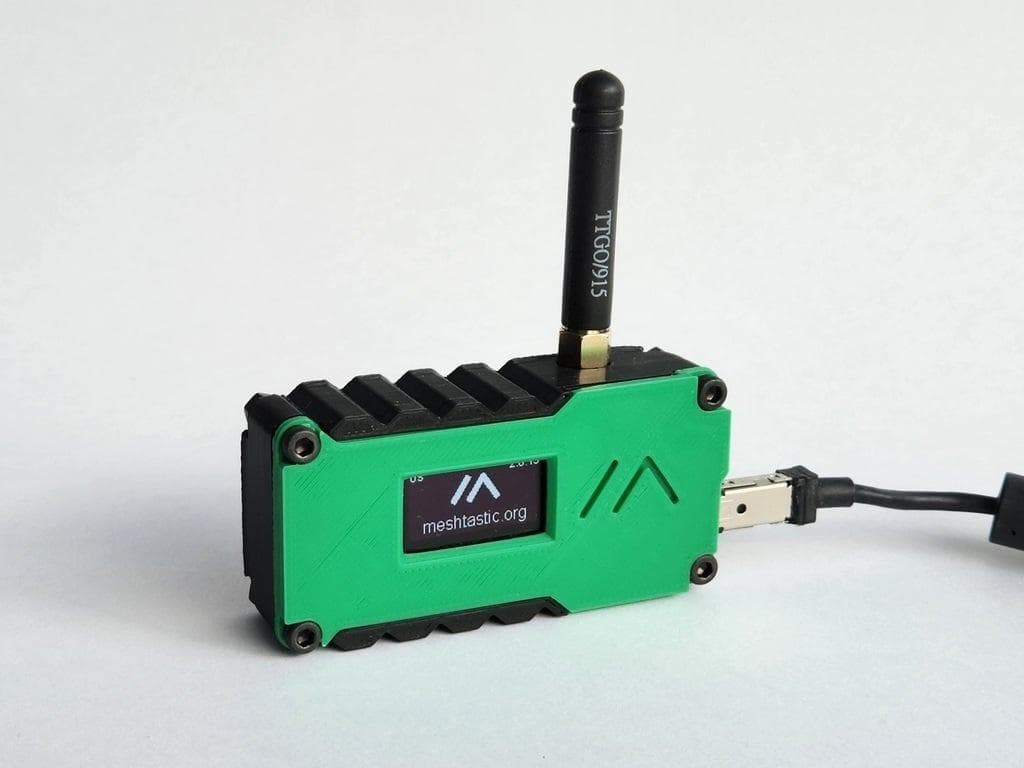
The most useful Meshtastic builds are not always the loudest ones. A tiny gateway that can hear LoRa traffic, push it onto Wi-Fi, and feed a dashboard is the kind of hardware that turns a mesh from a neat radio hobby into something you can actually use for telemetry, monitoring, and remote awareness.
That is the promise of Profe Tolocka’s M5Stack C6L project, published on May 13, 2026: a beginner-friendly gateway that bridges a local Meshtastic mesh to the internet through MQTT, then surfaces the data in Node-RED. In practice, that means two nodes can send telemetry through the mesh, the gateway can publish it onward, and a computer can display it as a live dashboard. For anyone trying to track sensors, follow a field deployment, or keep an eye on an off-grid node, that is a very immediate unlock.
What the build actually does
Meshtastic does not require every node to talk directly to every other node. Messages hop through the mesh until they reach their destination, which is what makes the network useful beyond line-of-sight radio links. A gateway sits at the edge of that mesh and acts as the translator between LoRa and external services, servers, or monitoring tools.
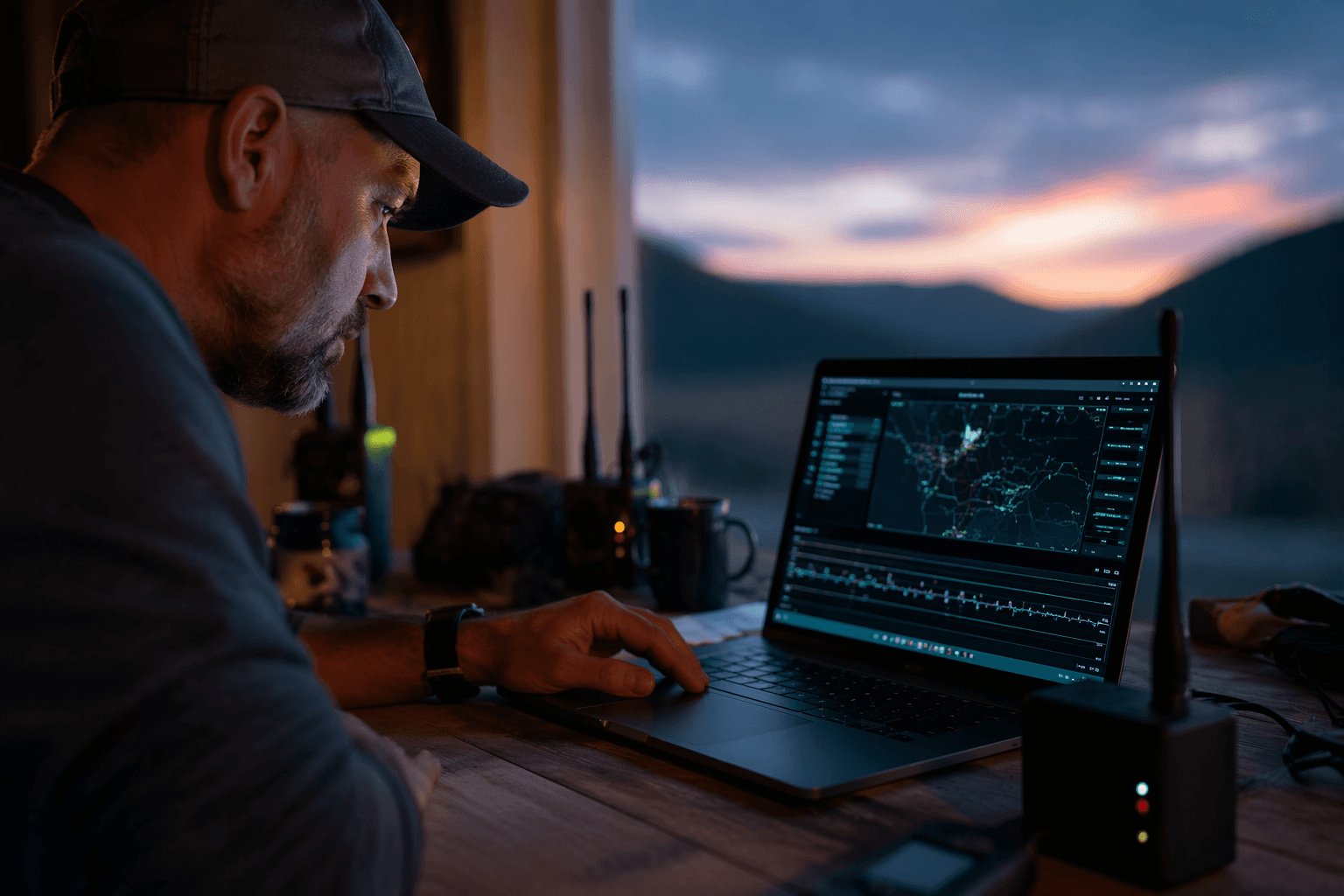
In this project, the gateway role is deliberately practical. The mesh delivers telemetry to the C6L, MQTT carries it into the broader network, and Node-RED turns it into something you can watch in real time. That flow is the difference between a mesh that only moves messages and a mesh that becomes a sensor backhaul layer, a remote status feed, or a hybrid off-grid and online system.
Why the C6L is the interesting part
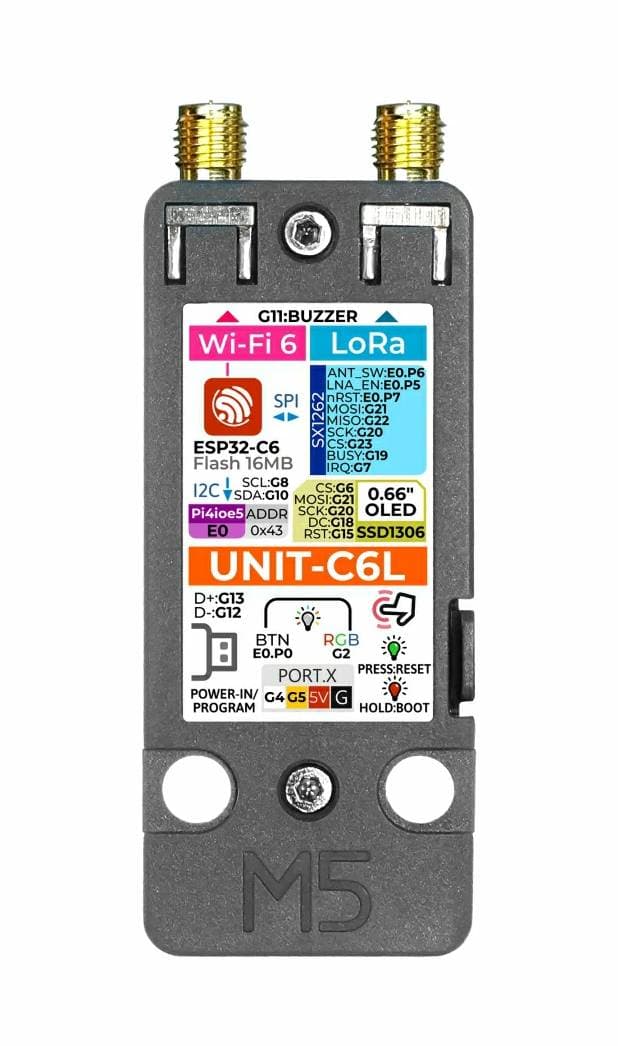
The M5Stack Unit C6L is doing a lot of the heavy lifting here because it packs both sides of the bridge into one compact board. M5Stack’s documentation says the unit has two RP-SMA antenna interfaces, one for 2.4 GHz Wi-Fi 6 and one for LoRa communication, and that it supports connection to the Meshtastic network. It is also described as suitable for remote monitoring, outdoor exploration, and emergency communication scenarios.
That matters because a gateway is only truly convenient if it is easy to place where the mesh needs it. A single board with both radios is simpler than assembling separate LoRa and Wi-Fi parts, and the size makes it easier to treat the gateway like an edge device instead of a desk-bound demo. The parts list reinforces that portability angle too: the project includes a Solar Power Manager Module and a Panasonic NCR18650-BD battery, which points straight at field use, not just bench testing.
MQTT is the bridge that makes the mesh useful online
Meshtastic’s own documentation frames MQTT as the official bridge from mesh networks to the internet, with integration paths for Home Assistant, Node-RED, and Adafruit IO. When MQTT is enabled, the device uplinks and downlinks raw MeshPacket data inside a ServiceEnvelope, which is exactly what you want when the goal is to move mesh traffic into a wider automation or visualization stack.
The Node-RED side is especially compelling for makers who want fast results. Meshtastic’s documentation says Node-RED can rapidly, in minutes rather than days, produce useful output when paired with Meshtastic. It also notes that JSON output covers a specific subset of network data, including text messages, telemetry, device metrics, environment metrics, power metrics, node info, position, waypoint, and neighbor info. That is a strong match for dashboards, alerting, and lightweight monitoring.
What the example unlocks in practice
The project’s example is simple, but that is exactly why it lands. Two nodes send telemetry through the mesh, the gateway publishes the data to an MQTT broker, and Node-RED retrieves it for display. Once that pattern is in place, the same setup can support live view of node behavior, sensor readings from a distant site, and basic awareness of how the mesh itself is behaving.
- remote sensors feeding a home dashboard
- solar-powered field nodes reporting status over LoRa
- temporary deployments where only one node needs internet access
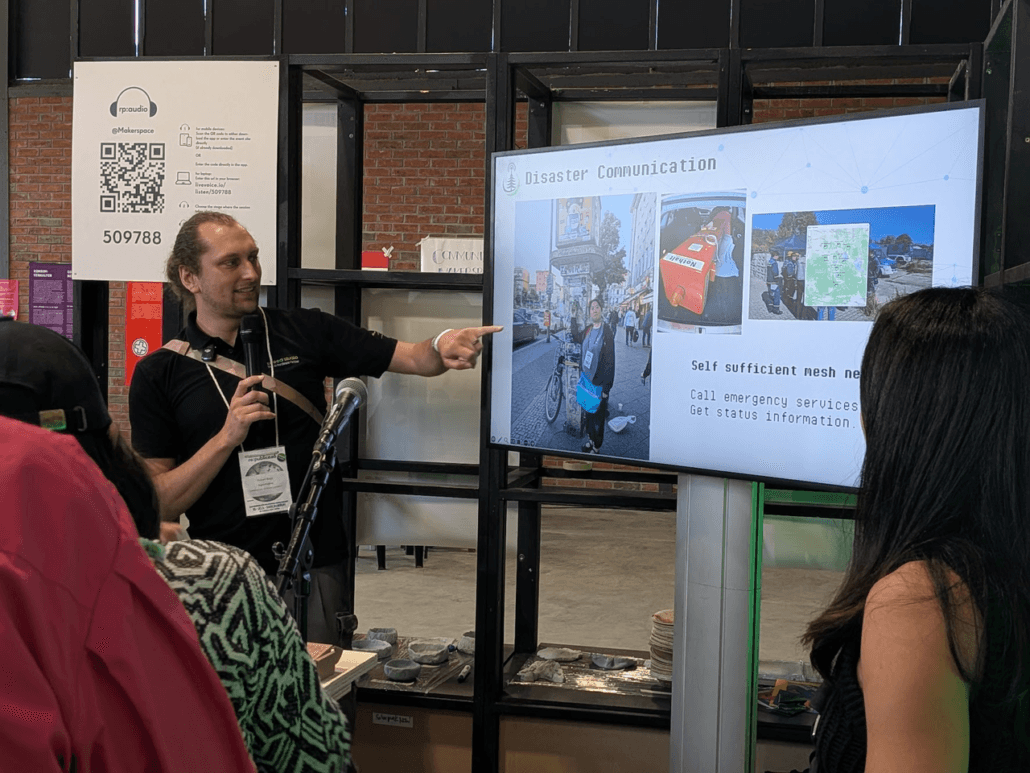
- emergency setups where mesh data should also reach a monitoring system
- automation workflows that combine Meshtastic with existing home or lab tools
That opens the door to a lot of current Meshtastic use cases:
The point is not that MQTT is flashy. The point is that it turns Meshtastic into a data source other systems can act on without changing the way the mesh itself works.
How this compares with the rest of the Meshtastic ecosystem
This is not a random hack thrown together for effect. Meshtastic has been building toward this style of integration for a while, and MQTT is increasingly treated as one of the platform’s most powerful advanced features. The C6L gateway fits that direction neatly: it shows how a low-cost LoRa node can become the edge device that hands off mesh data to software people already use.
That is what makes the build feel more meaningful than a demo. It is not just showing that Meshtastic can talk to the internet. It shows a compact, beginner-accessible way to push a mesh into the same workflows used for dashboards, automation, and remote monitoring. If you have been waiting for a cleaner path from sketch-stage radio tinkering to something you can actually leave in the field, this is the shape that path takes.
Why this one feels practical instead of ornamental
The strongest feature of the M5Stack C6L gateway is not novelty. It is consolidation. One compact board handles LoRa and Wi-Fi, the published build gives you a clear parts list, and the software path is already documented through MQTT and Node-RED. Add the solar module and battery, and the whole thing starts to look like a deployable edge node rather than a proof-of-concept on a workbench.
That is the real story here: a Meshtastic mesh no longer has to stop at radio-to-radio messaging. With a C6L gateway in place, the mesh can feed dashboards, automation tools, and remote monitoring systems, and it can do so in a form that is small enough to carry, simple enough to build, and useful enough to leave running.
This article was produced by Prism’s automated news system from verified source data, official records, and press releases, then run through automated quality and moderation checks before publishing. The system is built and supervised by the people who set the standards it runs under. Read our full AI policy.
Know something we missed? Have a correction or additional information?
Submit a Tip