Meshtastic guide shows off-grid mesh messaging for South Africa
Meshtastic turns cheap LoRa radios into a rescue-ready off-grid mesh, and South Africa's growing network shows how telemetry and relay links make it practical.
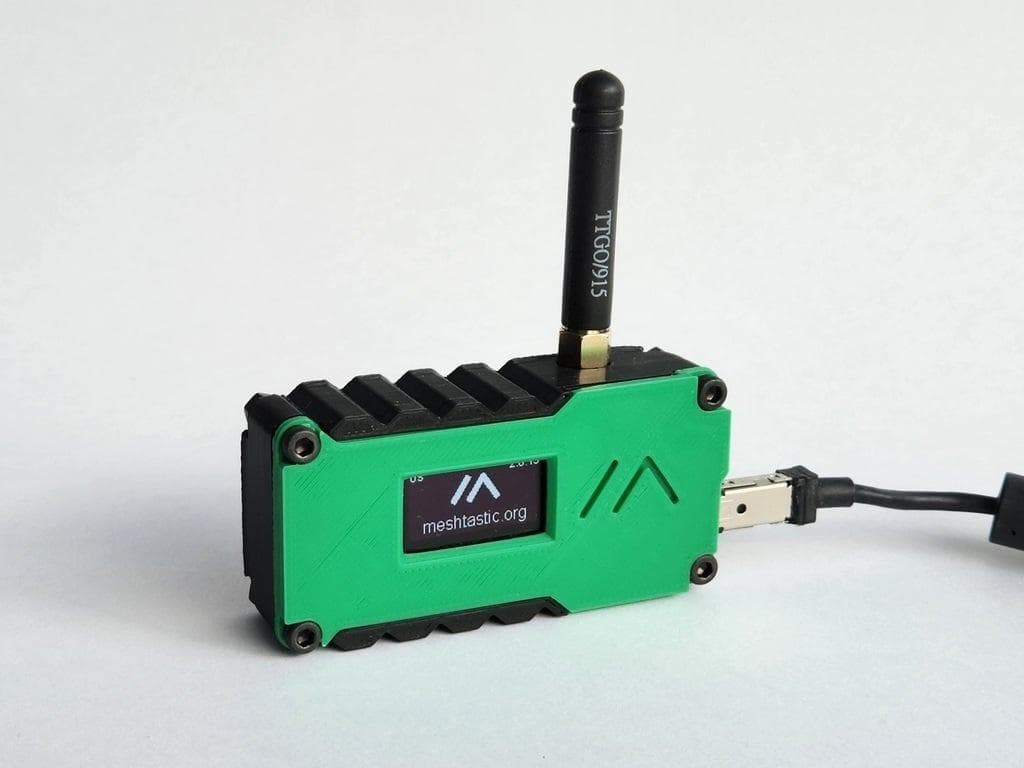
Meshtastic is at its best when the cell bars disappear and the job still has to get done. The South Africa guide treats it that way: as a working off-grid system for check-ins, coordination, telemetry, and rescue, built on inexpensive LoRa radios rather than a fragile promise of coverage. The real lesson is not that the mesh is clever, but that it changes what you can still communicate when terrain, distance, and infrastructure all start working against you.
What Meshtastic actually is
Meshtastic describes itself as a community-driven, open-source, off-grid, decentralized mesh network for affordable, low-power devices. In practice, that means nodes form a shared radio network, messages can go to a public channel or to private channels, and the system keeps moving even when there is no conventional communications infrastructure nearby. That is why the project keeps showing up in the conversations that matter most to field operators: not as a chat toy, but as a lightweight layer for real-world communication.
The security model matters just as much as the mesh model. Meshtastic’s current documentation says private channels use a pre-shared key, while direct messages now use public-key cryptography with x25519 and AES-CCM. It also uses a trust-on-first-use model, which fits a decentralized mesh but puts the burden on operators to know who they are trusting the first time a node appears. If you are deploying it for coordination or rescue, that is not a footnote. It is part of how you decide which nodes belong in the circle and which ones do not.
Why the South Africa use case feels immediate
The South Africa guide moves quickly past the beginner pitch and into situations that feel operational: hiking, wilderness use, and rescue. Two connected nodes can talk directly, and if the path breaks, a third node can relay the message. That simple relay behavior is the heart of the system, because it turns a pair of radios into a chain that can bridge rough ground, valleys, and awkward distances.
That is also where the range testing matters. Meshtastic’s own test pages list a 331 km ground record and a 206 km air record, which helps explain why people keep imagining use cases that go well beyond casual campsite messaging. The guide’s rescue-oriented example is especially vivid: a battery-powered device might last around 24 hours and still be picked up from roughly 30 kilometers away with line of sight, such as from a helicopter searching for a missing person. In a country where hiking communities already talk about off-grid safety, that is the kind of scenario that makes the mesh feel concrete instead of theoretical.
Telemetry is where the mesh starts doing real work
The strongest practical argument in the guide is not messaging at all. It is telemetry. Meshtastic’s telemetry module can carry device metrics, environment metrics, air quality metrics, and health metrics across the mesh, which turns the network into a narrow but useful transport layer for status data. The documentation goes further, listing device metrics such as battery level, voltage, channel utilization, and airtime, plus environment, air quality, and health readings like heart rate, oxygen saturation, and body temperature.
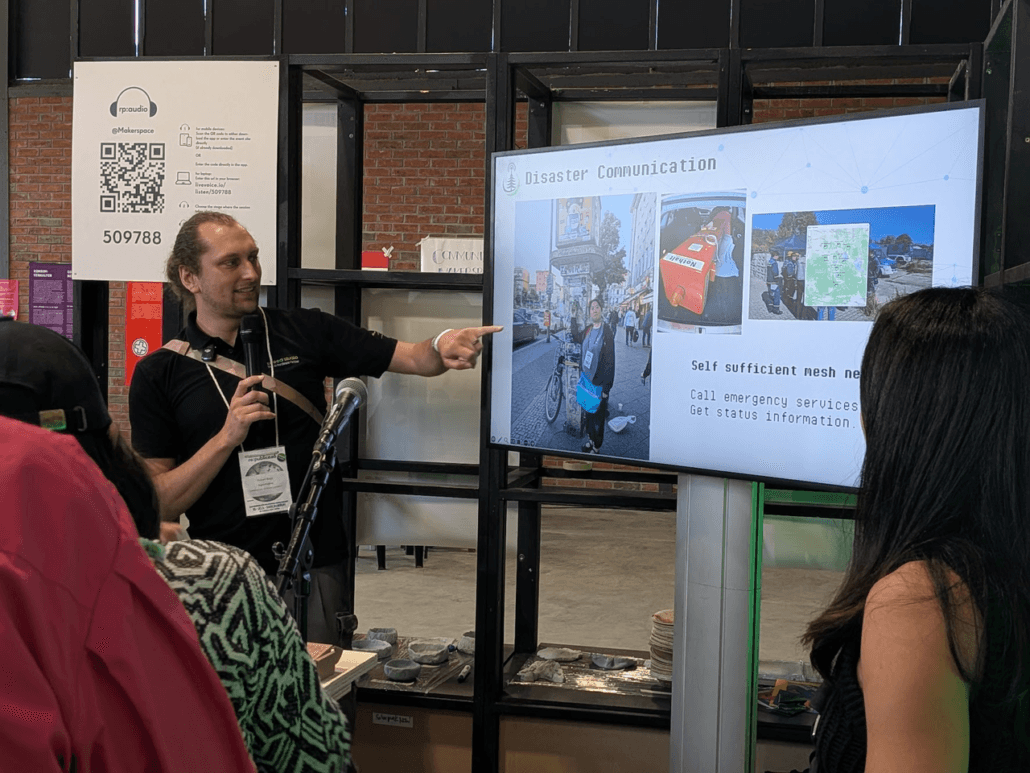
That opens up deployments that look much bigger than a radio hobby. The guide points to traffic lights reporting backup battery state of charge, and to sensors tracking water levels or diesel levels where there is no conventional network infrastructure. Those are exactly the kinds of jobs where a low-power mesh earns its keep: not high bandwidth, but dependable little packets that say whether something is alive, running low, or out of range.
For operators, the value is in what you can watch without standing next to the device. A mesh that carries telemetry lets you use the same radios for remote coordination and remote monitoring, which is a much better fit for scattered terrain than a voice-only setup. When the network is sparse, every status report becomes more valuable because it can tell you where to send help, where to wait, and where the gap in coverage actually is.

Planning the network is half the job
Meshtastic’s open-source site planner is the piece that keeps this from being guesswork. It predicts node range and coverage using antenna height, coordinates, and regional radio settings, which makes it a useful tool before you ever mount a radio on a ridge, mast, vehicle, or pack. If the first rule of off-grid networking is to respect terrain, the second is to respect placement.
A practical deployment habit set falls out of that pretty quickly:
- Put relay nodes where they can see more of the terrain, not where they are easiest to reach.
- Use antenna height deliberately, because the planner treats it as a real variable, not decoration.
- Match regional radio settings before you assume a link problem is really a hardware problem.
- Treat GPS-equipped nodes as more than conveniences, since the mobile app can show range and direction when location is part of the setup.
- Keep private channel keys controlled and understand the trust-on-first-use model before you rely on a node for sensitive coordination.
That planning mindset is what turns a few radios into something resembling infrastructure. The guide also points readers toward scenarios, parts lists, and a Meshtastic versus MeshCore comparison, which reinforces the same message: this is about deployment, not just theory.
A small network with a real footprint
South Africa is not just a hypothetical backdrop for the idea. Meshtastic’s local-groups directory exists to help people find or contact active regional communities, and ZA Mesh says it tracks 63 active nodes in the South African network. That does not make the system ubiquitous, but it does show that the mesh has moved from isolated experiments into a small, visible local presence.
The social signal matters here too. Discussion on the Hiking South Africa Forum has already linked Meshtastic to off-grid safety and rescue communication, which is exactly the sort of use case that gives the technology momentum beyond hobby chatter. Put together, the guide, the planner, the telemetry tools, and the local community footprint all point in the same direction: Meshtastic is becoming most useful where it behaves like field infrastructure.
That is the promise the South Africa guide makes so clearly. In a place where off-grid communication can stop being a nice extra and start being the only option, the value of a mesh is not that it feels futuristic. It is that a cheap node, placed well and trusted carefully, can still carry the message when everything else has already dropped away.
This article was produced by Prism’s automated news system from verified source data, official records, and press releases, then run through automated quality and moderation checks before publishing. The system is built and supervised by the people who set the standards it runs under. Read our full AI policy.
Know something we missed? Have a correction or additional information?
Submit a Tip