Seeed spotlights Meshtastic at re:publica, pushing off-grid resilience
Seeed used re:publica to cast Meshtastic as resilience gear for Berlin, showing 30-plus people how tiny LoRa trackers can keep comms alive off-grid.
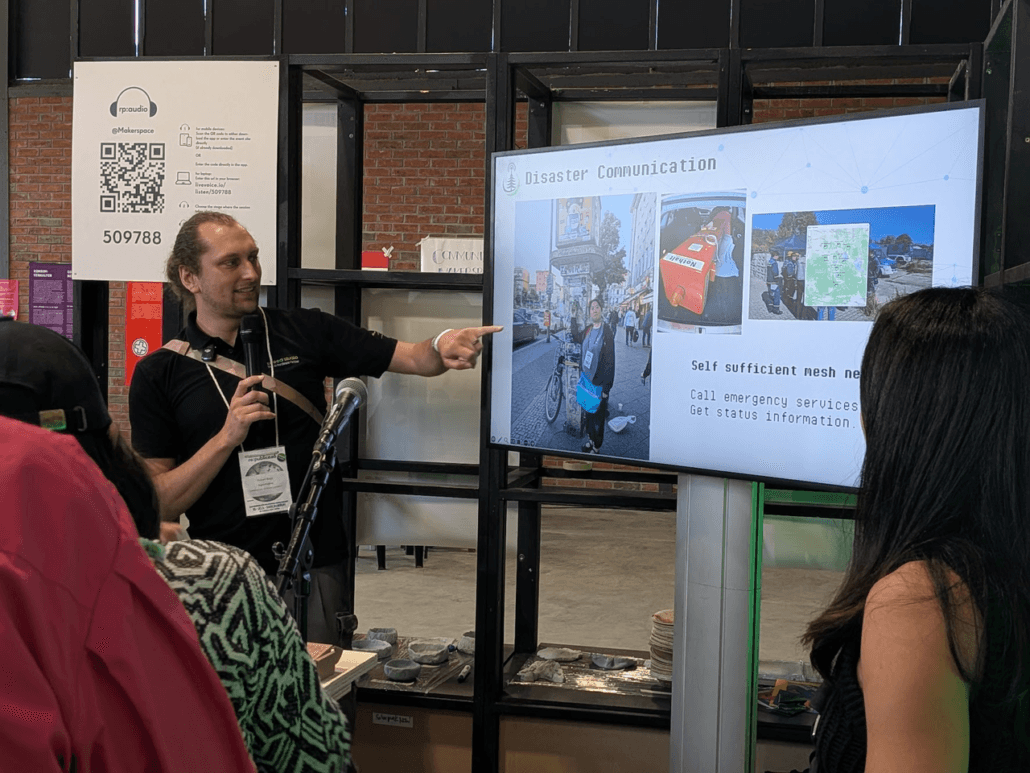
Seeed Studio used re:publica 2026 in Berlin to push Meshtastic well beyond the hobby table. In the makerspace it shared with Global Innovation Gathering at STATION Berlin, the company framed off-grid mesh networking as a citizen resilience tool, a fit for places where cellular service, Wi-Fi, or other conventional infrastructure cannot be counted on.
The clearest example was a hands-on session called Build Your Own Mesh, hosted by Seeed Ranger Robert Bogs. The workshop drew more than 30 participants and walked them through node setup and local mesh networking with the Wio Tracker L1 Pro and the SenseCAP Card Tracker T1000-E. Seeed presented the session as a working demonstration of how compact hardware can keep messages moving when the usual network path disappears, tying the experience to environmental monitoring, local sensing, and community-controlled communications.
That positioning was reinforced by the related workshop From Hardware to Mesh: Prototyping Off-Grid Communication Systems, which was scheduled for May 20, 2026 from 16:15 to 18:30 in the Maker Community Table track. The session named Lingping Huang, Rain Ye, Robert Kayna-Funkt, and Jinger Zeng as presenters, and its description said it was aimed at developers, makers, and innovators. Its focus was practical: mesh networking, LoRa radio communication, and edge device integration using Seeed’s Wio Tracker series, XIAO microcontrollers, and SenseCAP LoRa solutions.
Meshtastic’s own positioning makes the pitch easy to understand. The project describes itself as an open-source, off-grid, decentralized mesh network built to run on affordable, low-power devices, with no cell towers and no internet required. Its documentation says it supports text messaging, optional GPS-based location sharing, and encrypted communication, and that a phone is optional rather than required. For disrupted or remote environments, that is the difference between an experiment and a backup communication layer.
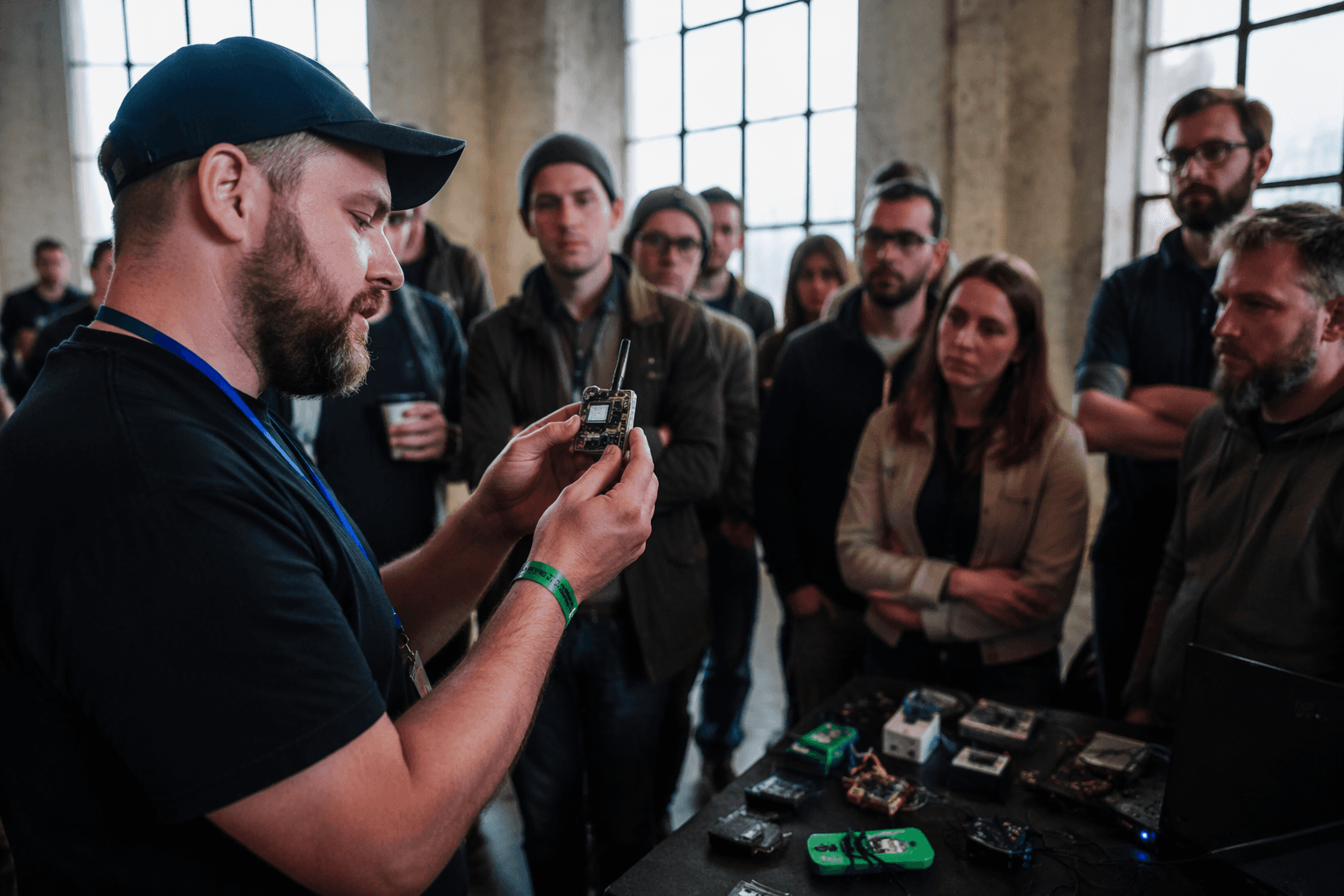
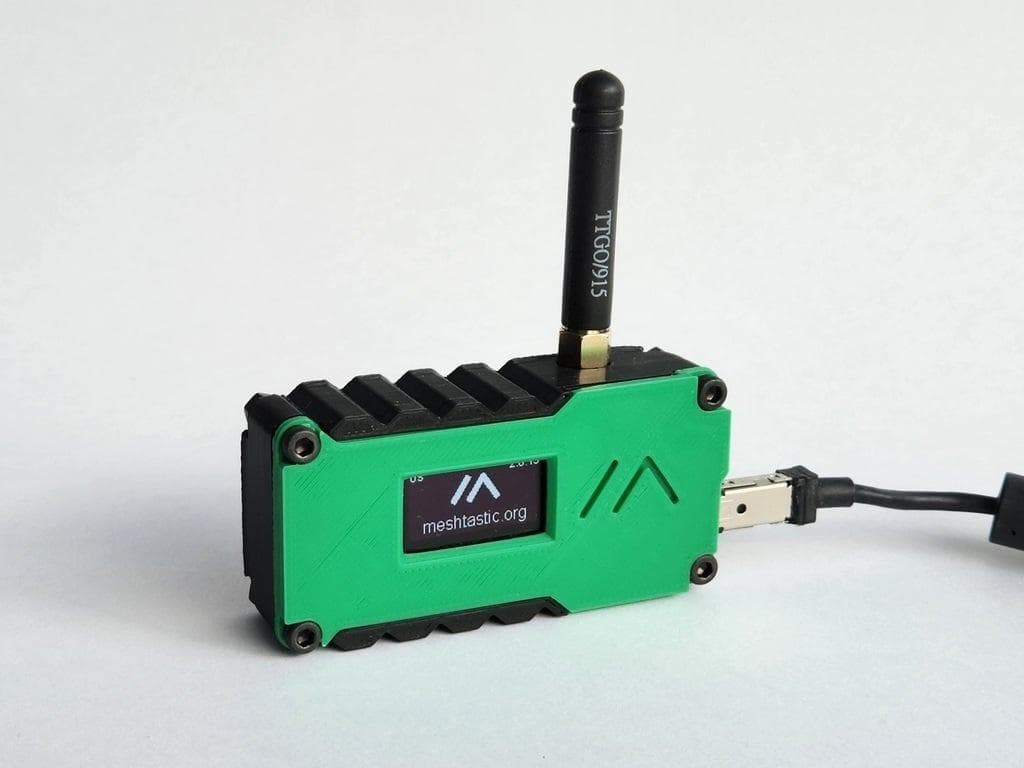
Seeed’s hardware choices underscored the point. The Wio Tracker L1 Pro combines a LoRa radio, a Nordic nRF52840 processor, and an L76K GPS module. The SenseCAP Card Tracker T1000-E is a credit-card-sized tracker that uses Semtech’s LR1110, Nordic’s nRF52840, and MediaTek’s AG3335 GPS module; Seeed says it is IP65-rated and weighs just 32 grams. Those are the kinds of specs that make sense for field use, not just bench testing.
Re:publica itself gave the message a bigger stage. The festival ran from May 18 to 20 at STATION Berlin, carried the motto Never Gonna Give You Up, and was billed as Europe’s largest festival for digital society with more than 1,000 speakers across more than 20 stages. Seen in that setting, Seeed’s Meshtastic push read as something larger than product visibility. It was a bid to place low-cost mesh networking inside the conversation about resilience, independence, and who gets to own the communications layer when normal networks fail.
This article was produced by Prism’s automated news system from verified source data, official records, and press releases, then run through automated quality and moderation checks before publishing. The system is built and supervised by the people who set the standards it runs under. Read our full AI policy.
Know something we missed? Have a correction or additional information?
Submit a Tip