Portuguese teen mindfulness scale validated in 2,345 adolescents
A five-item Portuguese mindfulness scale held up in 2,345 teens, with gender and grade invariance that could make school evaluation far easier.
A five-item mindfulness scale that held up in a sample of 2,345 Portuguese adolescents gives schools and youth programs a much sharper way to tell whether mindfulness work is actually landing. The new brief report matters because adolescent mindfulness research still rises or falls on measurement: if a scale shifts by gender or school grade, the numbers can blur who is benefiting and who is not.
The report, published in Mindfulness, tested the Portuguese short form of the Child and Adolescent Mindfulness Measure, or CAMM-5-PT, in students ages 12 to 18. The authors used confirmatory factor analysis, reliability checks, test-retest stability, convergent and divergent validity, incremental validity, and measurement invariance across gender and school grade. The scale showed excellent fit for a one-factor structure, strong internal consistency, high test-retest reliability, and stable performance across those subgroups.
That is the kind of result researchers have wanted for years. The original English CAMM was developed across four studies with a combined sample of 1,413 young people, and a 2015 validation in non-clinical adolescents had already flagged the need for more work on gender differences in mindfulness measurement. Portuguese researchers first reported the CAMM in 2013 in 410 adolescents with a mean age of 15.18 years, finding a single-factor structure, alpha of .80, composite reliability of .85, and test-retest reliability of .46. A 2022 Portuguese study then extended the measure into pre-teens and tied mindfulness to school achievement through executive functions.
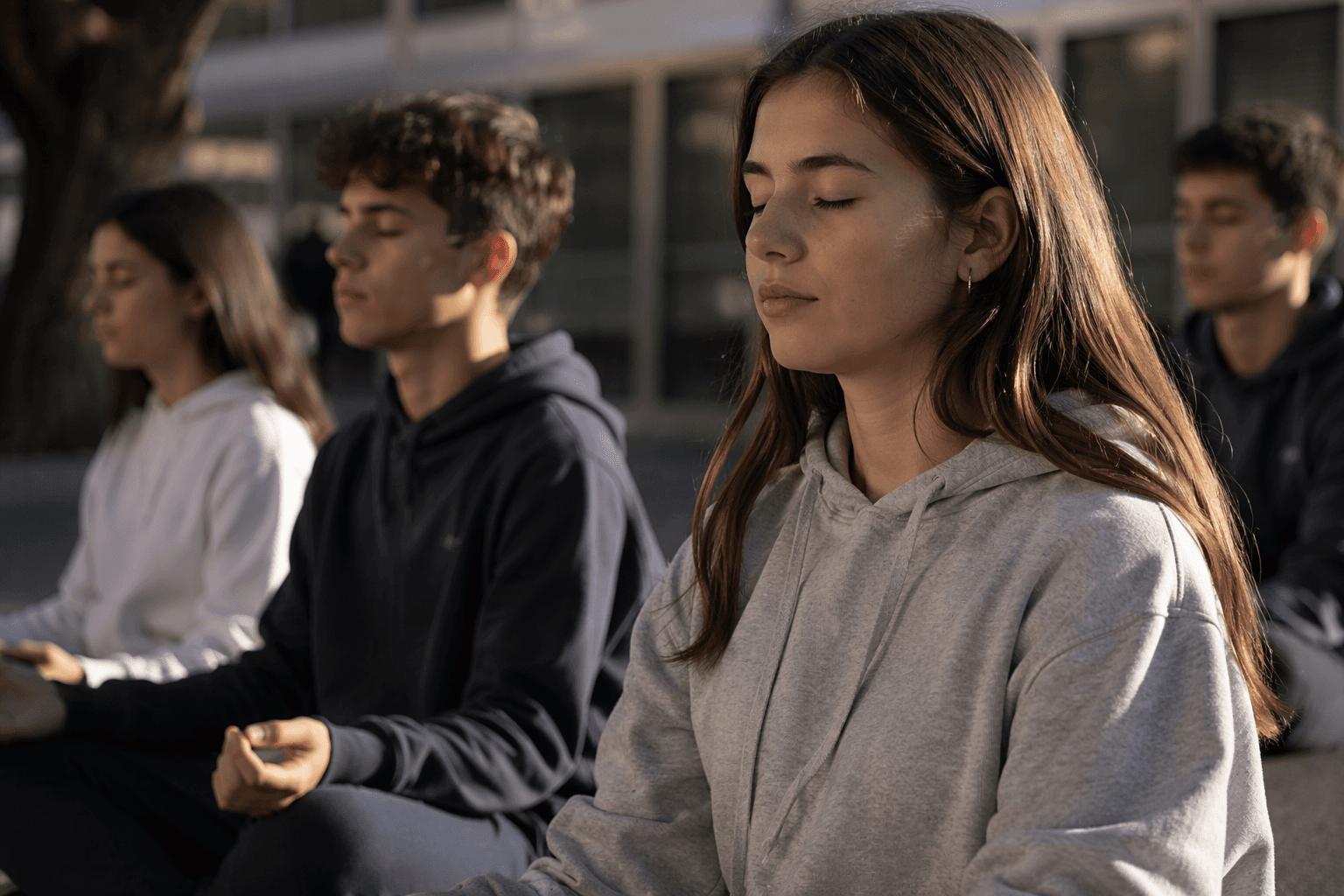
The new brief report also linked the CAMM-5-PT with psychological variables including depression, anxiety and psychological inflexibility, fitting the broader pattern in which more mindful adolescents tend to show better emotional functioning. That makes the five-item version especially practical in schools, public-health studies and youth mental-health settings, where a shorter questionnaire is often the difference between an evaluation that gets used and one that gets abandoned halfway through the year.
For teachers, counselors and researchers working with Portuguese-speaking teens, the takeaway is simple: better measurement is not a side issue, it is the foundation. A brief tool that stays steady across boys and girls, younger and older students, and still tracks the outcomes that matter gives mindfulness programs a way to prove their value without burying adolescents in paperwork.
This article was produced by Prism’s automated news system from verified source data, official records, and press releases, then run through automated quality and moderation checks before publishing. The system is built and supervised by the people who set the standards it runs under. Read our full AI policy.
Know something we missed? Have a correction or additional information?
Submit a Tip