Airbrushing Basics for Miniature Painters: Compressors, Airbrushes, Safety
Clear, practical steps to start airbrushing miniatures, focusing on compressor specs, airbrush choice, and safety essentials to protect health and paint jobs.
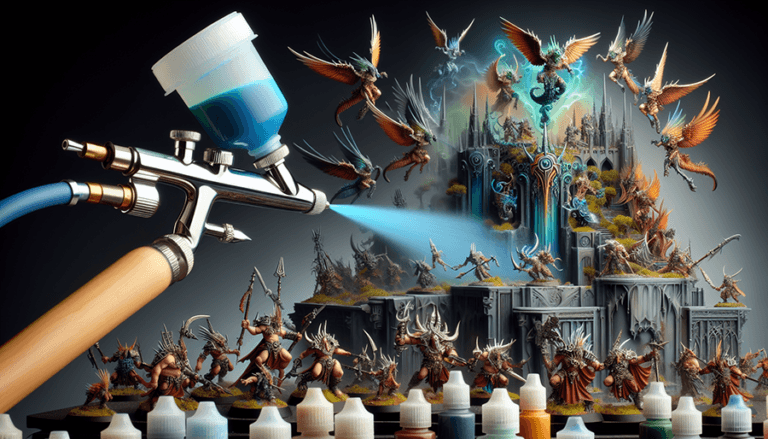
Airbrushing transforms miniature painting by delivering smooth, even coats and fast blending, but getting the basics right matters for results and safety. Choose a hobby-grade compressor that delivers about 1 to 2 CFM at 20 to 30 PSI and includes a moisture trap and regulator. That combination gives steady pressure for most miniature tasks while protecting thin paint from water contamination and keeping spray consistent from basecoat to highlight.
Pick an airbrush suited to miniature work. An HVLP or a siphon-feed dual-action airbrush paired with a 0.3mm to 0.4mm nozzle size covers the usual range of priming, basecoating, and detail work on 28mm to 54mm models. Dual-action control lets you vary airflow and paint flow independently, which is key for feathered blends and tiny highlights. The 0.3mm to 0.4mm tip balances fine control with the ability to lay down thin, even coats without constant clogging.
Safety and workspace setup come next. Work in a well-ventilated area and use a respirator rated for paint particulates and solvents to avoid inhaling atomized acrylics and additives. Install the compressor’s moisture trap close to the airbrush so condensation does not reach paint cups, and set the regulator to match the paint and nozzle - 20 to 30 PSI is a reliable starting range. Wear gloves and eye protection when handling thinners, cleaners, and paints to prevent skin and eye contact.
Paint preparation and maintenance determine your day-to-day success. Thin acrylics to the consistency recommended by your paint maker or until they flow smoothly through the 0.3mm to 0.4mm nozzle without sputtering. Test spray on a scrap surface before committing to a model to dial in pressure and trigger control. Clean the airbrush thoroughly after each session to prevent buildup; flushing with the appropriate cleaner and disassembling the needle and nozzle for periodic maintenance keeps spray patterns crisp and prevents damage.
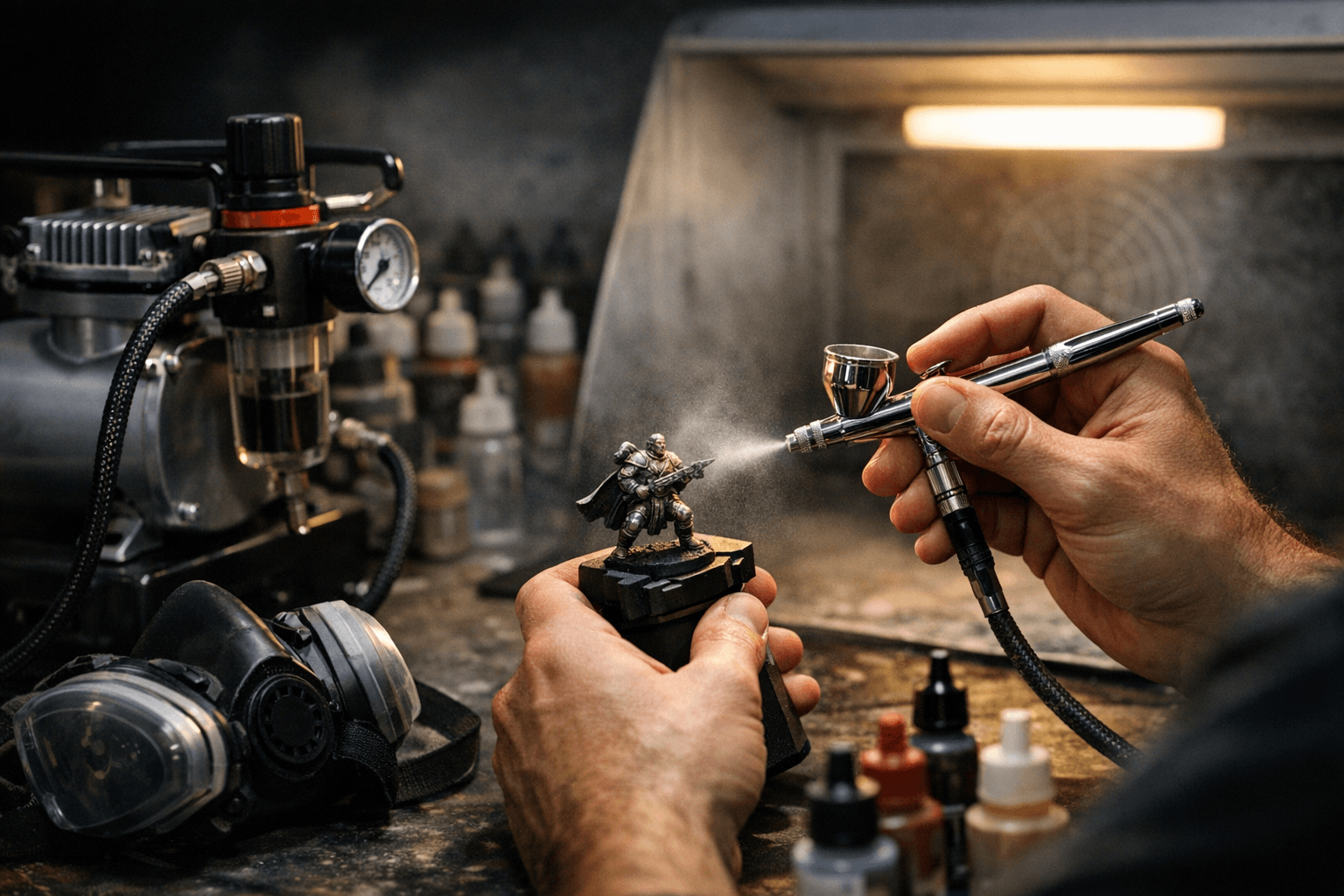
Practical investments matter more than premium brands. A reliable 1-2 CFM compressor with a regulator and moisture trap, combined with an HVLP or siphon-feed dual-action airbrush and a 0.3mm-0.4mm nozzle, will cover most miniature painting needs while minimizing headaches. Proper ventilation, a suitable respirator, and routine cleaning protect health and gear.
Getting these basics right speeds up tabletop prep, improves finishes, and reduces waste. Start with the recommended pressure and nozzle sizes, prioritize filtration and cleaning, and you’ll spend more time painting and less time troubleshooting.
Know something we missed? Have a correction or additional information?
Submit a Tip

