Army Painter Academy shows three ways to paint bold red Space Marines
Army Painter’s red tutorial turns one Space Marine into three clear workflows, showing when to use Speedpaint, Fanatic, or Air for clean armor that reads fast on the table.
Three roads to red
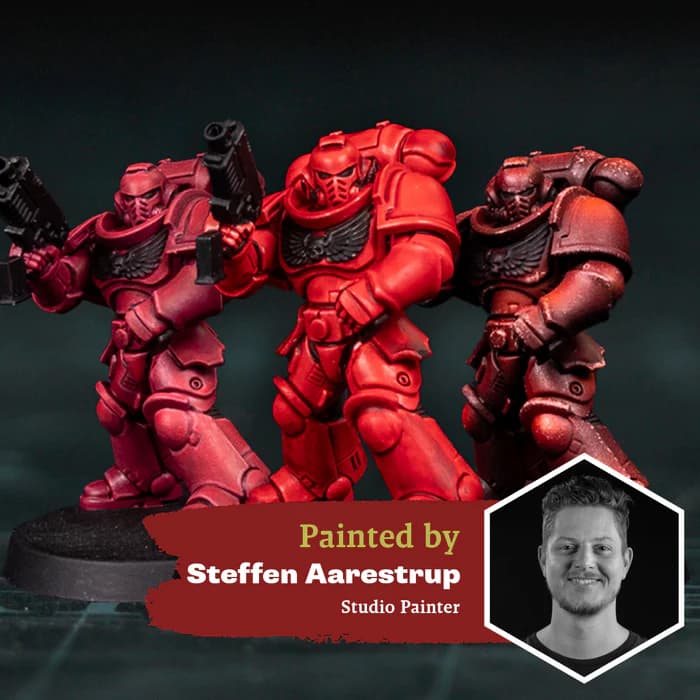
Army Painter’s Academy has put one of miniature painting’s hardest colors under the spotlight, and it does it in the most useful way possible: by showing the same Space Marine painted three different ways. The result is less a color lesson than a practical decision guide for anyone trying to get red armor, cloth, or vehicles to look bold without turning chalky, muddy, or flat.
Steffen, the studio painter fronting the tutorial, frames red as the boldest and fastest color in the hobby. That makes sense on the table, where red can dominate a force visually, but it also exposes every mistake in coverage and every weak highlight. The tutorial answers that problem with three distinct routes: Speedpaint, Warpaints Fanatic, and Warpaints Air.
Speedpaint for the fastest tabletop result
The Speedpaint version is the clearest choice when speed matters most. Army Painter describes Speedpaint as a one-coat painting solution, built to deliver shading and highlights in a single stroke, and that is exactly why it fits rank-and-file squads that need to look finished quickly. For anyone pushing through a Blood Angels unit, Khorne infantry, World Eaters, or any army where red needs to read across dozens of models, this is the route that gets paint on the battlefield fastest.
The specific recipe matters here. Steffen starts with Brainmatter Beige Colour Primer and then goes in with Speedpaint Blood Red. That combination gives the red a lighter foundation, which helps the color stay vibrant instead of sinking into a dull, heavy finish. If the goal is a clean, fast army scheme that still has punch on the table, this is the workflow that makes the most immediate sense.
Warpaints Fanatic for controlled, traditional red
Warpaints Fanatic is the path for painters who want more hand-built control. Army Painter positions the line as its premium acrylic range, with intense pigmentation, smooth application, and the Flexible Triad system, which is designed to make smooth color transitions easier to build. It is also not a small side range: Warpaints Fanatic contains 216 paints, a scale that underscores how seriously Army Painter treats it as a full painting system rather than just another bottle line.
In the red tutorial, the Fanatic Space Marine uses Uniform Grey Colour Primer. That choice is telling. A neutral, controlled undercoat gives the painter a stable base for layered opacity, cleaner edge work, and more deliberate highlights. If Speedpaint is the answer for getting a unit done quickly, Fanatic is the answer when you want that red to feel engineered, with stronger separation between shadows, midtones, and edge highlights.
Warpaints Air for the smoothest fades
The third path is the airbrush route, and it is the one for painters chasing the smoothest fades and the most controlled transitions. In practical terms, that makes it the strongest option for larger surfaces where brush strokes can break the illusion, especially on centerpieces, tanks, or characters with broad armor panels that need red to glow rather than simply cover.
Army Painter presents the Warpaints Air version as the same Space Marine handled through an airbrush-oriented workflow, which makes the contrast with the other two methods useful rather than theoretical. If you want soft shifts, controlled blends, and a finish that feels especially polished, this is the road that gives you the most refinement. It is the method that best suits showcase work, even when the subject is still a familiar Space Marine.
Why this comparison works for real armies
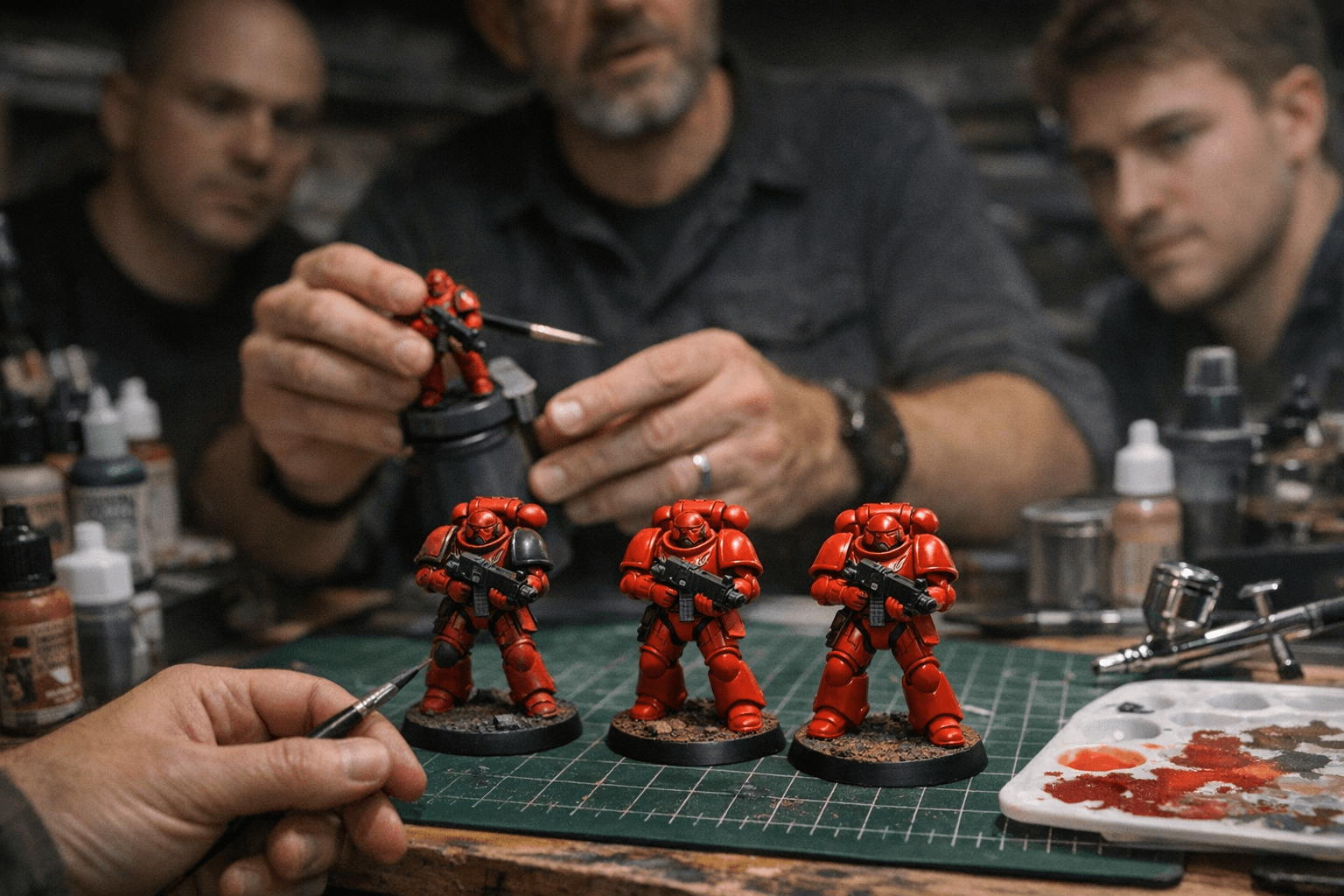
The strength of the tutorial is that it does not treat red as a single problem with one correct answer. It shows how the same model can be adapted to different tools, different time budgets, and different expectations on the tabletop. That matters in armies built around a dominant faction color, because red has to do more than look good on one model. It has to hold together across a whole force.
Army Painter’s approach also reflects a bigger shift in how hobby ranges are sold and taught. The company is not just pushing products in isolation. It is showing how its newer paint families work as a system, whether you want speed, traditional layering, or airbrush-assisted blending. That makes the tutorial useful to painters at different levels, from someone trying their first squad to someone refining a centerpiece model.
A recurring format in Army Painter Academy
This red feature is part of a broader Academy structure that Army Painter has already used for blue and green, so the “three ways” format is not a one-off gimmick. It is a deliberate way to teach across color families by comparing workflows rather than simply listing recipes. That format helps painters understand not just what color to use, but how each paint line changes the final result.
There is also a small publication wrinkle worth noting. Army Painter’s own blog archive dates “The Army Painter Academy: How to Paint Red Three Ways” to March 4, 2025, while the repost that surfaced through Olympic Cards and Comics is dated April 13, 2026. That later repost has helped the piece reach a wider audience again, which makes sense for a tutorial built around one of the hobby’s most commonly used and most difficult colors.
The company behind the lesson
The fact that this tutorial comes from The Army Painter matters too. The brand is based in Denmark, with its address listed in Skanderborg, and it has long positioned itself as a paint company for miniature and wargaming painters of all levels. Its product pages back up the tutorial’s logic: Speedpaint is marketed as a one-coat solution, while Warpaints Fanatic is pitched as a premium acrylic line with a Flexible Triad system and 216 paints in the range.
Army Painter has also described the launch of those 216 Fanatic paints as one of the most anticipated releases in the miniature-painting hobby. That helps explain why a red tutorial built around Fanatic, Speedpaint, and Air carries more weight than a simple how-to. It is effectively a live demonstration of how the company wants painters to think about its range: not as one paint line, but as three different solutions to the same hobby problem.
Red will always be a color that rewards confidence and punishes hesitation, and that is exactly why this Academy installment lands. It gives painters three believable answers, each matched to a different kind of project, from fast rank-and-file to polished centerpiece work.
This article was produced by Prism’s automated news system from verified source data, official records, and press releases, then run through automated quality and moderation checks before publishing. The system is built and supervised by the people who set the standards it runs under. Read our full AI policy.
Did this article answer your question?