Citadel Colour paints explained, what each miniature paint does
Citadel Colour is easier to buy and use when you treat it as a workflow, not a wall of bottles. Base, Shade, Layer, and the rest each solve a different step on the bench.
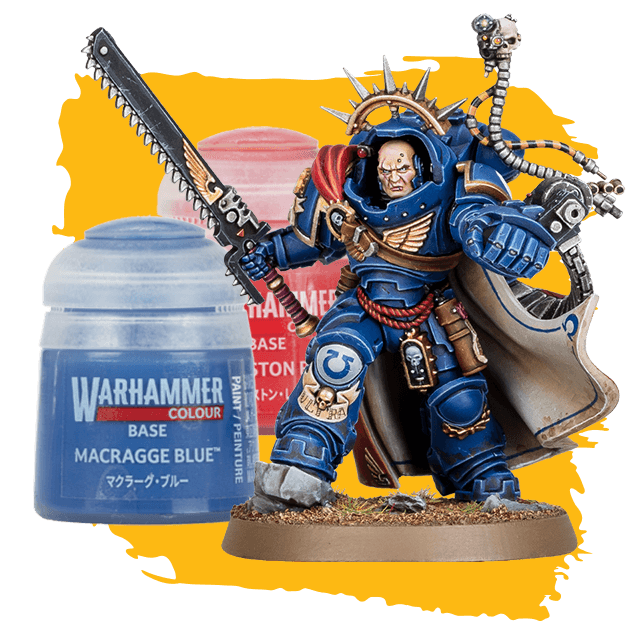
Games Workshop’s Warhammer Colour range splits hundreds of paints into Base, Layer, Shade, Dry, Contrast, Technical, and Spray, all aimed at painters at every skill level. The key for beginners is choosing the right tool for undercoat, coverage, shadows, highlights, texture, and finishing effects.
The paint range is a workflow, not just a catalog
Citadel Colour makes the most sense when you picture a model moving through stages. You start with a spray or undercoat, establish solid base color, deepen the recesses with shade, bring surfaces back up with layers, then use texture or effect paints where the model needs speed or special treatment. Each family answers a different miniature-painting problem.
Games Workshop has been painting miniatures for four decades. The range is built to get models on the table, whether you are painting your first troops or finishing a full army.
Base paints: the coverage bottle you reach for first
Base paints are designed for opacity, which makes them the safest choice when you need strong, even coverage over primer or undercoat. If you have ever fought a thin color that takes four coats and still looks patchy, that is the problem Base paints are meant to solve. They are the foundation for armor panels, cloth, skin, and any area where you want the underlying primer to disappear quickly.
For a beginner, Base paints are usually the least confusing category to understand because they do exactly what the name suggests. They give you a solid starting layer before you start refining the model, and they are especially useful when you want a clean, predictable first pass across a whole unit.
Layer paints: where the color gets refined
Layer paints are built for building color on top of a basecoat. In practice, they are what you use for controlled highlights, transitions, and color correction after the first coat has done the heavy lifting. Where Base paints solve coverage, Layer paints solve finesse.

This is the family that helps a miniature stop looking flat. You can use Layer paints to brighten raised areas, sharpen edges, and gradually move a color from dark to light without flooding details. If you want a helmet rim, robe fold, or shoulder pad to read clearly on the table, Layer paints are part of that process.
Shade paints: the fast route to depth
Shade paints are made to flow into recesses and create shadow. That makes them one of the most important tools in fast army painting, because they separate shapes quickly on small sculpts where every detail fights for attention. A good shade can define armor joints, cloth folds, teeth, chains, and rivets in a single pass.
They are also one of the most misunderstood categories, because they do not replace your base colors or layers. They support them. Use a shade when you need instant depth and value separation across a force.
Dry paints: texture work made simple
Dry paints are built for drybrushing, which is why they shine on textured surfaces like fur, fur cloaks, stone, bones, and battlefield debris. The lighter pigment catch brings out detail fast, especially when you want a worn, dusty, or weathered look. For bases and terrain, Dry paints can save a lot of time.
They are situational rather than universal. On smooth armor or polished weapons, drybrushing can look harsh if you overdo it, but on rock, skulls, rubble, bark, and rough cloth, it is one of the quickest ways to make details pop. If you paint a lot of basing material, Dry paints are easy to justify.
Contrast paints: speed with built-in depth
Contrast paints sit in their own category because they are often used as a shortcut for color and shadow in one pass. They are especially handy on cloth, armor plates, organic surfaces, and quick tabletop projects where you want the model to read well without building every step manually. For many painters, they are the fastest route from primer to a convincing tabletop finish.
That said, Contrast is not magic, and it is not a replacement for every other family. It works best when you understand where you want speed and where you still want control. Games Workshop’s 2022 refresh, “A New Era of Paints,” included new Contrast colours and reformulated Shades.
Technical paints: the special-effects drawer
Technical paints cover the jobs that standard colors do not. They are the paints you reach for when you need effects, unusual textures, or finishing tasks that go beyond base, layer, and shade work. That can include anything from surface treatment to special detailing, which makes Technical paints more situational than essential, but very useful when a model needs a specific finish.
This is the category beginners often buy too early because the bottles look exciting. The better rule is simple: buy Technical paints when you already know the effect you need. If you do not have a plan for a texture or finish, the bottle can sit unused while your Base, Layer, and Shade paints do the real work.
Spray paints: the fastest way to start clean
Spray paints are the foundation for primers and fast base color application. They matter because they set the tone for everything that follows, whether you are using them just to prime or to lay down a first color pass across a batch of miniatures. A good spray step saves time later by giving you an even start.
Games Workshop’s 13 June 2022 refresh included a new white spray.

What to buy first, and what to treat as situational
If you are standing at the rack trying to avoid bad purchases, think in terms of problems, not product names. Start with the families that solve the most common tasks in a normal painting workflow:
- Base for coverage
- Shade for shadows and definition
- Layer for highlights and refinement
- Spray for priming and quick starts
Then add the more situational tools as your projects demand them:
- Dry for rough textures and terrain
- Contrast for fast tabletop results
- Technical for special finishes and effects
Why the range keeps getting attention
Contrast paints first arrived as a major new product line in 2019 and immediately sparked a lot of hobby discussion. Warhammer Community later expanded the line again with “10 Dazzling New Contrast Paints and How To Use Them.” A 2024 Reddit thread was still asking whether Contrast paints were being phased out.
A 2023 trade-page description called Citadel Colour “the premier paint miniature range in the world,” and a follow-up Warhammer Community piece showed the Warhammer TV painting team using the refreshed range in-house.
This article was produced by Prism’s automated news system from verified source data, official records, and press releases, then run through automated quality and moderation checks before publishing. The system is built and supervised by the people who set the standards it runs under. Read our full AI policy.
Did this article answer your question?