Filgja’s Catalina showcases dramatic textures in Sirens’ Armada miniature
Filgja’s 75mm Catalina turns Sirens’ Armada into a stormy showcase, where texture, temperature shifts, and a sharp silhouette do the talking.
Filgja’s Catalina, The Caribbean’s Silent Storm, is the kind of 75mm display piece that makes a community feed stop scrolling. Presented as a painted project from Michael Kontraros’s Sirens’ Armada collection, it sits firmly in the showpiece lane, where the goal is not battlefield utility but visual impact, close inspection, and a finish that rewards photography. The entry already drew a reaction calling out its “cool textures!”, which tells you exactly what this miniature is selling: surface control, not just color.
A showcase piece built for close reading
The first thing that separates Catalina from a standard rank-and-file paint job is scale. At 75mm, the figure has room for subtler transitions in skin, cloth, and weathered details, and that extra size changes how the paint job needs to read. Small mistakes that might vanish on a gaming miniature become part of the story here, while strong texture work becomes a feature instead of a flourish.
That matters because the platform context is just as important as the sculpt. Filgja had 10 projects on the site, and this entry had 17 views, which gives the piece the feel of a community conversation rather than a mass-audience reveal. This is a model made to be seen, reacted to, and discussed by painters who know exactly how much discipline it takes to make a display model feel alive.
Why the Caribbean storm concept lands
The title does a lot of heavy lifting. “The Caribbean’s Silent Storm” frames the miniature as something between beauty and threat, and that tension is where the paint scheme gets its strength. A concept like that works best when the palette keeps warm and cool notes in play at the same time, so the eye feels both heat and weather pressure in the same frame.
For a fantasy maritime subject from Sirens’ Armada, the silhouette and theme already suggest motion, sea spray, and a character who belongs to a volatile shoreline rather than a calm harbor. That opens the door to color choices that lean into contrast rather than harmony alone. Deep sea tones, storm-dark shadows, and selective bright accents can make the figure feel like it is carrying the atmosphere around with it instead of standing apart from it.
What makes this kind of concept compelling is that it refuses to behave like a single correct paint job. A Caribbean storm can be sunlit and oppressive, beautiful and dangerous, polished and rough in the same glance. That gives the painter room to build a narrative through the palette instead of just dressing the sculpt.
Skin, fabric, and sea-toned accents do the storytelling
On a 75mm fantasy miniature, skin and fabric are not secondary surfaces. They are the places where the whole temperature of the piece gets decided. Warm skin tones can keep the figure human and inviting, while cooler cloth, shaded folds, or storm-toned garments can push the same model toward menace and atmosphere without losing clarity.
Sea-toned accents are especially useful in a piece like this because they tie the character back to the title without flooding the whole model in blue. A controlled edge of turquoise, teal, green-gray, or salt-worn highlights can suggest marine influence and still leave room for the warmer notes that keep the miniature from going flat. That restraint is what keeps the concept readable at a glance and rewarding up close.
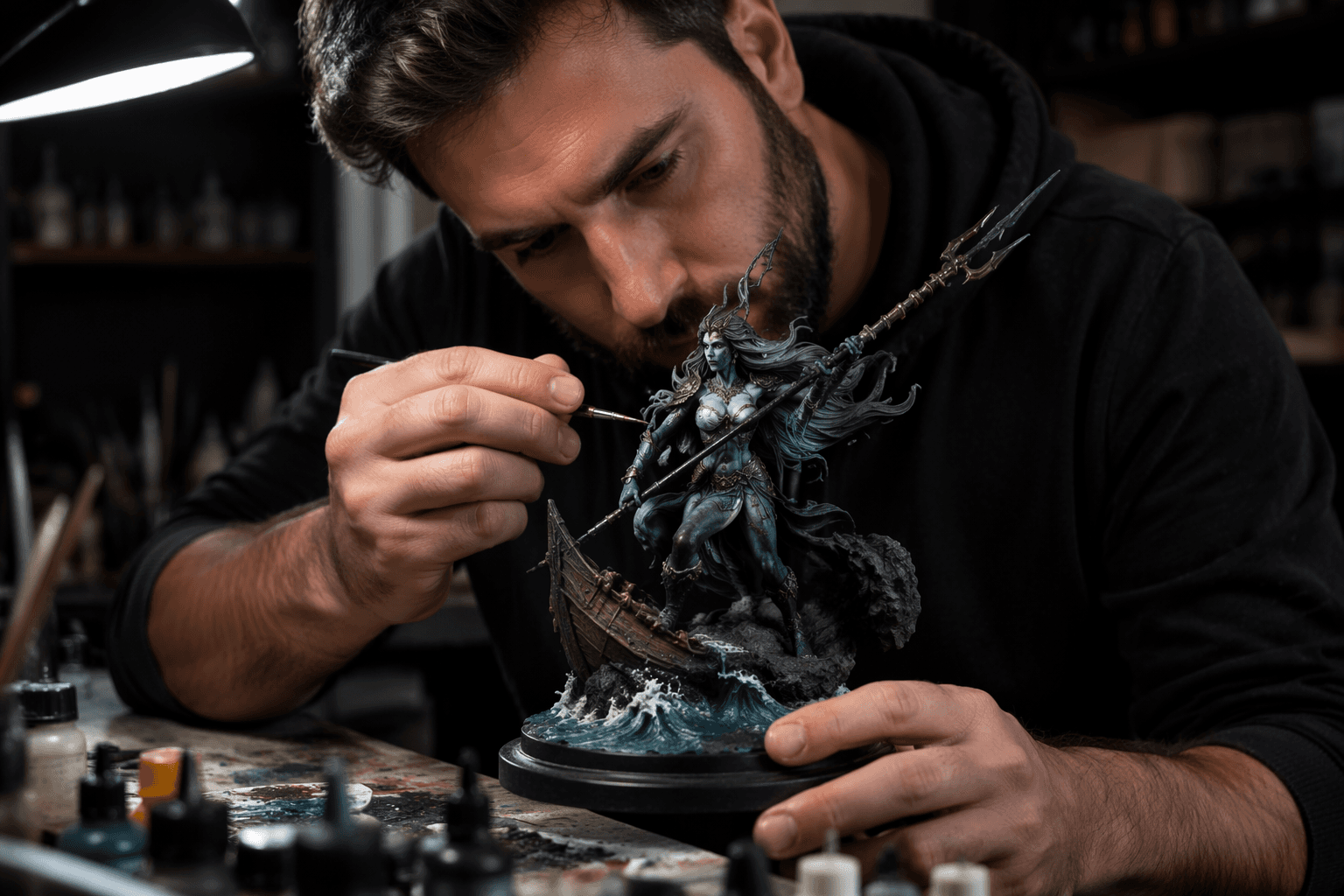
The “cool textures!” reaction makes sense in that context. Texture is often what turns a themed miniature from a nice color arrangement into a convincing scene. Skin that looks lived in, fabrics that carry weight, and surface finishes that distinguish wet, rough, or wind-beaten areas all help sell the idea that the model exists in weather, not just on a paint stand.
Why the presentation matters as much as the paint
Because this is a community showcase entry, presentation is part of the paint job whether the artist intends it that way or not. A display piece like Catalina has to perform in photographs, in a feed, and in the quick scan of someone browsing through other projects. That means the finish needs enough contrast, enough texture, and enough clarity that the eye immediately understands the model’s mood.
Sirens’ Armada is clearly the sort of range that rewards that approach. A themed collection with a maritime fantasy identity is already doing some narrative work before the brush even hits the miniature, and that is exactly why this piece has room to breathe. The painter is not forced to invent the whole concept from scratch; instead, the job becomes pushing the sculpt toward a memorable interpretation, then presenting it cleanly enough that the drama survives the camera.
- Keep warm and cool temperatures in tension so the piece feels like weather, not just costume.
- Let skin and fabric do different jobs, with skin carrying life and fabric carrying atmosphere.
- Use sea-toned accents sparingly so the maritime theme reads as an echo, not a saturation wash.
- Treat texture as a storytelling tool, especially on a 75mm display model where every surface gets noticed.
- Present the miniature like a finished scene, because a public showcase post lives or dies by first impression.
Catalina works because it understands that a storm is not only a subject, it is a set of visual decisions. Filgja has taken a 75mm Sirens’ Armada figure and turned it into a miniature that gets its power from temperature shifts, texture, and the confidence to let the silhouette and finish carry the drama. That is why the piece feels at home in a showcase feed and why it leaves such a clear idea behind for the next painter reaching for a large fantasy display model.
This article was produced by Prism’s automated news system from verified source data, official records, and press releases, then run through automated quality and moderation checks before publishing. The system is built and supervised by the people who set the standards it runs under. Read our full AI policy.
Know something we missed? Have a correction or additional information?
Submit a Tip