Goonhammer revisits StarCraft Terran Marines with a painting guide
The Terran Marine still defines StarCraft at a glance, and this guide shows how to turn that classic grunt into a sharp, display-ready miniature with modern metallics.
The Marine that everyone recognizes
The Terran Marine is StarCraft’s visual shortcut: one look at the powered armor, oversized rifle, and hard-edged silhouette, and the whole universe clicks into place. That is why this painting guide works so well as a nostalgia piece. It starts with an icon that has appeared in several forms across StarCraft, StarCraft: Remastered, and StarCraft II, then uses that history to show how to keep the model instantly readable on the table.
What makes the Marine such a strong project subject is how much personality Blizzard has always packed into the unit. Terrans are framed as scrappy improvisers who rely on cobbled-together technology and cost-effective combined-arms warfare, while later StarCraft II material makes the Marine’s role even clearer as a front-line grunt in powered armor with a C-14 gauss rifle. That combination of rough utility and iconic sci-fi design gives painters a lot to work with without forcing a complicated scheme.
Why the visual history matters
The guide leans hard into the differences between the original StarCraft Marine, the remastered look, and the StarCraft II redesign because each version solves the same problem in a slightly different way. The original version pushes stronger team colour cues and a more toy-like read. StarCraft: Remastered sharpens the presentation. StarCraft II goes for higher contrast, with a mag-locked combat shield, clearer heraldry, and a visor that shifts toward yellow, orange, and gold.
That evolution matters because it gives painters permission to choose the version of the Marine they want to evoke. If you want the pure nostalgia hit, the brighter, more saturated original language is right there. If you want the model to feel like a cleaner modern studio piece, the later games provide a much crisper reference point. The guide’s strength is that it does not pretend there is one correct Terran Marine scheme. It treats the unit’s visual history as a toolbox.
A modern take built around metallic armour
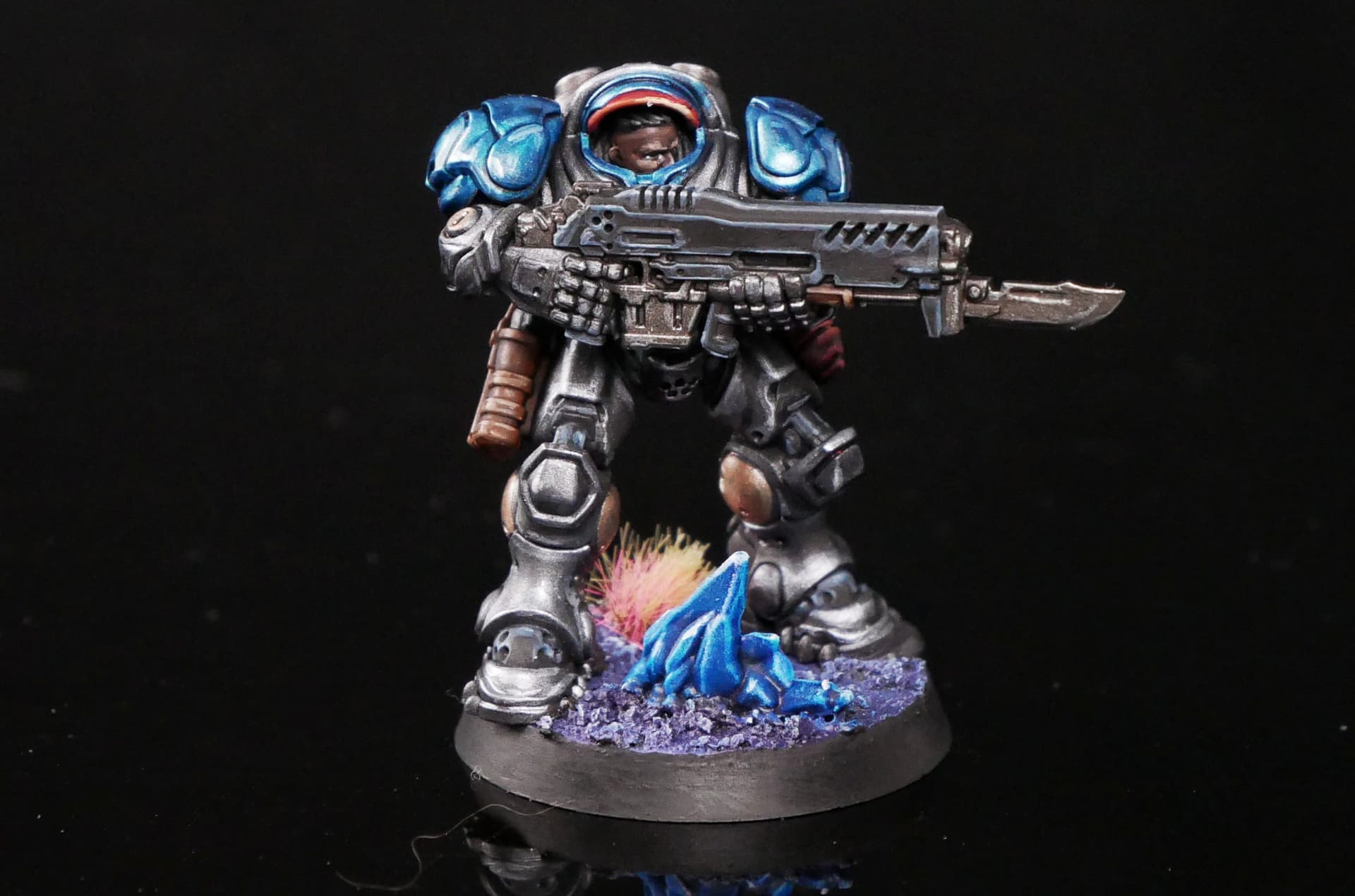
The paint approach in the guide keeps the classic Marine identity intact while updating the finish. The chosen version leans toward the original StarCraft Marine, but with brighter steel armour and strong faction colour cues, which helps the model read from a distance and still look good in close-up photos. That is exactly the sweet spot most tabletop painters want: enough shine to sell the powered armor, enough contrast to keep the model from turning into a flat silver block.
This is also where Vallejo True Metallic Metal becomes especially useful. Vallejo frames the TMM system as a way to represent realistic metallic surfaces using metallic paints, and the Marine is an ideal test bed for that kind of range. Armour plates, shoulder edges, and weapon surfaces all benefit from reflective metal that still lets colour accents do the storytelling. Instead of treating metallics as a gimmick, the guide uses them to make the suit feel heavy, functional, and recognizably Terran.
A practical approach here looks like this:
- Use bright metallic steel as the main armour tone so the silhouette stays clean.
- Reserve faction colour for panels, trims, and heraldic details so the Marine stays readable.
- Push the visor into the yellow-orange-gold range if you want the later StarCraft II feel.
- Keep the weapon and armour finish consistent across the squad so batch-painted units still look unified.
That balance is what makes the scheme shareable. It feels like StarCraft, but it is still a miniature project that looks current on an Instagram feed, in a cabinet, or packed into a full squad shot.
Why this is a good batch-painting project
The Terran Marine is one of those rare subjects that works both as a center model and as a line of troops. The whole design language is built around repetition: chunky armour, bold visor, rifle forward, team colour doing the branding work. That means the same scheme can carry a whole force without turning every model into a separate showcase piece.
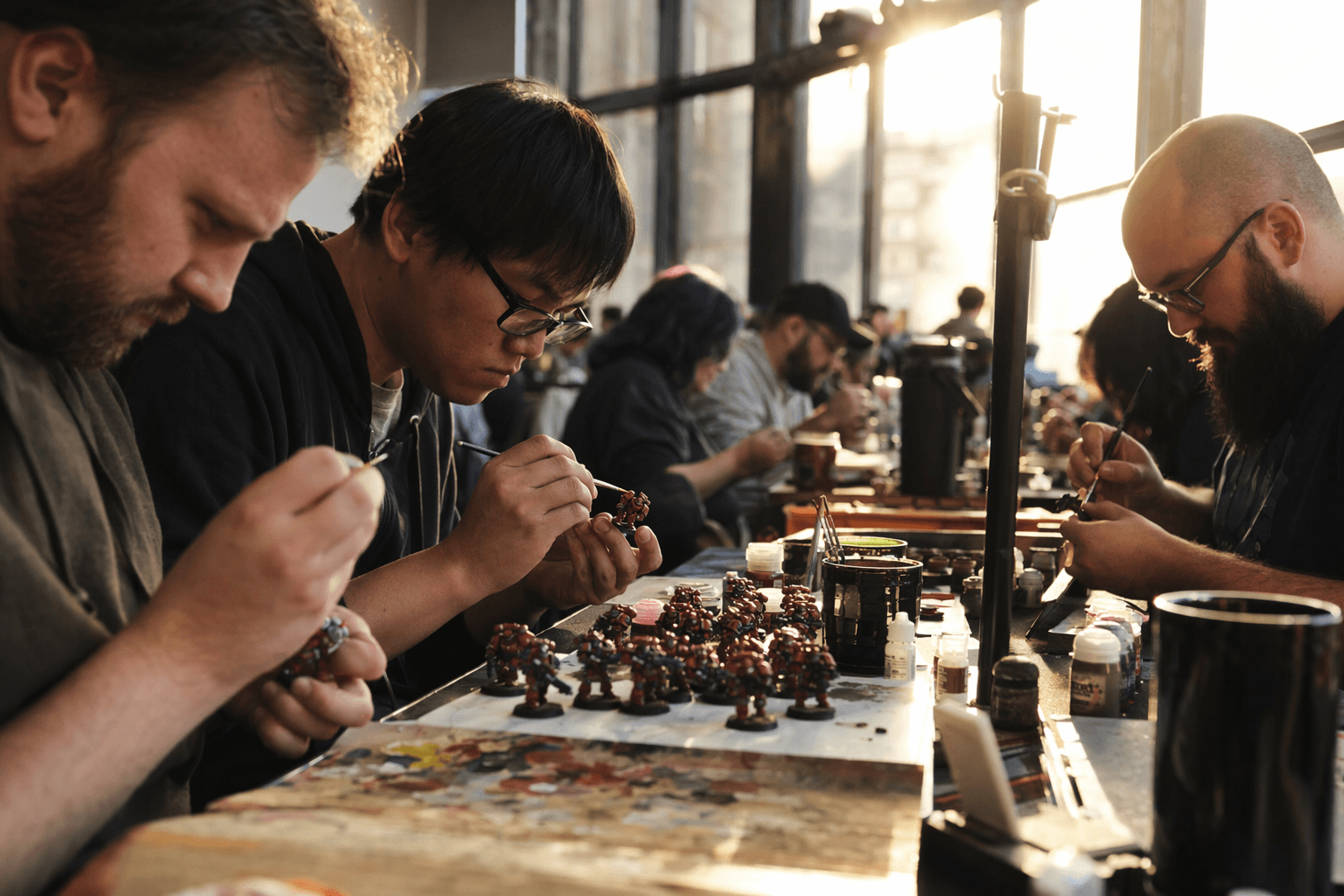
For painters, that is a real advantage. A Marine squad can be handled as a batch project with simple, repeatable steps, or broken down into one or two standout troopers with extra attention on reflections, visor glow, and heraldic marking. The model rewards both approaches because the unit identity is so strong. Even one carefully finished Marine still looks like the same soldier who belongs in a full Terran line.
The tabletop release makes the guide especially relevant
This guide lands in the middle of a real tabletop rollout, and that gives it extra weight for anyone building StarCraft miniatures now. Archon Studio has announced its official partnership with Blizzard Entertainment, with the StarCraft Tabletop Miniatures Game planned for 2026 and StarCraft board games following in 2027. The Marine set itself is built for hobby use, containing 9 Marine miniatures, 9 32mm bases, 3 cards, and 1 assembly manual, and it requires manual assembly and painting.
The scale of the launch explains why a Marine painting guide matters right now. Archon’s May 2026 FAQ says it has added 3 new injection machines, is preparing 300,000 individual boxes, including 95,000 starter sets, and expects pre-orders to begin shipping on May 25 with roughly a two-month fulfillment window. That is a serious production push, not a niche resin drop, and it means a lot of players are going to need a fast, practical way to get their first Terran troops table-ready.
A classic grunt, done the right way
The best thing about the Marine is that it still works as both memory and model. It carries the rough-and-ready Terran identity that Blizzard built around outcasts, improvised tech, and hard-soldier pragmatism, while also giving painters a clean surface for metallics, team colour, and visor work. A bright steel scheme, a few disciplined faction accents, and a careful metallic finish are enough to make the miniature feel like StarCraft the moment it hits the table.
That is why the Marine keeps coming back. It is the face of the faction, the face of the game, and, with the right paint, the kind of model that can still look like it stepped straight out of the Koprulu Sector.
This article was produced by Prism’s automated news system from verified source data, official records, and press releases, then run through automated quality and moderation checks before publishing. The system is built and supervised by the people who set the standards it runs under. Read our full AI policy.
Did this article answer your question?