Goonhammer shows a blue-green XMP scheme for Stealing the Horizons
XMP's blue-green armour makes Stealing the Horizons pop, and Keewa's airbrush-first method shows exactly what to borrow for your own sci-fi troops.
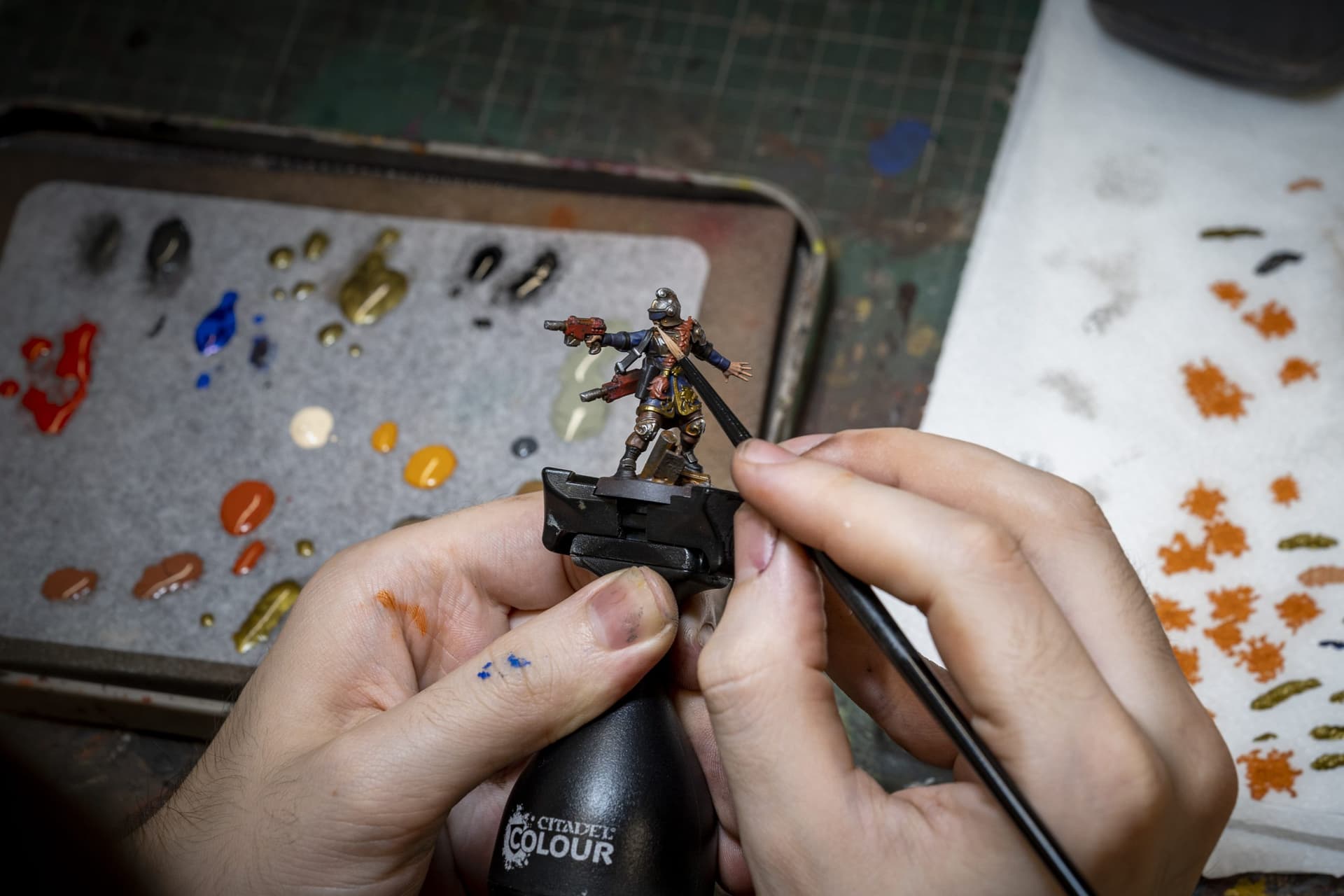
Goonhammer’s XMP guide gives Stealing the Horizons a painter-first angle that is easy to use the moment you see it. The blue-green armour, the sharp material separation, and the airbrush-led build make this faction feel less like a showcase piece and more like a scheme you can actually repeat across a full force.
Why the XMP scheme stands out
Stealing the Horizons is set in Khaeedorra, a sci-fi fantasy world where factions fight over the wreckage of a shattered planet and the floating objective anomalies called the Horizons. That backdrop matters, because the XMP scheme needs to read clearly against a battlefield full of rubble, machines, and shifting terrain, and this one does it with contrast rather than clutter.
What makes the guide useful is how firmly it ties the paint job to the game’s identity. The models come from one of the playable factions in the starter box, and the same-day Descendants piece confirms that the launch set contains two factions. In other words, this is not just a one-off display treatment. It is a way to establish a faction quickly, cleanly, and with enough visual punch that the troops still look coherent when they are lined up beside another army from the same box.
The blue-green backbone
Keewa builds the XMP armour around an Army Painter Fanatic blue-green flexible triad, and that is the first thing worth stealing for your own minis. The darkest step becomes the shadow base, then the tone climbs gradually toward the main colour and highlights through the airbrush. That sequence does the heavy lifting early, so the army already has depth before a brush comes anywhere near the model.
The strength of that choice is consistency. A flexible triad gives you an obvious range of values without forcing you to improvise every transition, and that makes it easier to repeat the look across infantry, larger machines, and any future additions to the faction. If you want the same effect on another sci-fi force, start by locking in a three-step colour family and let the airbrush establish the volume first.
- Choose a triad that naturally moves from shadow to midtone to highlight.
- Spray the darkest shade into the recesses and lower areas first.
- Build toward the brighter tones only after the broad shapes are already mapped out.
- Keep the armour smooth before moving on to texture and detail.
What to copy first:
How the scheme keeps its contrast
Once the armour is established, the guide moves into the details that make the miniatures pop on the table. Weapons are pushed into darker greys, which keeps them visually separate from the brighter armour plates without stealing attention from the blue-green core of the scheme. Metallic parts are also split into dark and light groups, so the painter can shade and highlight them differently instead of treating every metal surface the same way.
That division is one of the smartest parts of the recipe. It stops the model from becoming a single mass of cool-toned machinery and gives each component a job: armour carries the faction identity, weapons add weight, and metal surfaces break up the silhouette. If you are adapting the look to your own army, follow that same logic before you worry about tiny finishing touches.

Yellow gets special treatment too. The guide stresses that yellow is best blocked over a white base coat, because yellow over anything darker turns into a fight you do not need. That advice is as practical as it gets for miniature painting: when a colour is naturally weak, give it a bright foundation and let the base coat do the rescue work.
Texturing the white stripes and mechanical surfaces
The XMP mechs do not rely on perfect, factory-clean markings to look finished. Washi tape is used for the white stripes, then the markings are roughened with a sponge so they read as textured and worn rather than like printed decals. That small move keeps the machine surfaces from looking sterile and gives the paint job a hand-built character that suits the battered world of Khaeedorra.
The same thinking carries through the larger quadrupedal mech. Keewa masks off the sections already completed and repeats the airbrush process, which keeps the whole machine consistent without flattening the model into sameness. That is especially useful on larger centerpiece kits, where a single colour recipe can easily start to look repetitive if every panel is treated identically.
A final pass of Speedpaint ties the yellow panels together and adds another layer of tonal interest. Instead of treating the yellow as a single flat block, the extra glaze-like layer helps the panels feel integrated with the rest of the machine. It is a good reminder that a strong scheme often comes from one last unifying step, not from piling on more colours.
What this guide gives painters right now
The real value of the XMP showcase is that it turns a faction scheme into a toolkit. You get an airbrush-first way to establish volume, a simple method for splitting armour, weapons, and metals into readable families, and a smart answer for problem colours like yellow. You also get a texture trick for white striping that makes the mechs feel used instead of over-clean.
That combination matters because Stealing the Horizons is built around motion, objectives, and faction identity, not just firefights. Between the 2-player skirmish structure, the Kickstarter description of built-in problem solving, and the launch box’s two factions, the game already asks for armies that can be identified fast on the table. The XMP scheme answers that brief with a palette that is vivid, readable, and easy to scale.
The blue-green armour is what catches the eye, but the real lesson is the system underneath it. Keewa’s recipe works because it starts with structure, not decoration, and that is exactly why the XMP scheme is the bit worth borrowing first for your own minis.
This article was produced by Prism’s automated news system from verified source data, official records, and press releases, then run through automated quality and moderation checks before publishing. The system is built and supervised by the people who set the standards it runs under. Read our full AI policy.
Did this article answer your question?