Gorram's Last-Minute Swarm: Quick Paint Choices for Beginner Tournament
gorram pulled a last-minute paint sprint to get a swarm army table-ready for a beginner tournament, showing practical, repeatable steps for speed painting and prepping to play.
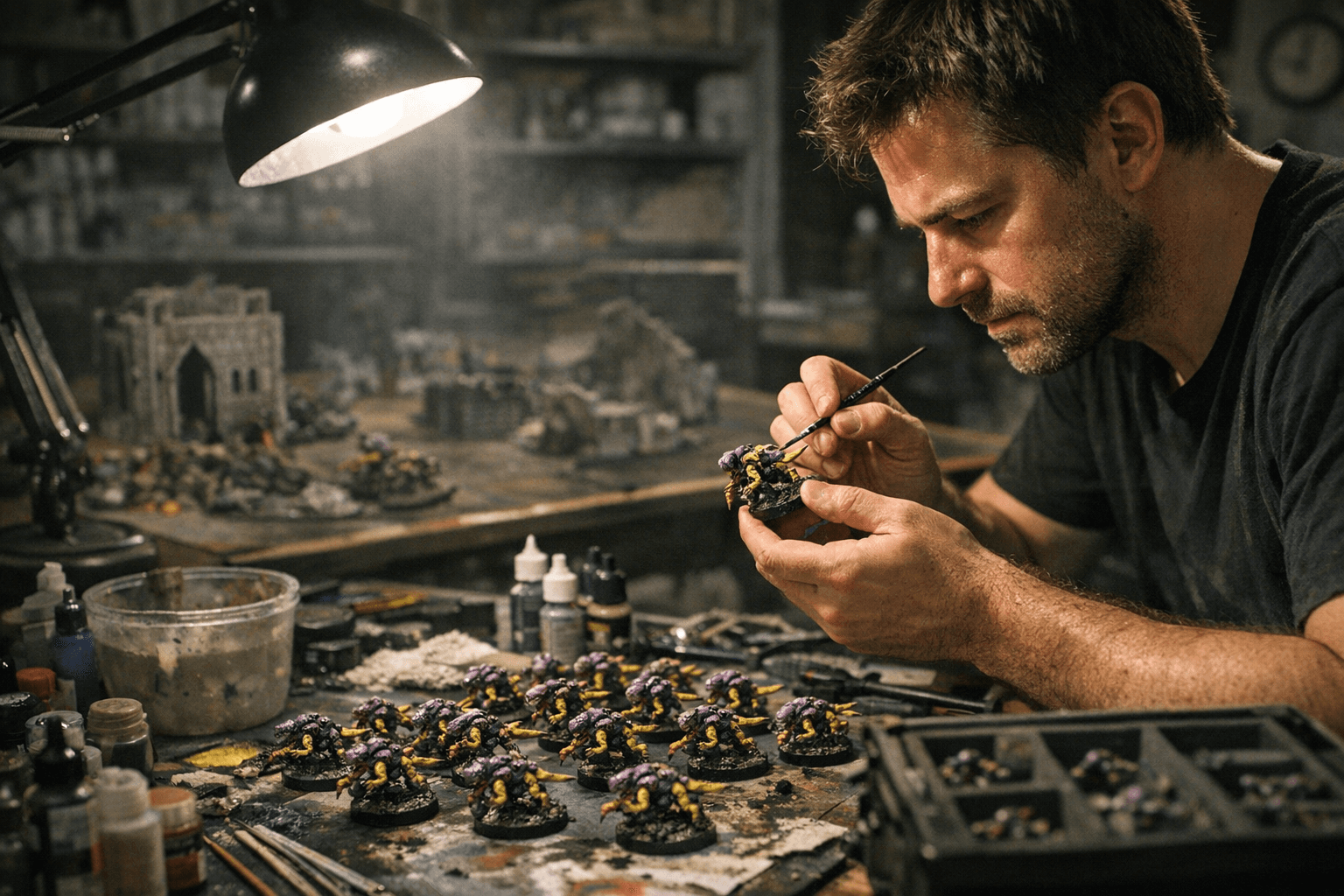
A last-minute push by user gorram turned an incomplete swarm into a table-ready force for a beginner-friendly tournament held January 21, 2026. The event enforced clear painting rules - no unassembled models, no primed-only models, and a requirement that each miniature be at least partially painted - and those constraints shaped gorram’s workflow under time pressure.
Faced with a deadline, gorram cut scope and focused on readability and basing rather than display-grade detail. The paint sequence was straightforward and efficient: black primer, an airbrushed stegadon-scale green base for skin, then heavy drybrush layers using Sotek Green and Temple Guard Blue to build highlights quickly. Weapons and hooves received Zandri Dust, small accents went in pink, and depth was added with fast washes of Reikland Flesh Shade and Agrax Earth Shade. Basing received special attention as a quick route to tabletop cohesion, and gorram deliberately set aside finer edge highlights in order to practice game rules and positioning ahead of matches.
Those choices matter for anyone racing to get models legal for a tournament. The combination of an airbrushed basecoat and aggressive drybrushing produces consistent, readable color across a swarm while minimizing per-model brush time. Zandri Dust for gear and hooves gave a neutral, quick finish that contrasts against the greens without requiring multi-stage layering. Reikland Flesh Shade and Agrax Earth Shade provided rapid shading that unifies the paintwork and hides rushed brushstrokes. Prioritizing basing meant the army looked complete on the table even if individual miniatures lacked final detailing.
The community relevance is practical: many local and beginner events enforce assembly and painting minimums, and last-minute entrants need a repeatable, low-fuss pipeline that meets those rules. Verify event rules before attending and decide which elements will make the biggest impact on the table - basecoats, washes, and basing often beat perfect highlights when time is short. Learning the rules and practicing with the finished force proved as important to gorram as the paint job itself.
Gorram’s post offers a compact case study in triage painting: choose contrast, prioritize cohesion, and accept trade-offs to ensure participation. For readers preparing for upcoming events, the takeaway is actionable - focus on priming, basecoating, quick highlights, washes, and basing, then spend leftover time learning the army’s tactics at the table.
This article was produced by Prism’s automated news system from verified source data, official records, and press releases, then run through automated quality and moderation checks before publishing. The system is built and supervised by the people who set the standards it runs under. Read our full AI policy.
Did this article answer your question?