Human Torch Miniature Workflow: Mephiston Red, Trollslayer Orange, Flash Gitz Yellow
A hobbyist documented a step-by-step workflow for painting a Human Torch miniature using a stylised flame recipe, giving painters a reproducible red-to-yellow mixing sequence and practical shop-tested tips.

A clear, repeatable flame recipe landed in the community this week when a hobbyist published a step-by-step workflow for painting the Human Torch miniature (Johnny Storm). The most concrete takeaway is the paint mixing sequence the author used for stylised fire: Mephiston Red → Trollslayer Orange → Flash Gitz Yellow. That sequence offers a practical starting point for painters who want a bold, saturated flame effect without chasing subtle temperature shifts.
The write-up pairs that named-paint recipe with process notes and an incomplete fragment preserved in the text: "a separate orange mix fo", which leaves one specific orange blend unspecified. Treat the listed sequence as the operational recipe the author applied; how that workflow translates into a yellow-core visual can come through layering and selective highlights rather than reversing the mixing order.
Community best practices around equipment and technique filled out the workflow. Use a wet palette to keep paints workable; Reddit contributors emphasized, "A DYI wet palette is good too for starters." Lighting and magnification matter for tiny flame edges: "Get some kind of lighting/magnification. Your eyes will thank you." Primer choice remains situational - black, grey, or white all have use cases - and basic paint sets from Vallejo, Reaper, and Army Painter are commonly recommended. One commenter noted product timing with the exact phrasing preserved: "For paint specifically, army painter are coming up wirh a new starter set in a couple of weeks..."
Brush and technique advice from the forum is straightforward and low-cost. Start with cheap synthetic brushes for most work: "Cheap synthetic brushes for 90% of the work you do." Keep a size 1 round for general detail and use dry brushing and edge highlights as finishing tools. The community explains dry brushing plainly: "Dry brushing... is just putting paint on a (normally) bigger brush, then dabbing that paint off/removing it on paper towel..." Edge highlight concepts appear as a common topic under the header "How to Edge Highlight." Mental framing also matters: "It's common among all artists to not finish or feel like works are unfinished or unsatisfactory." and "Copy what better painters were doing."
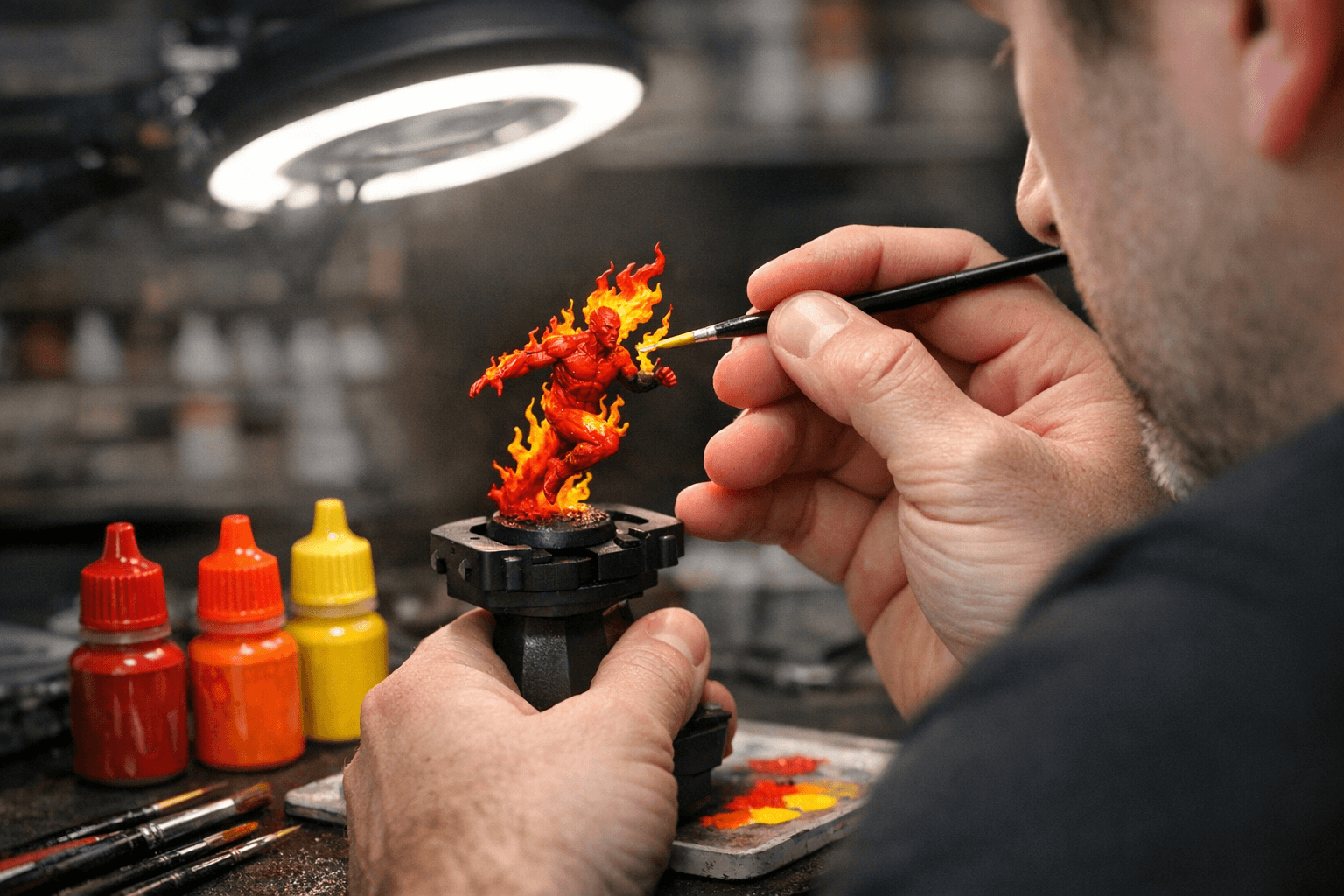
Art theory guidance complements the hands-on recipe. Oreateai's colour advice captures the visual goal for flames: "Color brings life! The classic palette includes vibrant yellows at core flame points transitioning outward through oranges then reds toward cooler shades near tips where heat dissipates into air itself: don’t forget highlights, a touch of white can simulate intense light reflecting off surfaces nearby such as skin tone which should remain warm yet subtle compared against bright hues surrounding them too much contrast here could detract from overall impact instead focus more closely together within those ranges chosen earlier when planning composition initially;" That passage underlines using bright yellows at core points and restrained skin highlights to sell the light source.
For painters ready to try the recipe, apply the Mephiston Red → Trollslayer Orange → Flash Gitz Yellow progression as a palette roadmap, use a wet palette and solid lighting, and finish with targeted highlights and edge work to sell a yellow-leaning core if that is the visual goal. Note the truncated "a separate orange mix fo" in the source; you may want to experiment with custom orange glazes or ask the author for the missing ratios. Expect the next steps to be experimentation: tweak thinning, glazing, and highlight placement until the flame reads against warm skin tones without overpowering the figure.
This article was produced by Prism’s automated news system from verified source data, official records, and press releases, then run through automated quality and moderation checks before publishing. The system is built and supervised by the people who set the standards it runs under. Read our full AI policy.
Did this article answer your question?