Italian Armour Reconsidered: Reassessing Doctrine and Equipment Across WWII Campaigns
Italian armour wasn't simply outmatched; Bayonets & Brushes makes a compelling case for reassessing how doctrine shaped performance across WWII campaigns.
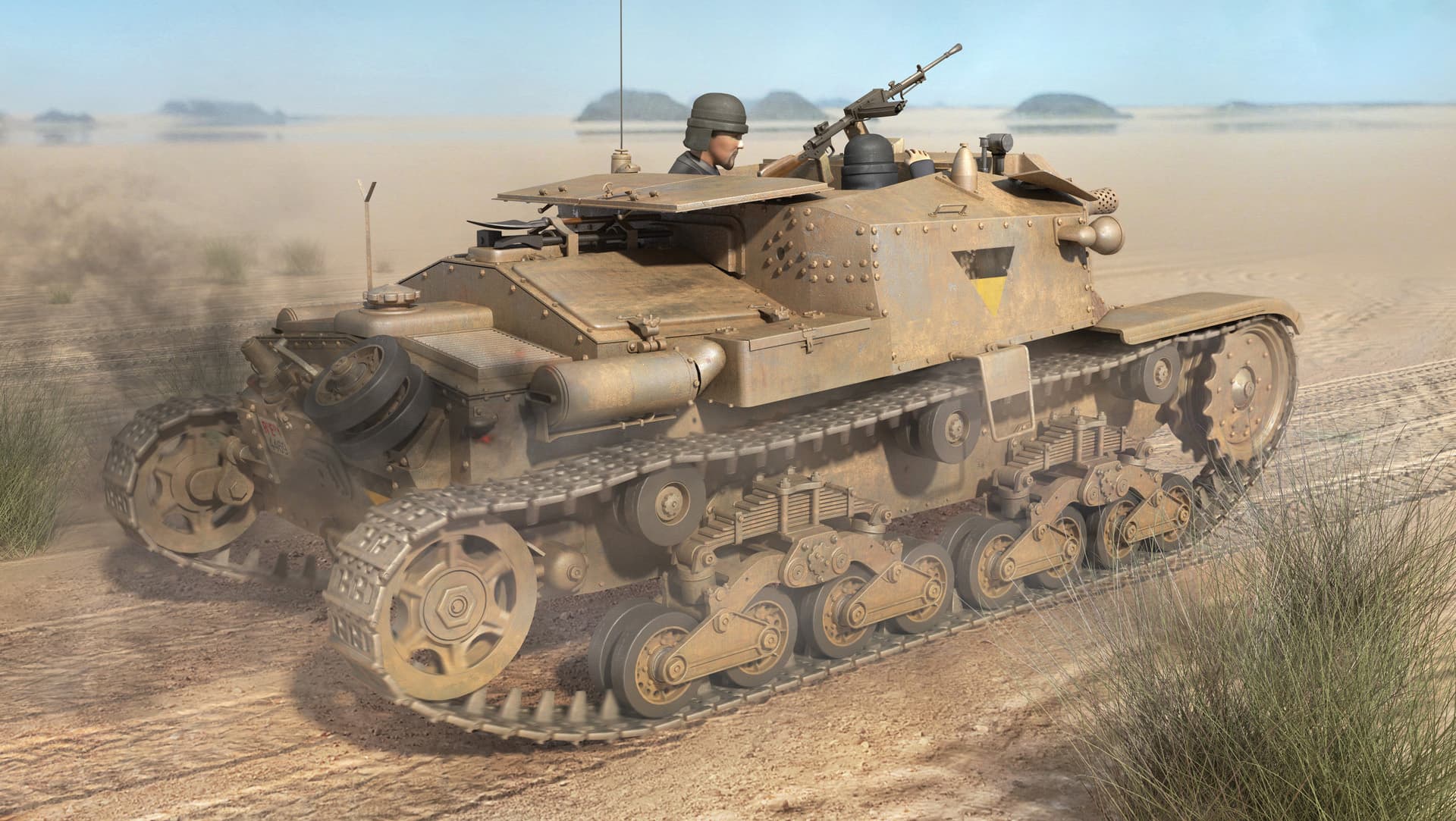
Few subjects in WWII wargaming attract as much reflexive dismissal as Italian armoured forces. The standard narrative writes them off as poorly equipped, poorly led, and hopelessly outclassed from North Africa to the Eastern Front. Bayonets & Brushes has pushed back hard against that narrative with a long-form piece titled "Under-Gunned and Outmatched? Italian Armour Reconsidered," a serious re-evaluation of Italian armoured doctrine and equipment that deserves attention from anyone modelling or gaming this theatre.
Why Italian armour gets a bad reputation
The dismissal of Italian armoured capability has become almost a hobby tradition. Paint a Carro Armato M13/40, put it on the table, and expect it to die quickly to almost anything the Allies field. That assumption is baked into points values, special rules, and the broader cultural shorthand that treats Italian forces as comic relief in a war full of grim material. But that framing collapses under scrutiny when you actually examine the interwar development of Italian armoured doctrine alongside the operational contexts in which these vehicles were deployed.
The Bayonets & Brushes article frames its re-evaluation across both the interwar period and the full span of Second World War campaigns, which is the right scope for understanding how decisions made in the 1930s shaped battlefield outcomes in the 1940s. Doctrine does not emerge from a vacuum, and understanding where Italian armoured thinking came from is essential to understanding why it performed as it did.
Interwar doctrine and the choices that followed
Italian armoured development in the interwar years was shaped by the same budget pressures, strategic priorities, and doctrinal debates that affected every major power. Italy had genuine experience with armoured vehicles from the First World War, and the interwar Regio Esercito was not simply asleep at the wheel. The tankette concept, which produced vehicles like the CV33 and CV35, reflected a deliberate doctrinal choice about infantry support and colonial warfare rather than ignorance of what armoured vehicles could do.
This is precisely where a re-evaluation becomes valuable for painters and gamers working in this period. When you understand that the L3 series tankettes were designed for a specific operational role in colonial campaigns and infantry accompaniment, rather than tank-versus-tank combat, the vehicles look different on the workbench. They represent a doctrine, not a failure. Modelling the corrugated armour, the twin Breda machine gun configuration, and the distinctive silhouette of these small tracked vehicles carries more meaning when you understand the thinking behind them.
Equipment across campaigns
By the time Italian armoured units were fighting in North Africa, Greece, and the Soviet Union, the gap between doctrine and battlefield reality had become painful. The M13/40 and M14/41 medium tanks were not world-beaters, but they were also not without capability when used correctly and supported properly. The Semovente da 75/18, the self-propelled gun built on the M13/40 hull, gave Italian armoured formations genuine anti-tank punch and was respected by Allied tank crews who encountered it.
For miniature painters, this equipment diversity is one of the most rewarding aspects of the Italian armoured roster. You have the opportunity to work across a genuinely varied range of vehicles, from the boxy, riveted construction of the M-series medium tanks to the lower, more aggressive profile of the Semovente family. The colour work alone spans multiple challenges: the sand yellows and khaki greens of the North Africa theatre, the grey-greens used in the Balkans and on the Eastern Front, and the complex weathering demands of desert campaigns where dust, oil, and track wear all leave distinct marks.
Reassessing performance in context
The Bayonets & Brushes re-evaluation does the work that good military history should do: it separates equipment limitations from doctrinal and operational failures, and it asks whether Italian armoured forces were genuinely outmatched or whether they were frequently misused, undersupplied, and operating in conditions that would have challenged any contemporary armoured force.
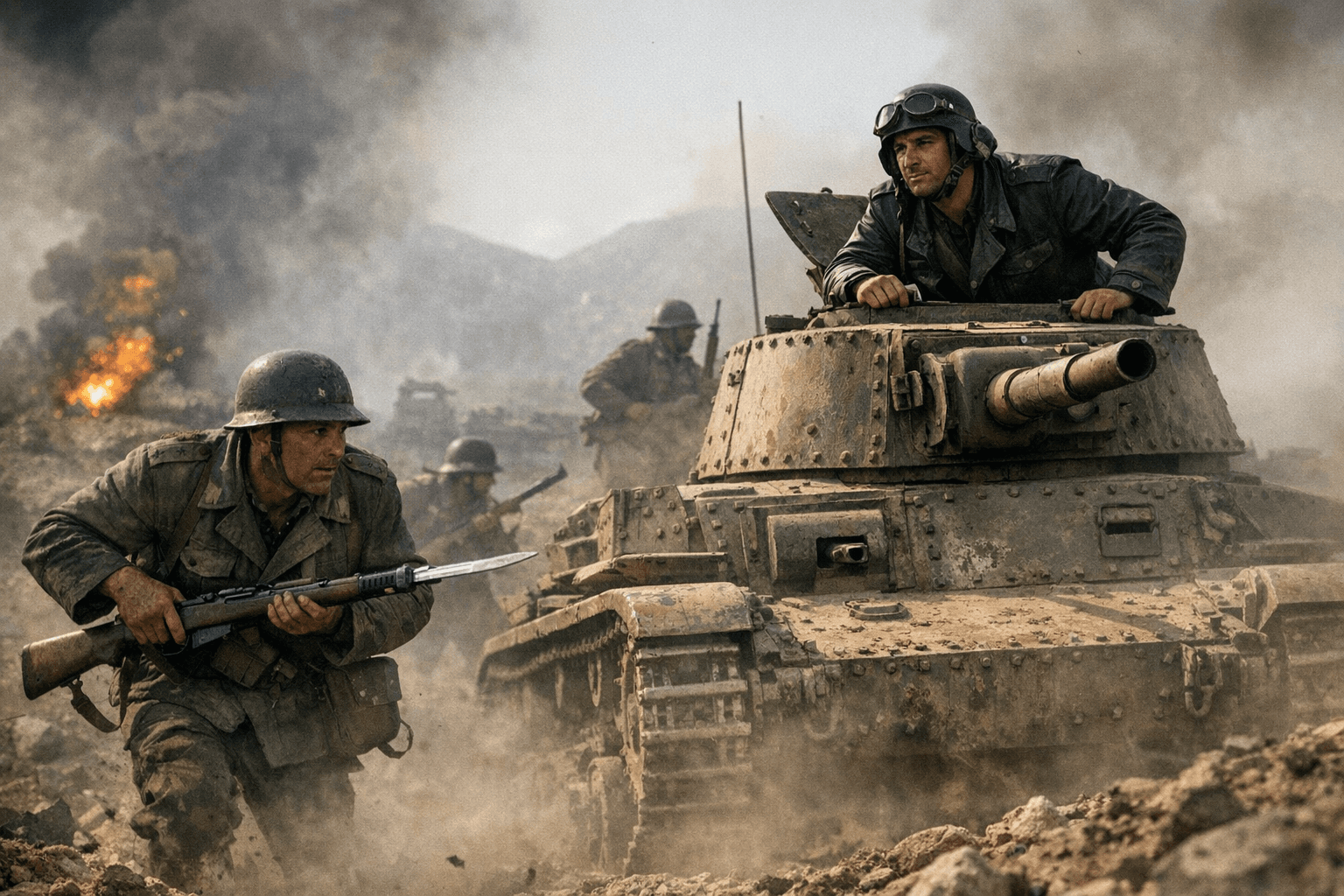
This matters for how you build and present your Italian armoured forces on a gaming table or display board. An army built around the understanding that these units fought hard under difficult circumstances, that tank crews maintained their vehicles under brutal desert conditions with limited spare parts, and that formations like the Ariete Division earned genuine respect from opponents, produces a very different aesthetic and narrative than one built around the "doomed Italian" cliché.
Painting and modelling takeaways
The re-evaluation framing in the Bayonets & Brushes piece opens up some specific directions worth pursuing on the workbench:
- Battle damage and field repair are appropriate and historically grounded on Italian armoured vehicles. Improvised repairs, mismatched paint patches, and heavily worn surfaces reflect the supply realities these units faced.
- Markings varied significantly across theatres and years. The bold fasces and divisional symbols of early war vehicles give way to more subdued markings as the war progresses and paint becomes scarce.
- Crew figures matter enormously for Italian armoured units. The tankers of the Regio Esercito had a distinctive uniform and equipment set, and well-painted crew figures leaning from hatches or standing alongside their vehicles transform a model into a scene.
- Basing choices should reflect the specific campaign. North Africa demands fine sand, sparse vegetation, and a bleached, sun-hammered palette. The Balkans and Soviet Union call for entirely different groundwork approaches.
The value of this kind of re-evaluation
Long-form historical analysis published by sources like Bayonets & Brushes represents exactly the kind of research that improves miniature painting and gaming. When you understand that Italian armoured forces operated within a specific doctrinal framework shaped by interwar priorities and resource constraints, rather than simply being incompetent, you approach the models differently. The vehicles carry more historical weight. The paint job tells a more honest story.
Italian armoured vehicles are some of the most characterful subjects available for WWII modellers. Giving them the serious historical treatment they deserve, rather than treating them as easy points or table filler, produces better models and better games.
Know something we missed? Have a correction or additional information?
Submit a Tip

