Japan Forms Parliamentary League to Promote Scale Model Kit Culture Nationally
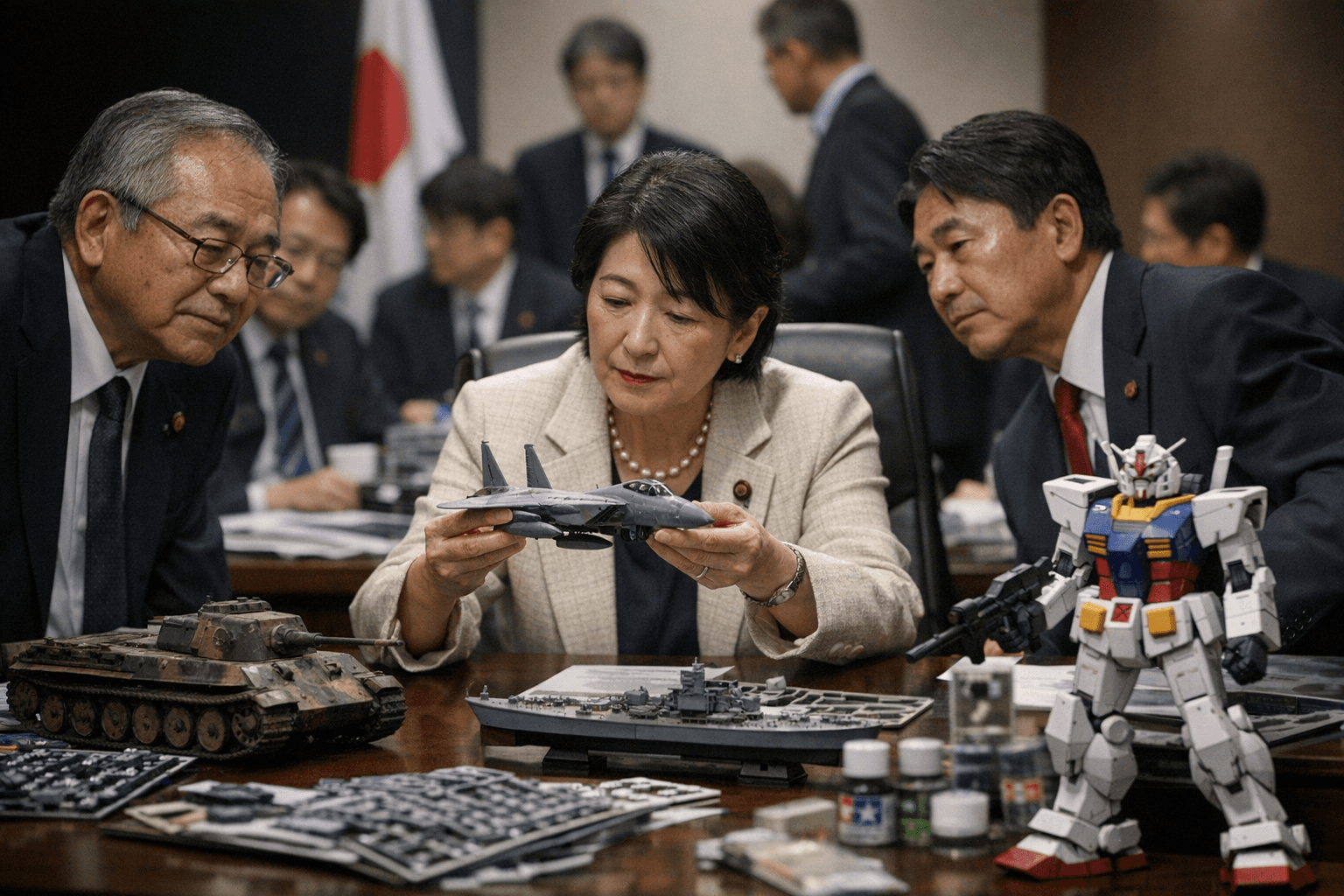
Japan's Parliamentary League to Promote MOKEI Culture held its first meeting March 24, putting scale modelling on track for official cultural asset status under former FM Kamikawa.

Roughly 80% of Japan's plastic model kit production flows out of a single city, Shizuoka, home to Tamiya, Hasegawa, Bandai Spirits, and several other manufacturers whose kits sit on workbenches from Tokyo to Texas. That concentrated industrial weight is now getting a political counterpart: the Parliamentary League to Promote MOKEI (Model Kit) Culture held its inaugural meeting on March 24, 2026, at Japan's National Diet, with former Foreign Minister Yoko Kamikawa installed as chair.
The league, driven primarily by members of the ruling Liberal Democratic Party, is pursuing formal cultural asset designation for plastic model kit culture, the Japanese term "mokei" covering everything from 1/35 Tamiya armour to Bandai's Gunpla line. Kamikawa framed the push around "monozukuri," the Japanese concept of skilled craftsmanship, arguing that model kits represent an exportable cultural and educational asset that has not yet received institutional backing commensurate with its reach.
One of the meeting's more striking contributions came from comedian and committed modelling enthusiast Tetsuo Sato, who gave an impassioned speech arguing that the hobby lacks a dedicated entertainment vehicle to drive mainstream awareness. Sato pointed to Beyblade as a case study: a spinning top that was rebranded and marketed aggressively into a cultural phenomenon. Model kits, he contended, have never had an equivalent promotional engine pulling new people in.
The league's primary legislative route runs through Cool Japan, the long-running government initiative that has backed anime, cuisine, and fashion as export commodities. If model culture earns a formal slot in that framework, it would unlock public funding, trade support, and coordinated international promotion that the industry currently lacks.
For painters and modellers outside Japan, the downstream implications are tangible, even if the timeline is measured in months and years rather than weeks. Government-backed tourism promotion tied to Shizuoka would increase foot traffic to the hobby museums and manufacturer showrooms already operating there. Youth education programs using model building as a classroom tool, one option the league specifically flagged, would create a fresh pipeline of hobbyists who need primer, paints, and brushes almost immediately. Expanded export support could improve overseas availability of Japanese modelling paints and accessories, a persistent friction point for international buyers who rely on slow import channels.
For display painters and competition artists, there is an additional angle worth watching. National-level cultural designation tends to generate exhibition infrastructure and marketing that raises the visibility of high-end work. Japanese scale modellers have long produced some of the most technically precise and artistically ambitious painted figures and dioramas in the hobby; a formal government recognition push could give that work broader international platforms than it currently enjoys.
The March 24 meeting produced statements and structural commitments, not legislation or a funding line. Full program results will follow the pace of parliamentary and bureaucratic process. But the meeting represents the clearest signal yet from Japanese policymakers that scale model culture belongs in the same conversation as anime and cuisine when the country considers what it wants to project to the world.
Know something we missed? Have a correction or additional information?
Submit a Tip