Lyrior Uthralle Leads the Lumineth Realm-lords Into War Again
Lyrior Uthralle’s return gives Lumineth painters a sharper brief, turning grief, light, and discipline into a stronger reason to reach for clean whites and radiant glow.
Why this chapter matters now
Lyrior Uthralle’s return does more than advance the story, it gives the Lumineth Realm-lords a fresh visual reason to matter on your painting desk. The new fiction moves them out of the previous week’s “in dire straits” moment and puts them back on the offensive, which instantly changes the mood from recovery to resolve. That shift is exactly what makes this feel useful to painters right now: the faction is not just elegant, it is being presented as disciplined, luminous, and under pressure.
The opening tone matters because it frames the Lumineth as beings made to shine, creatures of nobility, strength, and wisdom who also carry a harder, less definable burden. That tension between pristine ideal and brutal reality is the kind of contrast that translates beautifully to miniatures. If you want an army that looks like light cut from marble and then tested in war, this story gives you the brief.
Lyrior Uthralle is the right kind of centerpiece
Lyrior is not a throwaway commander. He is the Warden of Ymetrica, the Voice of the Lord Phoenix, and the supreme Vanari Lord Regent, which makes him one of the faction’s most important faces rather than just another named hero. Warhammer presents him as a peerless commander whose composure hides deep grief, and that detail gives you a very clear painting direction: calm on the surface, heavy underneath.
That balance is gold for hobby work because it lets you build a character model around restraint instead of excess. Keep the armor crisp and ceremonial, then use subtle shadowing, a colder highlight path, or a slightly more severe base to hint that this is a leader carrying more than rank alone. The fiction does not just say “this is a powerful elf”; it gives you a mood, and that mood can be painted.
What the fiction suggests you put on the table
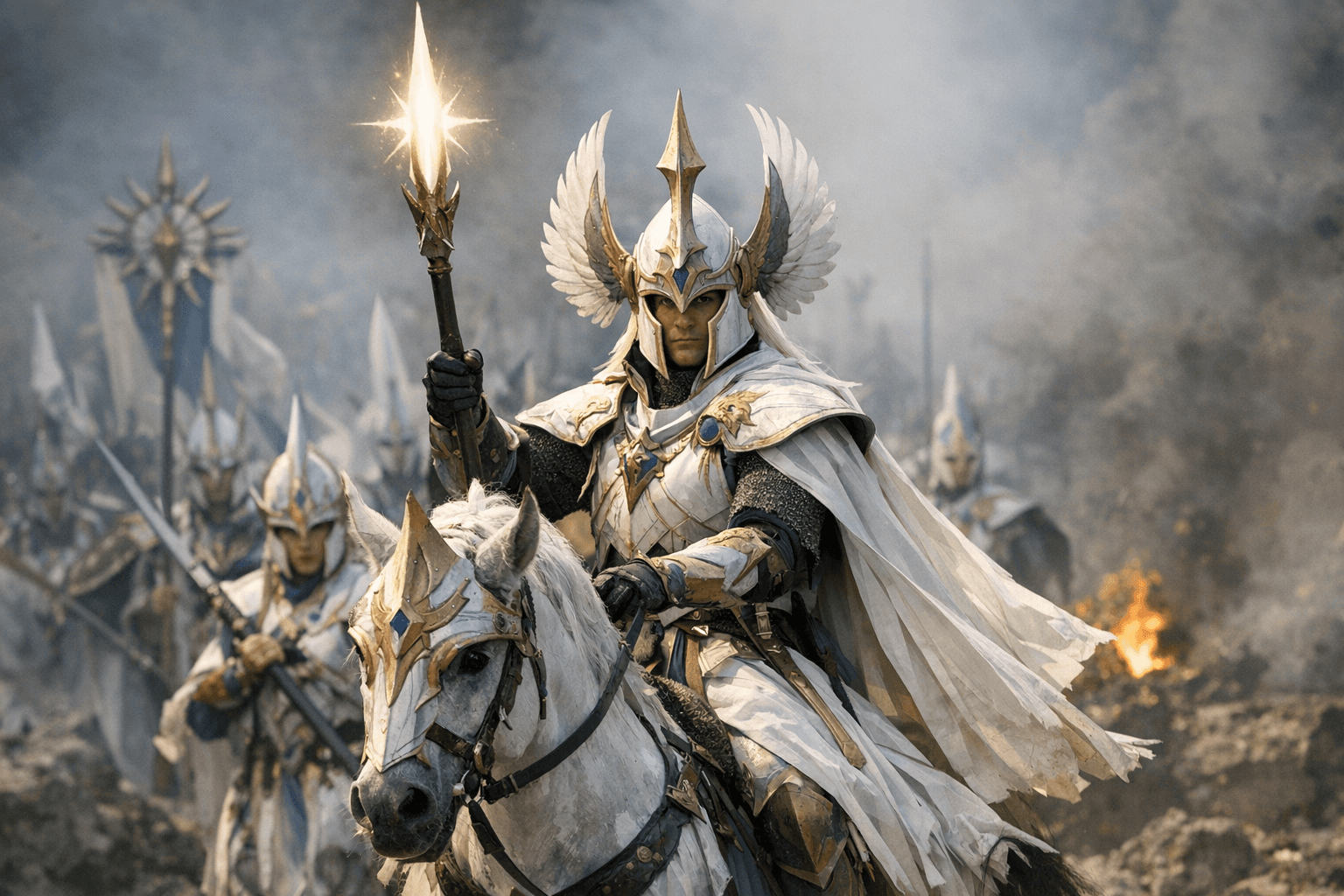
The strongest hobby takeaway is the Lumineth language of clarity, precision, and light captured out of darkness. That points directly toward clean whites, bright blues, gold trims, and very controlled spot highlights, especially on armor plates, robes, and weapon edges. It also supports the disciplined geometric look many Lumineth armies already lean into, where repetition and symmetry help the force feel ordered rather than chaotic.
If you are planning a scheme, this story backs a palette that feels almost ceremonial, then lets war wear into it just enough to keep it human. Think luminous cloth with sharp linework, metallics that catch the light without overpowering the model, and glow effects that feel purposeful instead of decorative. The narrative’s contrast between divine expectation and battlefield reality makes that approach feel earned, not just pretty.
A practical way to read the story is this:
- Use bright, high-contrast lighting to emphasize Hysh-born radiance.
- Keep edge highlights tight and deliberate to match the faction’s sense of discipline.
- Add just enough tonal coolness or weathering to show the cost of the warpath.
- Let banners, helms, and weapons carry the strongest focal glow, so the army reads as a coherent whole.
The wider Lumineth story still shapes the paint job
This latest fiction lands better because it sits inside a longer redemption arc. The Lumineth have been described before as “arrogant-but-brilliant” warriors, and later coverage stressed that the faction was tainted by a tragedy and had to learn humility as part of its recovery. That history makes Lyrior’s offensive feel like more than a military beat, it feels like another attempt to live up to an ideal that has already been broken once.
That is useful if you care about army identity as much as model quality. The Lumineth are not simply “light elves”; they are warrior-aelves of Hysh, the Realm of Light, who have spent centuries seeking enlightenment, reclaiming their homeland, and fighting alongside the armies of Sigmar against the Ruinous Powers. Their visual identity should therefore feel elevated but not effortless, serene but never soft.
The faction’s relationship with the aelementors also reinforces that careful, balanced look. Recent rules coverage emphasizes battlefield harmony and subtlety over brute-force mass warfare, which is exactly the sort of language that helps an army read well in a display cabinet or on a table. When every unit looks like part of a larger, ordered composition, the whole force feels more Lumineth than any single bright color ever could.
Why this is still active hobby news, not just lore
The new 98-page Battletome: Lumineth Realm-lords hardback matters here because it shows the faction is actively supported, not left behind as legacy content. The earlier Army Set release in July 2020 established the range, and the current support keeps the army visible in the game’s present tense. That matters for painters because fresh fiction, active rules coverage, and new faction framing all help keep a project feeling current.
This is also why the story has real hobby value even without a new model reveal. It refreshes the faction’s visual identity, gives you a named leader with strong emotional cues, and reinforces the idea that the Lumineth should look immaculate without ever feeling static. If you are choosing what to paint next, this chapter makes a convincing case for returning to the Realm of Light.
The bottom line for painters
Lyrior Uthralle’s return does what the best faction fiction should do: it sharpens the look, the mood, and the purpose of the army in one pass. You come away with a clearer sense of how the Lumineth should read on the table, radiant, disciplined, burdened, and moving forward under pressure. For painters, that is not filler lore. It is a usable visual brief, and it gives the Lumineth Realm-lords a stronger claim on your desk right now.
This article was produced by Prism’s automated news system from verified source data, official records, and press releases, then run through automated quality and moderation checks before publishing. The system is built and supervised by the people who set the standards it runs under. Read our full AI policy.
Did this article answer your question?