March 2026's Best Miniature Paintjobs Highlight Glazing, Color Modulation, and Key Techniques
Glazing shows up in 3+ of March's top paintjobs — Alex's latest roundup breaks down exactly how the community's best painters are pulling it off.
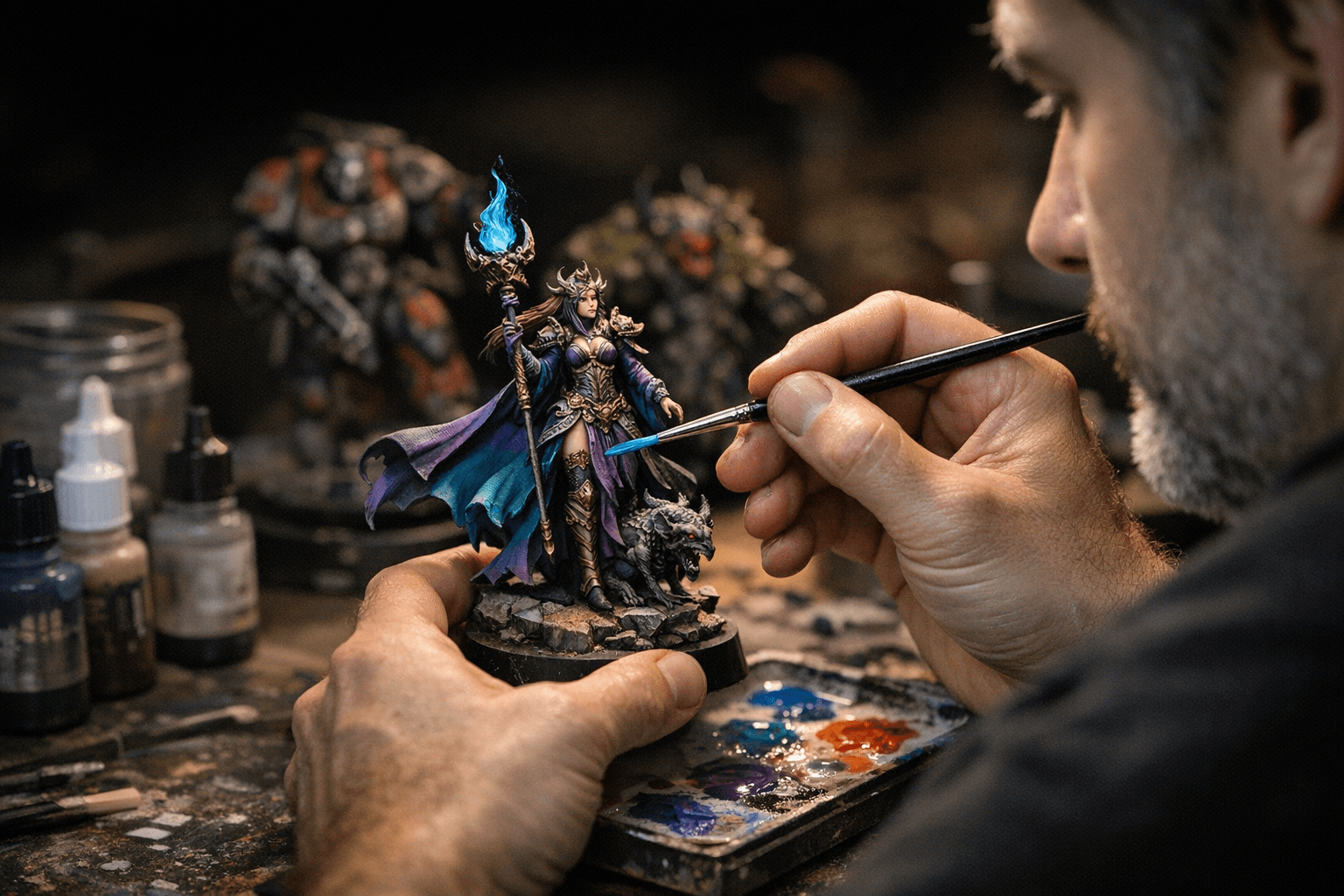
Every month, a handful of painters quietly raise the bar for what a finished miniature can look like, and Alex's March 2026 roundup "March 2026's Best Miniature and Warhammer Paintjobs (and what they can teach us)!" is a tightly curated case study in how. The video does something most gallery posts don't: it explains *why* the work lands, pulling technique callouts alongside the pretty pictures. If you paint Warhammer or any tabletop miniature and want to level up fast, here are the five most transferable lessons the video surfaces.
1. Controlled glazing over heavy washes
Glazing is the technique that appears across more than three of the standout pieces Alex highlights, making it the single most recurring differentiator between a flat tabletop standard and the kind of finish that stops a scroll. The lesson Alex draws out is precision: where a wash floods a whole area with indiscriminate shadow, a glaze lets you steer color transitions exactly where you want them, building saturation in recesses without muddying raised edges. Practice this on a spare model before applying it to anything precious; a few thin passes of a well-thinned mid-tone over a dried highlight is all it takes to start seeing the difference.
2. Color modulation on large flat panels
Several of the featured Warhammer pieces use color modulation to solve the hobby's perennial problem: large armor plates that read as flat and lifeless in photos even after hours of work. The technique involves systematically lightening toward a zenithal focal point and cooling or warming the shadows in the opposite direction, giving the illusion of reflected ambient light. It's a workflow borrowed from scale modeling that's now firmly embedded in competitive miniature painting, and Alex's roundup makes clear it's crossed into community hobby work in a serious way.
3. Micro-highlights placed for the camera, not just the eye
One consistent observation across the top paintjobs is that the finest edge highlights are sized and placed to survive photography. Brushwork that reads beautifully in hand can disappear entirely in a photo, or worse, blow out highlights into white noise. The painters Alex features have clearly calibrated their highlight thickness to perform at typical photo distances, which means slightly bolder lines than pure aesthetics would demand. If your portfolio photos never quite capture the quality of the real model, this is the adjustment worth making first.
4. Basing as a color anchor, not an afterthought
The basing choices in this month's selections aren't decorative finishing touches; they're doing structural color work. Several of the highlighted projects use the base to introduce a complementary or contrasting hue that makes the model's main palette pop, a practice that's easy to replicate by choosing your base palette before you prime, not after. A warm ochre or terracotta ground under a cool grey Space Marine reads completely differently than a matching neutral grey base, and the video makes that contrast visible in ways that static photos alone rarely communicate.
5. Documenting your palette and sharing your process
Alex's roundup doesn't just credit the painters; it surfaces the paints and brands used whenever that information is available. That transparency is both a community courtesy and a practical self-marketing tool: painters who document their palettes publicly are far easier for curators, commissioners, and competition judges to follow up with. The featured artists who list their colors, link their profiles, and tag their work with discoverable hashtags are the ones who end up in roundups, which in turn drive commission inquiries and competition nominations. The pipeline from good process documentation to real hobby opportunity is short and direct.
6. Submitting work to curated channels as an active strategy
The video functions as a submission call as much as a showcase. Alex actively encourages painters to tag him and share projects, and the works that make the cut aren't always the most technically advanced pieces in the community; they're often the best-lit, best-framed photos of solid work by painters who made themselves easy to discover. A single concise, well-lit image linked to a creator who does monthly roundups can deliver more exposure than months of posting into the void. For anyone painting for commissions or growing a following, treating roundup creators as a specific outreach target is one of the highest-return moves available right now.
7. Using video critique as a learning accelerator
What separates Alex's format from a simple Reddit gallery thread is the running commentary: he explains what specifically works in each piece and, by implication, what the painter solved. Watching with that analytical layer engaged, pausing on each featured model and asking "what is this painter doing with light direction, with edge thickness, with color temperature?" compresses weeks of solo practice into a focused viewing session. Monthly video roundups have become one of the primary ways that techniques migrate from elite competition painters into mainstream hobby practice, and March 2026's edition is a clean example of that pipeline running at full speed.
Know something we missed? Have a correction or additional information?
Submit a Tip

