Marvel Crisis Protocol: Painting Ultimate Spider‑Man, Prowler, Spider‑Man 2099
Atomic Mass Games released tutorials for painting Ultimate Spider-Man, Prowler, and Spider-Man 2099, offering color recipes and table-ready techniques useful for quick, readable minis.
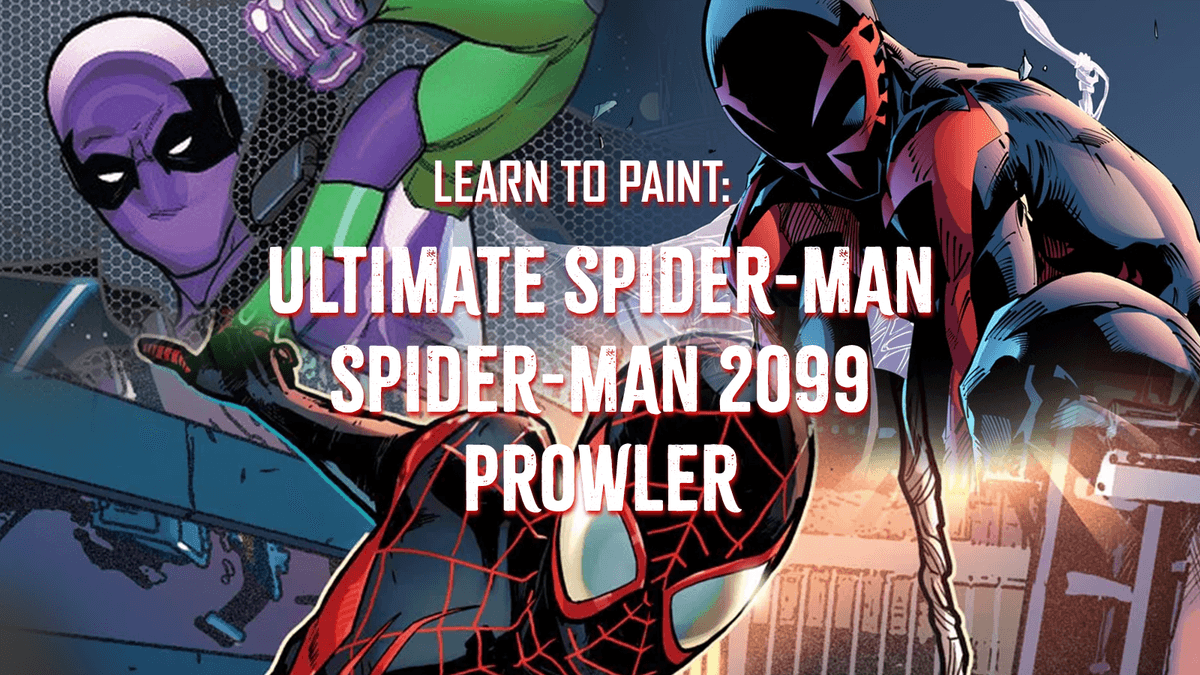
Atomic Mass Games followed up Spider-Verse hype with focused painting tutorials for Marvel Crisis Protocol models, giving clear paint calls and practical workflows that get these iconic figures table-ready fast. The guides prioritize color blocking, readable saturation, and a few targeted details for show pieces, so you can choose speed or spectacle depending on your goals.
Ultimate Spider-Man (Miles Morales) needs deep, saturated shadow tones and sharp piping to sell the suit on a tiny scale. The tutorial pairs The Darkness and Tidal Blue for base and shadow tones, then layers reds with Fire Vermilion, Legendary Red, and Glowing Inferno. Highlight placement follows the box art for spandex, with a small brush recommended for the piping lines. Energy effects are finished in gloss varnish while the rest of the figure receives matte varnish for contrast, a straightforward trick that boosts the model’s read at distance.
Spider-Man 2099 (Miguel O'Hara) gets special attention on webbing and cape work. The guides call for Neptune Glow then Plasma Coil on web details and Voodoo Shade to push cape shadows. Bases lean into metallic storytelling with Plate Mail and Mithral used for structural bits, heavy metal darks for depth, and tiny bright gold accents to suggest broken wires and tech salvage. These metallic choices play well on the board and keep the silhouette readable under gaming lights.
Prowler is all about a saturated, dramatic cape. Start with a Pro Acryl Blue plus Purple mix as the base, move to midtones with Pro Acryl Magenta, and boost highlights with Warm Yellow. The guide suggests fluorescent additions for those super-saturated pops that read well from three feet away and give the cape that comic-book punch.
Across all three models the emphasis is on a specific plan and paint selection to get fast results. For tabletop pieces prioritize saturation and contrast; for show pieces add freehand, NMM or blended highlights. Use a small brush for fine piping and switch varnish finishes to separate effects from cloth. The tutorials also include step-by-step color callouts, recommended brushes, and basing notes so you can replicate the paint recipes without guesswork.
If you want quick, playable Spider-Verse crews or a display mini that stops a convention table, these tutorials map out the exact mixes and finishes to use. Try the table-ready approach first, then revisit a favorite model for the extra layers and freehand that turn a solid paint job into a true showpiece.
This article was produced by Prism’s automated news system from verified source data, official records, and press releases, then run through automated quality and moderation checks before publishing. The system is built and supervised by the people who set the standards it runs under. Read our full AI policy.
Did this article answer your question?