Miniature painting basics, a beginner’s roadmap to better results
Small setups and thin coats beat hobby overload. This roadmap shows the few buys, prep steps, and painting habits that get your first mini finished faster.
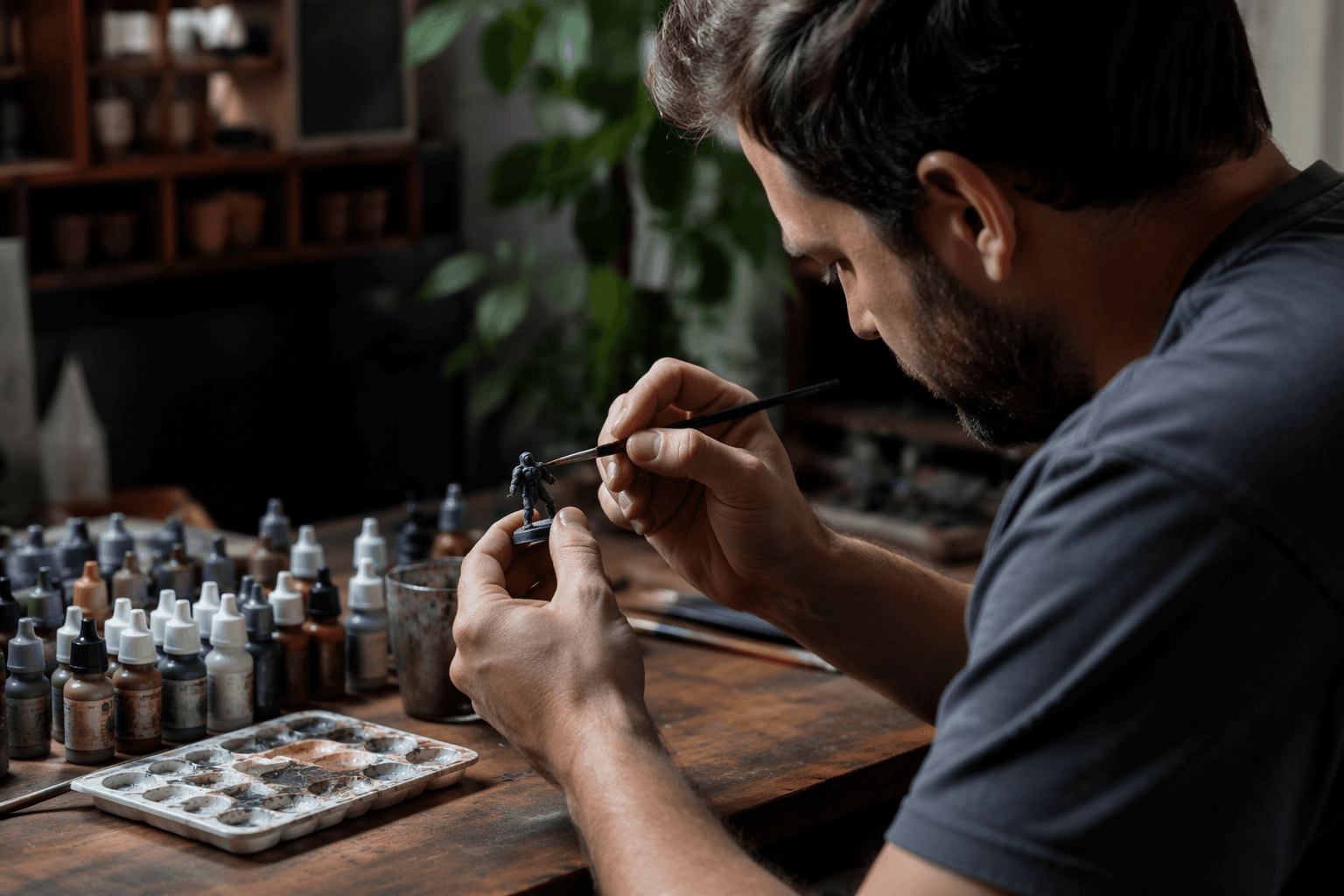
A model, a water cup, brushes, and a wet palette fit comfortably in about 24 by 18 inches of workspace under proper LED lighting. You do not need a wall of paints or a pro studio to start painting miniatures well. The fastest route is a small, tidy setup, acrylics thinned about 1:1 with water, and a process you can repeat before you ever think about display-level detail.
Start with a bench that keeps you moving
A beginner setup works best when it stays compact. Quality synthetic brushes are the right first buy because they hold up to practice, and they are less painful to replace than premium sable brushes if you are still learning control.
The paint itself matters less than how you use it. Acrylics thinned to roughly a 1:1 mix with water give you the kind of transparency that lets detail survive under multiple coats. Thick paint is the easiest way to bury a sculpt’s sharp edges, and that mistake is harder to fix later than it is to prevent on the first pass.
A practical starter bench usually looks like this:
- Acrylic paints
- Quality synthetic brushes
- Water cup and paper towel
- A small palette space
- LED desk lighting
- About 24 by 18 inches of clear work area
Prep is where most first models are won or lost
Before paint ever hits the model, the surface has to be ready to accept it. Washing miniatures with warm soapy water removes mold release and other residue that can make paint bead or slide, and that one step often solves problems new painters blame on their brushwork. Removing mold lines also pays off immediately, because every line left behind becomes more obvious once primer and base colors go down.
Primer is not a shortcut step, it is the layer that makes the rest of the job behave. Thin primer coats are the goal here, not a heavy blast that softens the sculpt, and the point is simple: paint needs something dependable to grip. Games Workshop calls painting one of the most satisfying parts of the Warhammer hobby.
Learn the core cycle: basecoat, highlight, shade
The beginner-friendly painting loop is not complicated, but it works because it repeats. Basecoating lays down the main color, highlighting pulls edges and raised surfaces forward, and shading pushes recesses back so the miniature reads clearly at arm’s length. That trio is enough to get a strong tabletop result, and painting can be finished quickly for a “battle-ready” look or pushed much further into high-detail work.
Thin layers are the rule at every stage. One opaque coat is tempting, but several controlled passes are cleaner and preserve detail better, especially on faces, armor trim, and small equipment. The older language around miniature painting traces back to manuscript illumination before the term shifted to very small paintings, especially portraits. By the 16th and 17th centuries, portrait miniatures were fashionable in Europe.
Buy fewer tools, then let the hobby earn the next purchase
Starter sets make sense because they give you practice miniatures and the paints you need for them in one box. They are a low-friction way to begin: you learn on models meant for practice instead of spending your first week assembling an all-purpose arsenal you may never use. Using a standard brush for texture work can ruin the brush’s fine point, which is a good reminder that specialty tools are useful only when the job actually needs them.
You do not need every technical brush, effect paint, and accessory on day one. You need enough to basecoat cleanly, shade neatly, and keep your main brush tips alive long enough to learn the difference.
Treat the first week like practice, not performance
Games Workshop’s company history begins in 1975, when three friends started a UK-based mail-order business, and the brand now describes itself as the largest and most successful tabletop fantasy and futuristic battle-games company in the world. In 2026, Golden Demon remains a major competition for painters who want to test their work at the sharp end.
A University of Southern California folklore study of wargaming describes paint thinning as a rite of passage. The first real milestone is not a perfect model, it is the moment you can see your own improvement from one mini to the next. Photos and a short journal make progress visible when the tabletop eye is still too close to the work to judge it fairly.
This article was produced by Prism’s automated news system from verified source data, official records, and press releases, then run through automated quality and moderation checks before publishing. The system is built and supervised by the people who set the standards it runs under. Read our full AI policy.
Did this article answer your question?