New painters learn planning, assembly, priming and basic brush techniques
Use a paint mixing stick wrapped in masking tape to mount minis, spray in a well-ventilated area with thin coats, and remember simple rescue steps if glue melts or poses bend.
You can’t go wrong with a paint mixing stick (free at most hardware stores) covered in masking tape, unrolled sticky side out. Just stick your minis on and go." That mounting trick is the most practical takeaway for new painters preparing to spray-prime, paired with a simple safety and technique checklist: paint in an open, well-ventilated area, apply thin, even coats of paint, and to avoid runs "you should both depress and release the trigger on your spray can while the stream of paint is not pointed at a model."
Planning remains the first step: decide "what style/finish you want" before you cut, glue, or prime. Many newcomers can skip complex assembly because a growing number of lines are sold preassembled, including hobby board-game minis and commercial ranges such as Monster Fight Club’s Witcher and Cyberpunk Red lines, the new plastic range for Catalyst Game Labs’ BattleTech, and the WizKids selection custom-made for D&D. "Some even come primed and ready to paint right out of the box," so check product descriptions before buying glue or clippers.
If assembly goes wrong, the hobby’s low-stress fix is straightforward: "If you do have a glue-melting, pose-bending catastrophe, don't panic - like almost everything in the miniature-painting hobby, it can be rescued. Just stay calm, clean off any excess glue or melty plastic - then re-apply a (probably smaller) amount of glue and try again. You'll get there." That rescue routine, clean excess, use less adhesive on the second try, is specific, quick, and uses tools most painters already own.
Primer is non-negotiable: "Priming is an essential part of the painting process. Primer is a strong, adhesive undercoat of paint that is just stickier than anything else. It grips onto the smooth, glossy plastic of your model, and provides a much better surface for subsequent layers of paint to stick onto." Likewise, "Paint won’t stick to bare plastic, so before you start painting, you’ll need to prepare your miniatures with a special kind of paint called a primer. A primer will stick to bare plastic, and it will create a rough surface that will be easier for you to paint on." The most common way to achieve that is canned spray primer, but choose products labeled safe for plastic and "avoid enamel and other oil-based primers as they can be hard to clean up."

If you prefer hands-on priming, brush-on primer remains a valid route: "The first way to prime a model is via the brush - use thinned down primer to apply an all-over coat to your model." It "takes some time, but this is by far the cheapest way and probably the method you'll use if you're a beginner. Just be careful not to clog the finer details of the model with paint, and to be consistent with your brushstrokes."
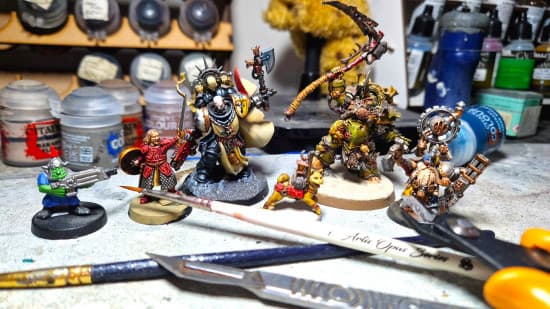
On tools, visual references show a range of starter kit items: citadel spray primer cans in different colours, citadel paints, brushes and clippers from other brands, and a Swann-Morton scalpel, alongside miniatures from Warhammer 40k, Age of Sigmar, and Lord of the Rings. For handling, "Alternatively, a painting handle, like the Citadel Painting Handle, can make cleanup much easier, and help conserve paint."
Together these steps form an "evergreen resource" for beginners: planning the miniature (what style/finish you want), basic assembly and cleaning, priming advice, and the "first brush techniques to make a model table‑ready." Follow the mounting and priming tips above, use the glue-rescue routine if needed, and then move on to your first brush-on coats.
Know something we missed? Have a correction or additional information?
Submit a Tip

