Olden Demon 2026 celebrates classic Games Workshop miniatures and old-Eavy Metal style
Olden Demon 2026 turns vintage Games Workshop minis into a living style movement, with green bases, classic colors, and old-Eavy Metal polish leading the way.

Olden Demon 2026 and the return of the old look
Olden Demon 2026 is not asking painters to chase the newest sculpt or the loudest trend. It is inviting the hobby back to a very specific visual language: pre-2000 Games Workshop miniatures, green bases, and the clean, bright discipline of classic old-Eavy Metal presentation. That is why the contest lands as more than nostalgia. It feels like a community rallying point for painters who still love the crisp, poster-like look of late-20th-century Warhammer armies.
The competition runs from February 13 through May 31, 2026, with entries due by the end of day GMT on May 31. That timeline gives the event a proper season, not just a weekend burst of posts, and the Hall of Fame behind it shows this is already a recurring part of the hobby calendar. Winners are recorded for 2020, 2021, 2022, 2023, 2024, and 2025, with 2025 split into sci-fi and fantasy categories, which makes Olden Demon feel established rather than experimental.
What counts as an Olden Demon entry
The rules are wonderfully specific. Eligible models must be Games Workshop miniatures produced before the year 2000, and the list explicitly includes classic Citadel Miniatures, Iron Claw, and Marauder Minis. That matters because it defines the contest as a celebration of a certain era of sculpting, when chunky silhouettes, dramatic weapons, and characterful faces carried a different kind of presence on the tabletop.
The base requirement is just as important as the miniature itself. Every entry needs a green base, ideally in the old pre-2000s Eavy Metal style. For anyone who remembers the era, that instantly conjures Goblin Green rims, tidy presentation, and an army look designed to pop from across a display shelf. Alterations to conceal issues with the original sculpts are allowed, which is a practical rule for old metal and resin models that may need a little filling, repair, or cleanup before paint ever hits the figure.
What the old-Eavy Metal style actually looks like
If you are trying to decide whether this is your scene, the quickest answer is that Olden Demon rewards clarity. The style is built around bright separation, strong edge definition, and a finish that makes a vintage sculpt read cleanly instead of just looking old. These are minis that want confident brushwork, not overworked effects.
A few visual hallmarks define the look:
- Bright, readable color choices rather than muted modern palettes.
- Clean highlights that make armor plates, cloth folds, and weapon edges stand out.
- Neat base presentation, especially the classic green rim treatment.
- Period-accurate basing and a sense of display-first composition.
- Just enough weathering or finish work to refresh the miniature without erasing its era.
That leaves room for subtle updates. A carefully controlled glaze, a sharper highlight, or modest weathering can make an old sculpt feel fresh while keeping the spirit intact. The best entries are not trying to disguise their age. They are treating that age as part of the charm.
Why this revival feels bigger than a themed contest
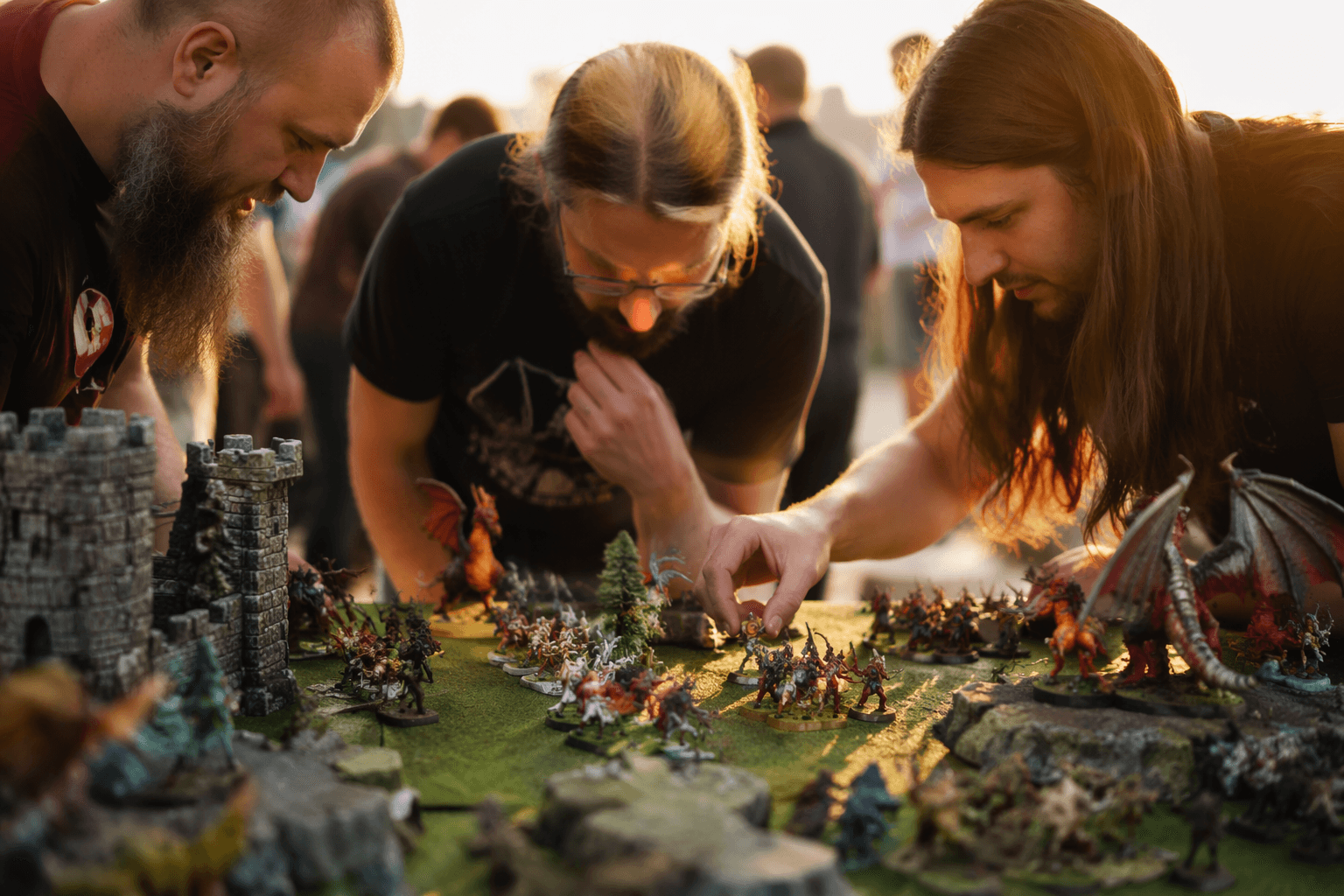
Olden Demon has a broader mission running underneath the competition. The project says it is recovering and reconstructing 1980s and 1990s Games Workshop artwork because much of it is unavailable for public display. That means the contest sits beside an archival impulse: preserving the visual history of the hobby, not just echoing it for a seasonal challenge.
That mission lines up neatly with the wider nostalgia around Goblin Green and second-edition-era Warhammer. Warhammer Community has described Goblin Green bases as an iconic marker of that era and noted that by the early 2000s Warhammer painting had shifted darker, with Goblin Green becoming part of hobby history. In other words, the look Olden Demon is pushing is not a joke or a gimmick. It is a real language from the hobby’s past that still speaks clearly to painters now.
That broader context is what makes Olden Demon resonate in 2026. The contest is arriving at a moment when retro Warhammer imagery is visible again in official hobby coverage, alongside modern masterclass-style painting content and Old World references that lean into old-school visual cues. The current wave of interest is not just about looking back. It is about proving that the old language still works when painters bring fresh skill to it.
How to judge whether a miniature belongs here
The easiest test is simple: if the model would look right on a second-edition display board, it probably belongs. Olden Demon favors miniatures with strong old-school silhouettes, sculpted details that invite crisp highlighting, and a presentation style that makes the whole piece feel like a finished artifact rather than a slice of grimdark battlefield grime.
The contest also rewards painters who understand restraint. A lot of modern miniature painting leans into atmospheric contrast, heavy weathering, and cinematic storytelling. Olden Demon asks for a different kind of confidence: brighter color, cleaner boundaries, and a base that signals the era before the miniature even gets a close look. That is why old Citadel, Marauder, and Iron Claw figures are such natural fits. They were built for a visual culture that valued immediate readability and character.
The archive of past winners reinforces that this approach has real prestige. Names such as Alexandre Gille, Tonykant_minis, Darren Latham, John “Murph” Murphy, Marco Pesci, Dean Lecoq, Sten Frödin, Nikolas Rubens Mortensen, Saverio Maiocchi, Maxime Corbeil, Sven Jonsson, Nicklas Pihlström, emuse_studio, dweeziedwee, madstudio_alexandre_gille, JanusDraik, magobaku8, axefacepaints, puddyspaint, jh.miniaturas, Marte Pesci, the_secret_workshop, Burdonite, and Marco_paints show up across the Hall of Fame, giving the competition a real lineage of painters who have embraced the brief at a high level.
Olden Demon 2026 thrives because it does not treat nostalgia as a soft excuse for easy sentiment. It turns the old Games Workshop look into a clear standard, then asks painters to meet it with precision, care, and confidence. The green base, the pre-2000 model, the old-Eavy Metal finish, and the recovered artwork all point toward the same idea: the classic style still has plenty of life left in it, and this contest is built to prove it.
This article was produced by Prism’s automated news system from verified source data, official records, and press releases, then run through automated quality and moderation checks before publishing. The system is built and supervised by the people who set the standards it runs under. Read our full AI policy.
Did this article answer your question?