One Nerdy Dad Releases Updated Airbrush Setup Checklist for Miniature Painting
One Nerdy Dad updated a compact, step-by-step airbrush setup checklist on Feb 26, 2026, focusing on reliable, repeatable results for hobby miniature painters.
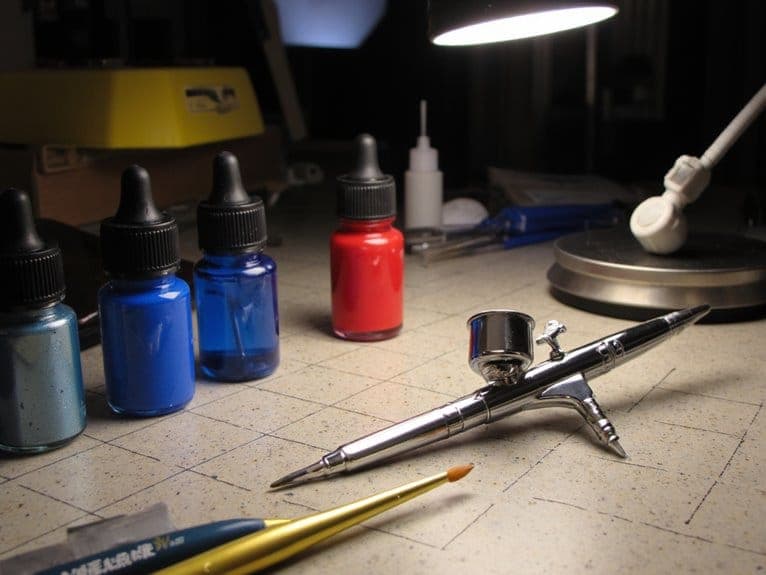
One Nerdy Dad’s updated "Airbrush Setup for Miniature Painting" checklist condenses the scattershot advice you usually find across forum threads into a compact, step-by-step workflow aimed at getting repeatable airbrush results. Published in an update on February 26, 2026, the guide is explicitly targeted at hobby painters who want to stop second-guessing their setups and start producing predictable passes.
1. Workstation and ventilation
One Nerdy Dad opens the checklist by treating your workspace as the foundation of every successful airbrush session. The update emphasizes a dedicated, well-lit area with cross-ventilation and a small extraction fan so overspray and solvent fumes don’t settle on models between passes. He recommends a clear, flat surface for staging minis and test sheets, and a respirator for any solvent-based work, the checklist's goal is to reduce variables that cause inconsistent results.
2. Compressor choice and pressure baseline
The checklist explains compressor types and gives baseline pressure guidance for miniatures work, to help you avoid trial-and-error PSI guessing. It recommends using a hobby compressor with a stable regulator (quiet diaphragm compressors are favored for long sessions) and sets a starting pressure window, low single digits for fine detail, mid-teens for primer and basecoats, then dialing down for glazes. The update on Feb 26, 2026 frames these as starting points to be adjusted for nozzle size, paint brand, and humidity.
3. Airbrush selection and nozzle sizing
One Nerdy Dad’s list covers picking the right airbrush and nozzle for scale work, pointing hobby painters toward dual-action gravity-feed brushes with replaceable needles. The checklist calls out common nozzle sizes (a 0.2–0.4 mm range) and ties each size to typical uses: 0.2 mm for fine lining and detail, 0.3 mm as a versatile all-rounder, and 0.4 mm for primers and larger-area basecoating. The update stresses matching nozzle diameter to paint viscosity and intended technique so you don't fight your tools mid-pass.
4. Hoses, fittings, and moisture control
Proper air delivery shows up early in the checklist: One Nerdy Dad lists hose length, fitting types, and moisture traps as easy wins for consistent airflow. He advises short, kink-free hoses and tightly sealed fittings to prevent pressure drops, plus an inline moisture trap or air dryer to stop water droplets from spitting paint. These elements are presented as small investments that eliminate a lot of the "why did this suddenly spit?" headaches hobbyists report across threads.
5. Regulator and gauge setup
The checklist makes the regulator your control center: mount a reliable regulator and gauge close to the airbrush so pressure readings reflect what’s hitting the cup. The guide recommends checking and reading the gauge with the brush attached and with airflow running, then locking in a baseline pressure before you thin paint. One Nerdy Dad emphasizes consistent, repeatable settings, set it once for a session, log the number, and you’ll get the same spray behavior later.
6. Thinning protocols and viscosity checks
One Nerdy Dad’s update gives a compact protocol for thinning paints for airbrush use rather than a single universal ratio. The checklist suggests starting with the manufacturer's thinner and testing on a card; for acrylics, many users find a workable range between roughly 1:1 and 3:1 (paint:thinner) depending on brand and nozzle. He stresses testing actual flow by spraying a fan pattern and adjusting until atomization is smooth, and recommends keeping a short lab card noting brand, thinner, ratio, and substrate for reproducibility.
7. Cleaning routine before, during, and after
Cleaning gets an entire checklist entry focused on preventing clogs and preserving needle geometry. The guide prescribes a quick flush before switching colors, a full disassemble-and-soak at session end, and needle inspection each time you change tips. One Nerdy Dad’s update frames cleaning as part of setup, a neglected brush is a variable, and suggests carrying a small toolkit (spare needles, needle lube, cleaning brushes) in your workstation.
8. Test sheets, masking, and pattern checks
Before touching a model, the checklist mandates test sheets and masking practice to confirm settings. The process: spray a fan pattern, check coverage and edge softness, then try masked lines and gradients on the test card at the session’s chosen pressure and thinning ratio. The Feb 26 update positions this as a time-saving habit: one short test run avoids ruining the first pass on a freshly prepped mini.
9. Primer and basecoat sequence
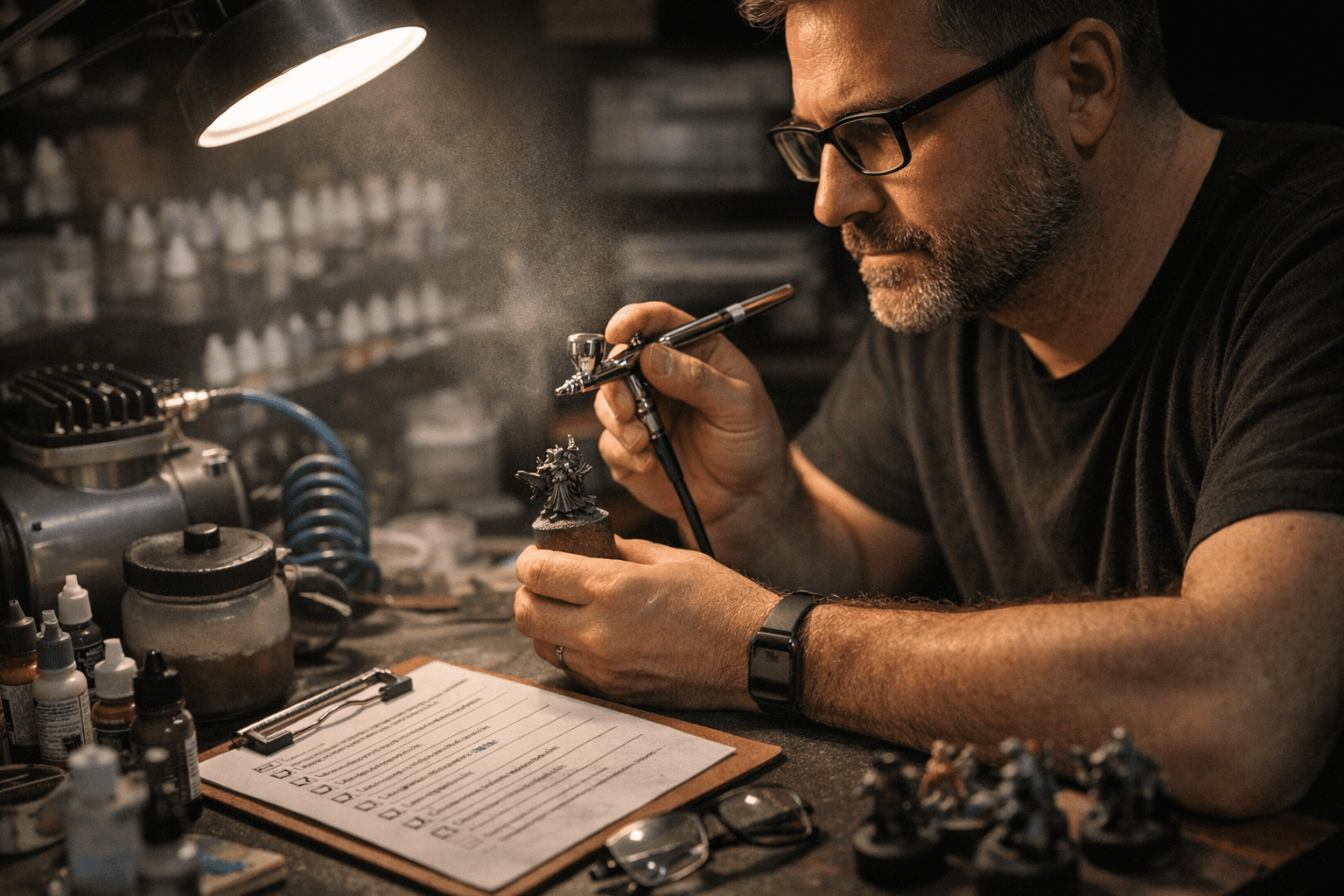
One Nerdy Dad’s checklist breaks priming and basecoating into repeatable steps to avoid adhesion and texture surprises. The recommended approach is thin, even primer passes from slightly farther back, followed by closer, light basecoat layers once the primer is dry. The checklist emphasizes respecting flash times and using the same airbrush settings on test sheets to ensure the primer and basecoat interplay behaves the same across models.
10. Pass strategy: blocking, shading, and glazing
The guide recommends a pass strategy that separates blocking, shading, and glazing into discrete runs so each technique uses an optimized setup. Block in base colors with slightly higher flow and wider passes, switch to finer nozzles and lower pressure for shading and edges, then use very low pressure with thin glazes for color modulation. The update underlines that reproducible results come from repeating the same pass order and pressure/thinning combos each session.
11. Consumables, spares, and a session log
Practical sustainability closes the checklist: stock spare needles, a second cup or brush, assorted thinning fluids, and a small parts kit to avoid session-killing failures. One Nerdy Dad adds a simple session card to the checklist, log date, compressor model, PSI, nozzle size, paint brand, thinning ratio, and humidity, so you can recreate successes without scouring forum threads for anecdotal fixes. The Feb 26, 2026 update makes the session log a central habit for repeatability.
- Start each session by running air through the brush into a waste jar for 10–20 seconds to clear residue.
- Use short test passes on a scrap model or card after any change in pressure or thinner.
- Keep a small portable kit with spare seals and needles where you paint.
Practical tips sprinkled through the checklist
A small experiment to try One Nerdy Dad’s checklist is engineered for iteration: try a controlled experiment by changing only one variable (nozzle size, pressure, or thinning ratio) and record that session card entry. That single habit, logging the number for each trial, turns random luck into reproducible technique.
Why this matters now The updated checklist released Feb 26, 2026 reframes setup as a predictable workflow rather than a RTFM scavenger hunt across forums. By removing ambiguity, clear baseline pressures, tested thinning steps, and a session log, One Nerdy Dad wants you to spend more time painting and less time troubleshooting. For anyone tired of chasing reddit posts and forum threads for the "right" setting, the checklist is a practical blueprint to build on.
Final note This checklist isn’t a rigid rulebook but a reproducible scaffold: follow the steps, keep the session card, and the odds are strong that your next airbrush session will behave the way the last one did. One Nerdy Dad’s Feb 26 update keeps the focus on making predictable passes, and on turning small, documented habits into consistently better minis.
Know something we missed? Have a correction or additional information?
Submit a Tip

