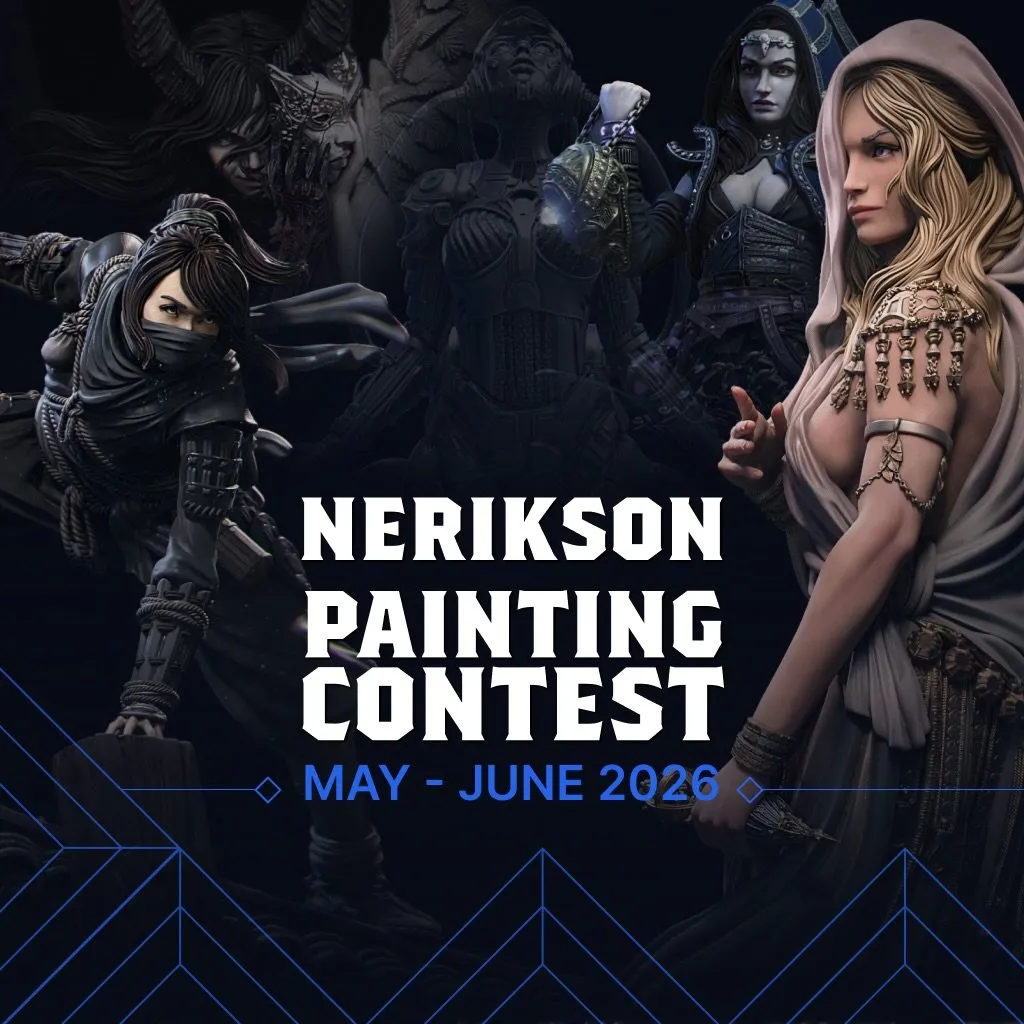
Paintedfigs showcases exhibition-quality Middara commission for Succubus Publishing
Paintedfigs' Middara commission turns a premium board game into a display piece and a long-form hobby project. The figures demand interpretation, not just tabletop-ready color.

Paintedfigs’ Middara commission turns a boxed board game into something that looks ready for a shelf before it ever reaches the table. The studio finished the figures at exhibition quality, which immediately places the work in the lane of collectors and players who want their miniatures to do more than function. For Succubus Publishing’s Middara, that kind of finish does more than decorate a game, it changes the whole feel of the product.
A commission that reads like a showcase
Paintedfigs has been operating since 2005 and describes itself as the largest dedicated fantasy miniature painting service in the world. That matters here, because Middara is not the sort of project you hand to a service that only does quick tabletop color on the side. An exhibition-quality commission signals a customer who wants crisp presentation, a cohesive visual story, and miniatures that hold up when the lid comes off the box and the game goes straight to the table.
The Middara job also fits the studio’s wider business model. Paintedfigs works across Games Workshop, Star Wars, Warmachine and Hordes, and a long list of Kickstarter and board-game properties, while also handling pre-painted inventory. That mix tells you where the market has moved: finished models are no longer just for display cabinets or tournament armies, they are part of how people buy into a hobby experience.
Why Middara invites paint in the first place
Succubus Publishing describes Middara as a fully cooperative, ultra-modern fantasy board game for 1-4 players, built with JRPG-style inspiration. The official site says it blends more than 400 unique illustrations with a narrative that stretches across the length of four novels’ worth of content, and another official page puts the game at over 1,200 pages of story content and more than 100 hours of gameplay. The store page lists Middara: Unintentional Malum - Act 1 at $250, which puts it firmly in premium box territory.

That scale explains why painted miniatures matter so much. A game like this is not just about moving pieces across a board; it is about living with the world for a long time. When a title promises that much story, that many illustrations, and that much play time, the miniatures stop being accessories and become part of the narrative architecture. Painted figures help make the game feel less like a product you open once and more like a project you return to for months.
For board gamers, that shift is the key difference between buying minis and investing in minis. In a competitive wargame, the paint job often has to work at army scale, across dozens of units and a fixed visual language. In a display piece, the goal is maximum polish on a single figure or diorama. A board game commission like Middara sits between those poles: the models have to read clearly in play, but they also have to carry atmosphere, because they are tied to a campaign that lasts far longer than a single session.
The design challenge is part of the appeal
Succubus has deliberately moved away from the usual orcs-and-goblins fantasy shorthand and built Middara around original creatures instead. That makes the painting job more distinctive, because the familiar shortcuts that help painters quickly establish a palette or a faction identity are not always available. Paintedfigs’ earlier Middara commission post also noted that the miniatures can be challenging to paint because the detail can be soft in places, and because the art references do not always fully specify what a figure should look like.
That combination turns commission painting into interpretation as much as execution. The painter is not simply matching a clean box illustration to plastic, but filling in visual gaps, clarifying forms, and deciding how to make an unusual sculpt look finished without flattening its personality. For a game like Middara, that interpretive work is part of the value. The client is paying not just for labor, but for judgment.

It also helps explain why exhibition-quality work has become such a selling point in this corner of the hobby. A board game with bespoke creatures and a sprawling narrative asks a painter to think like a sculptor, an illustrator, and a production artist all at once. The end result has to feel like it belongs to that world, not just like a standard fantasy job painted to a deadline.
Commission painting has become a hobby lane of its own
The broader market supports that shift. ICv2 reported that miniatures were the largest category to show growth in 2024, which puts commission painting inside a growing ecosystem rather than a tiny side interest. That growth makes sense when you look at the kind of products now filling shelves: premium board games, Kickstarter boxes packed with plastic, and big narrative campaigns that invite more customization than a standard card-driven title ever would.
Paintedfigs’ Middara commission is a clean example of how that ecosystem works. Succubus Publishing built a premium, long-form game with original creatures and a massive amount of story. Paintedfigs responded with exhibition-quality work that helps the miniatures live up to the box’s ambition. Together, they show how painted figures can transform a board game from something you own into something you build a relationship with, one miniature at a time.
This article was produced by Prism’s automated news system from verified source data, official records, and press releases, then run through automated quality and moderation checks before publishing. The system is built and supervised by the people who set the standards it runs under. Read our full AI policy.
Did this article answer your question?