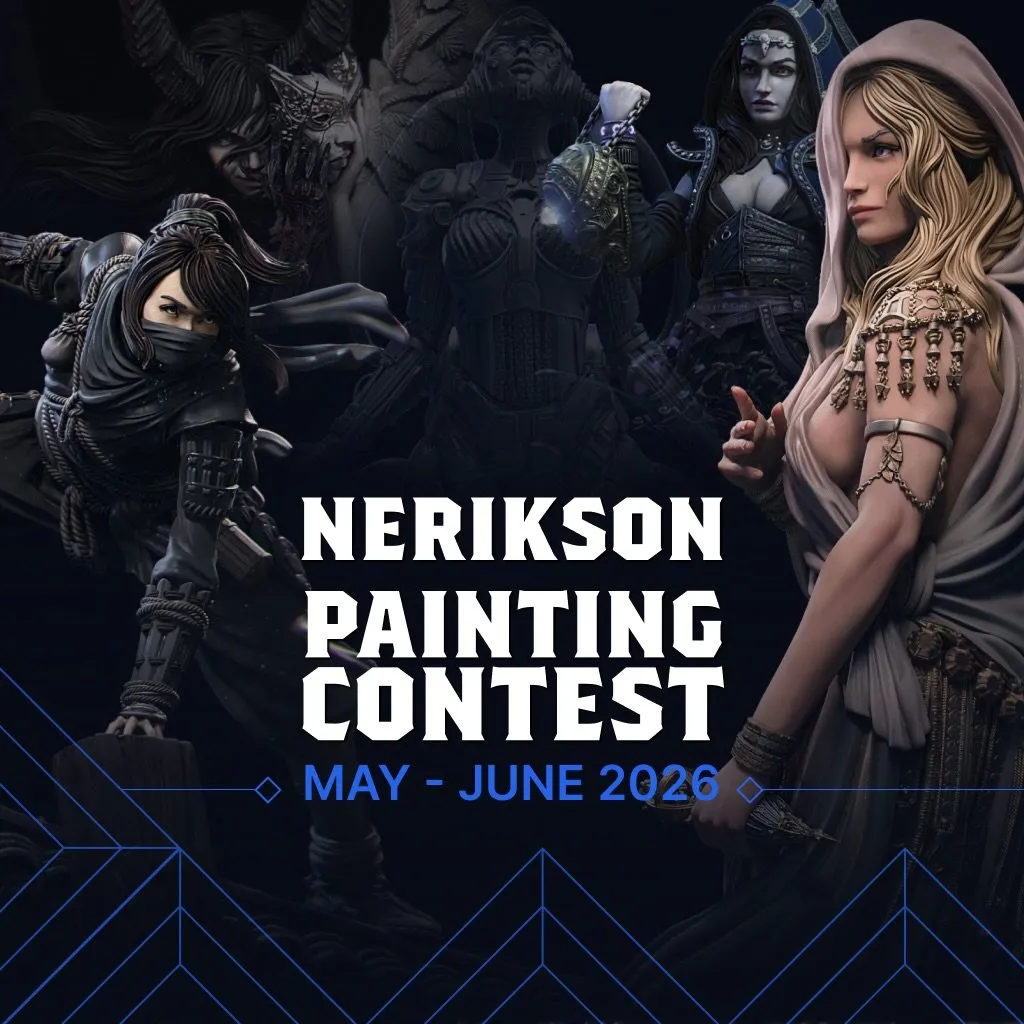
Poena Studios guide helps miniature painters choose contest categories
Poena Studios turns contest entry into a strategy call: judge your work honestly, read the rules, and choose the division that fits your goals.

A finished model can belong in Beginner, Intermediate, or Masters, and picking the right class is often harder than painting it.
Start with the category, not the medal
Poena Studios’ June 21 competition guide centers on the confidence gap that keeps many painters on the sidelines. Contest success starts before the brushwork, because the category you choose shapes how your entry will be judged and what kind of benchmark you are setting for yourself. Category selection is less like an admission of talent and more like a strategic decision about where your current work belongs.
Competition classes are not just labels. A Beginner field, an Intermediate field, and a Masters field can all exist in the same event, but each one creates a different standard of comparison. If you enter too high, you can end up measuring your piece against a level of finish or complexity that is out of step with your goals. Entering too low can be just as unsatisfying, because it may not give you the challenge or feedback you want from the show.
Judge your own work honestly
Self-assessment is part of the entry process. That means looking at your highlights, blends, basing, freehand, and overall presentation with the same blunt eye you would use on someone else’s model. If the work is solid but still developing, a lower or middle division may be the right fit. If the piece is pushing your own standards and matching the level you see in top tables, Masters may make sense.
That kind of honesty is especially useful for first-time competitors, who often read category names as a verdict on their skill rather than a tool for placement. The category should match the model, the event, and the goal.
Know that competition systems are not all the same
Contest systems can be designed very differently, even when the category names sound familiar. A Beginner class at one event may not carry the same standard as a Beginner class at another, and the label on the entry form does not automatically tell you how the judges will apply it.
Painters need to look beyond the name and read how the competition is structured. Some events are built around Open judging, while others use a Podium format, and the difference changes both how entries are awarded and how painters should think about placement. If you assume every show works the same way, it becomes easy to misread the field before you ever unpack your models.
Open and Podium reward different things
In an Open contest, multiple medals can be awarded at the same level if several entries earn them. That setup can be encouraging for painters because strong work is not forced into a fixed one-winner-only frame, and more than one model can leave with recognition if the standard is there.
Podium competitions are tighter. In that format, only one gold, one silver, and one bronze are awarded per category. That makes the competition feel more compressed, and it can raise the importance of how your work compares with the very top entries in the room.
Watch for judge movement between divisions
Judges may move an entry into another division if they think it belongs elsewhere. That matters because it can reduce pressure on first-time entrants who are unsure whether they have chosen the right class. It also helps preserve fairness when a model is entered into a category that does not quite match its level.

For painters, that means a carefully chosen entry is still valuable even if the initial placement is imperfect. The system is built, at least in part, to keep the contest organized around the model’s actual level rather than the entrant’s guess alone.
Read the rules before you submit anything
Read the rules before entering. That includes category limits, whether the event allows multiple entries, and what style of judging the show uses. Those details decide how many pieces you can submit, where they can go, and how your work will be compared against the rest of the field.
A painter who checks those rules early can avoid the most common entry mistakes. One event may allow several models from the same painter; another may not. One may use Open judging, while another uses Podium. A category name may look familiar, but the rule sheet is what tells you whether the division is actually the right home for your piece.
Use contests as a growth tool
A contest entry is not a final exam. It is a way to place your current work in the right environment so you can see where you stand and what to improve next.
When you choose a category strategically, you are not lowering the stakes. You are setting them correctly. A model entered into the right class can teach you far more than one entered out of nerves or guesswork, and the experience becomes part of your growth instead of a judgment on your worth as a painter.
This article was produced by Prism’s automated news system from verified source data, official records, and press releases, then run through automated quality and moderation checks before publishing. The system is built and supervised by the people who set the standards it runs under. Read our full AI policy.
Did this article answer your question?