Roman Lappat’s speedpainting masterclass teaches fast, repeatable zombie workflows
Roman Lappat’s one-day zombie class turns speedpainting into a repeatable workflow, with 15-minute figures and army-ready habits.
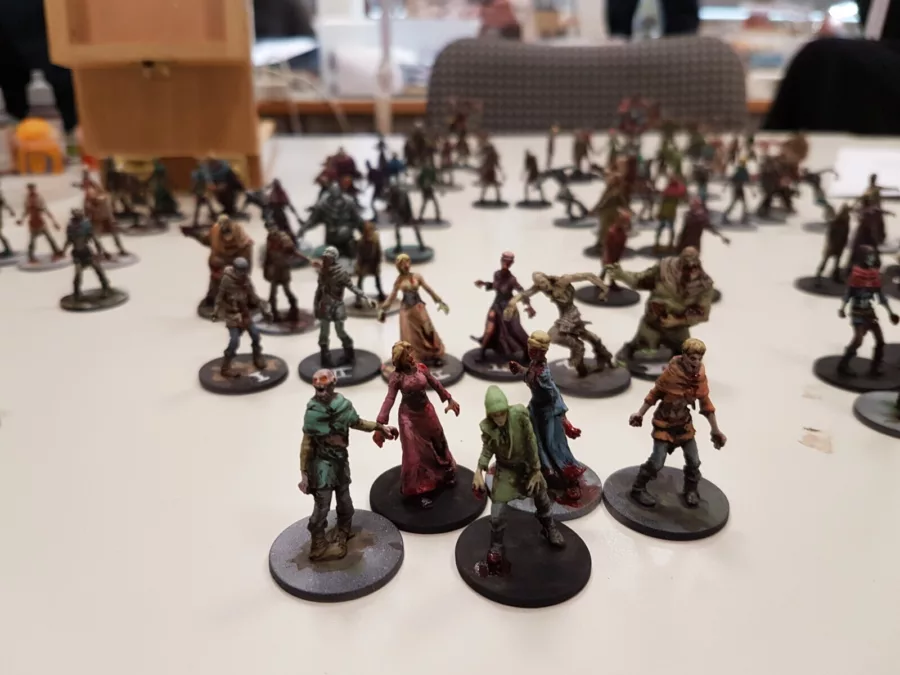
Roman Lappat is making a case that many miniature painters still resist: speed does not have to mean sloppiness. His one-day speedpainting masterclass in Augsburg is built around zombies, but the real promise is a workflow that lets you finish faster without losing the look that makes a figure worth putting on the table.
What this masterclass is really about
The class is framed around speed, efficiency, and zombie hordes, which is exactly why it matters to anyone fighting the backlog. Instead of treating speedpainting as a bag of shortcuts, the workshop is designed to show how a zombie gaming figure can be brought to a game-ready finish in about fifteen minutes. That kind of result is not just about one paint recipe. It is about learning a repeatable sequence that can be carried over to other gaming figures, especially when you need armies, skirmish forces, or display projects to move quickly.
That emphasis on repeatability is the sharpest takeaway. The class is not trying to cover every corner of miniature painting in one day. It is built as a masterclass seminar, which means the focus stays on one subject in depth: how to build a process that keeps your work consistent when the clock is working against you. For painters who have ever looked at a growing pile of unpainted models and wondered how to make progress feel manageable, that is the real lesson hiding inside the zombie theme.
What you can realistically learn in a day
A fifteen-minute zombie is a useful benchmark because it forces hard decisions. The class is not about laboring over every texture forever, but about choosing the steps that create maximum visual payoff in minimum time. That kind of structure usually teaches a painter to simplify the route, not the result.
In practical terms, that means you can expect the mindset to shift toward a few key habits:
- Build a process you can repeat figure after figure, rather than improvising from scratch each time.
- Aim for strong readability first, so the model still works from across a gaming table.
- Use the subject’s natural grime, decay, and chaos to your advantage instead of fighting for perfect cleanliness.
- Treat time as part of the recipe, because a method that works once still has to survive the tenth or twentieth model.
That is why the zombie subject is so smart. A shambling corpse gives you room to work fast, but it also exposes whether your workflow actually holds together. If your process can produce a convincing undead model in roughly a quarter hour, it has real potential for larger batches and wider army projects.
Why Roman Lappat’s teaching background matters
Lappat is not approaching this as a casual demo. He says he has taught over 5,000 students through workshops, events, and private coaching, with almost two hundred beginner workshops, more than one hundred special group workshops, and more than two hundred private coaching students behind him. That volume matters because speedpainting only works as a teaching subject when the instructor can break it into clear, repeatable decisions instead of vague advice.
He also says he usually does not teach masterclass seminars, which gives this workshop a different feel from a standard class listing. It is presented as a focused event, not a broad sampler, and that narrowness is part of the appeal. Painters who want a serious answer to batch painting and time pressure are not looking for inspiration alone. They want a method that can survive real hobby life, where the next deadline is usually another game night, another event, or another unit that needs paint on it now.
Lappat’s teaching page also identifies him as a miniature painter and teacher based in Augsburg. That local studio setting reinforces the sense that this is hands-on instruction rather than a lecture about theory. The workshop is built for painters who want to work, test, and leave with a process they can use again.
Event details painters need to know
The masterclass is listed for June 13, 2026, as a one-day session taught in English. It is marked for all student levels, and the price is €178.50. The venue is Roman Lappat Studio, Derchinger Straße 153, Augsburg, Bavaria 86165, Germany, and the listing notes that the workshop needs sufficient bookings to take place.
That combination makes the class unusually straightforward: one day, one focus, one promised outcome. You are not signing up for a broad survey of techniques. You are signing up to learn how to turn a zombie figure into a fast, repeatable benchmark for your own painting process.
A format with history, not a one-off gimmick
The 2026 listing is not the first time this idea has appeared in Lappat’s orbit. Hobby coverage from 2021 showed that the Speedpainting Masterclass had already been run before, so the format has history behind it. That matters because repeat appearances usually mean a teaching approach has proven useful enough to keep returning.
There is also a useful visual breadcrumb in his 2025 gallery, where a speedpainting demo called 15 min Speedpainted Zombie shows a 32mm Zombicide figure. That example backs up the workshop’s central claim in a very concrete way: this is not theoretical speedpainting, but a demonstrated method for getting a gaming figure to the table fast.
The tension at the heart of the class is the same one that pulls so many painters in two directions: you want your minis to look good, but you also want them finished. Lappat’s zombie masterclass leans into that problem instead of avoiding it, using a shambling horde as a test case for something bigger. If the method works here, under time pressure, it can probably work on the next unit too.
This article was produced by Prism’s automated news system from verified source data, official records, and press releases, then run through automated quality and moderation checks before publishing. The system is built and supervised by the people who set the standards it runs under. Read our full AI policy.
Did this article answer your question?