The Army Painter Academy explains paint consistency and primer effects
Chalky coats and streaky coverage usually start with the same culprit: inconsistent paint. The Army Painter’s Academy 101 lesson turns that problem into a practical read on pigments, primer, and brush control.
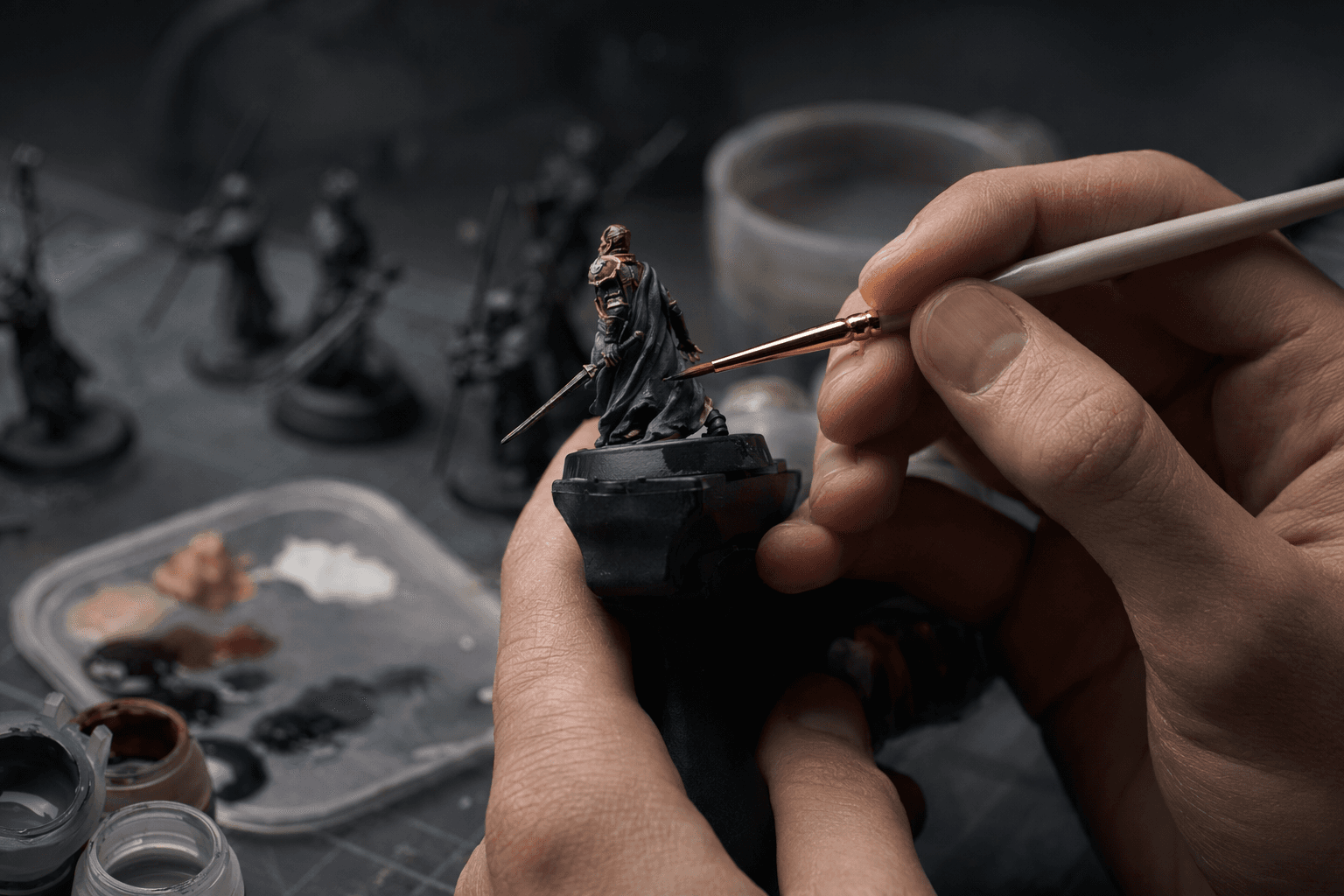
Chalky coats, clogged detail, streaking, and patchy coverage usually point to one thing before anything else: paint consistency. The Army Painter’s Academy 101 lesson goes straight at that problem, using Robert Karlsson, aka Rogland Studio, to frame consistency as the hidden variable that decides whether a layer settles smoothly or fights you on the model.
Paint does not all behave the same
The core message is simple but easy to overlook at the desk: different paints behave differently, even inside the same range. Pigment strength, transparency, and how many other colors are mixed into the formula all change the way a paint moves on the brush and lands on the miniature. That is why one color can cover beautifully while another from the same line looks thin, streaky, or translucent.
Karlsson’s point is not that theory replaces practice. It is that theory should guide practice, so you can read what the paint is doing instead of guessing. Once you understand that a color’s actual behavior depends on its formulation, the usual frustration around “why does this one act weird” starts to look less mysterious and more like a predictable material problem.
A useful detail from the lesson is the effect of white in a mix. Adding white often increases opacity, which helps explain why some blends suddenly cover better while others turn weak and see-through. For painters building highlights, edge transitions, or mixed skin tones, that is not a minor nuance. It is often the difference between a controllable layer and a frustrating one.
Primer sets the stage before the brush even touches the model
The other major lesson is that paint never works in a vacuum. The surface underneath it matters just as much as the paint itself, and The Army Painter’s newer posts underline that the same color can look very different depending on the undercoat or primer beneath it. Switch from black to grey, white, zenithal, or a colored undercoat, and the apparent result changes fast.
That is where primer stops being a box to check and becomes part of the finish you are designing. The Army Painter’s painting guide says priming creates a uniform surface, helps paint apply evenly, and preserves detail. In practical terms, that means the primer is not just there to make paint stick. It also shapes how the first layers read, how evenly they spread, and how much of the sculpt survives the process.
For anyone who has battled streaking or patchiness, this is the real diagnostic shift. The fix is not always more thinning, and it is not always a better brush. Sometimes the problem is simply that the primer and the paint are working against each other, so the finish keeps changing before you can control it.
Why the lesson matters for Speedpaint and regular ranges alike
The timing of the Academy 101 post fits neatly into The Army Painter’s broader 2026 teaching push, which has also included pieces on preparing miniatures properly, using Speedpaint, and explaining why a Speedpaint color can look different in the bottle than it does on the model. That matters because the company’s own product line is built around different paint behaviors, not one universal standard.
Speedpaint is presented as a one-coat solution, designed to give a base color, shading, and highlight effects in a single application. The newer product pages also say the range now includes 90 colors, and the company shows it applied directly over a white-primed miniature for a ready-to-go finish. That makes primer choice especially important, because Speedpaint is built to exploit the surface underneath rather than ignore it.
The lesson from Academy 101 is that even a fast-range system still depends on understanding what is happening below the surface. If the undercoat changes, the final look changes too. If the brush movement changes, the result changes again. That is why consistency is not only a question for traditional layering, but also for painters using Speedpaint, glazing, or batch work.
A teaching series built around repeatable results
The Army Painter has positioned Academy as a step-by-step educational series, not a one-off tutorial. That approach makes sense for a brand that says its paints are developed specifically for miniatures and wargaming, because repeatable results matter when you are painting armies, characters, and showcase pieces at different scales and speeds.

Robert Karlsson is a strong fit for that role. A later Academy masterclass describes him as a well-known miniature painter and links him to non-metallic-metal tutorials, which gives the consistency lesson extra weight. This is not a generic hobby tip from someone talking around the problem. It comes from a painter the company is actively presenting as one of its core teaching voices.
The result is a useful framework for reading your own work at the desk:
- If coverage looks chalky, look at pigment strength and whether the mix has too much white.
- If a color seems thin or translucent, check how transparent the formula is and what primer is underneath it.
- If the same paint behaves differently from model to model, compare black, grey, white, zenithal, and colored undercoats before changing your technique.
- If streaks keep appearing, pay attention to brush movement as much as thinning.
That is the real value of Academy 101. It does not treat paint as a mystery liquid that should simply cooperate if you are careful enough. It treats consistency, primer, and movement as a system. Once those pieces line up, the first coat stops fighting you and starts doing exactly what you asked it to do.
This article was produced by Prism’s automated news system from verified source data, official records, and press releases, then run through automated quality and moderation checks before publishing. The system is built and supervised by the people who set the standards it runs under. Read our full AI policy.
Did this article answer your question?