Thingiverse drying tray helps miniature painters move wet parts safely
A modular drying tray from klanderso gives batch painters a safer place to park wet subassemblies, so desks stay clearer and smudges stay fewer.
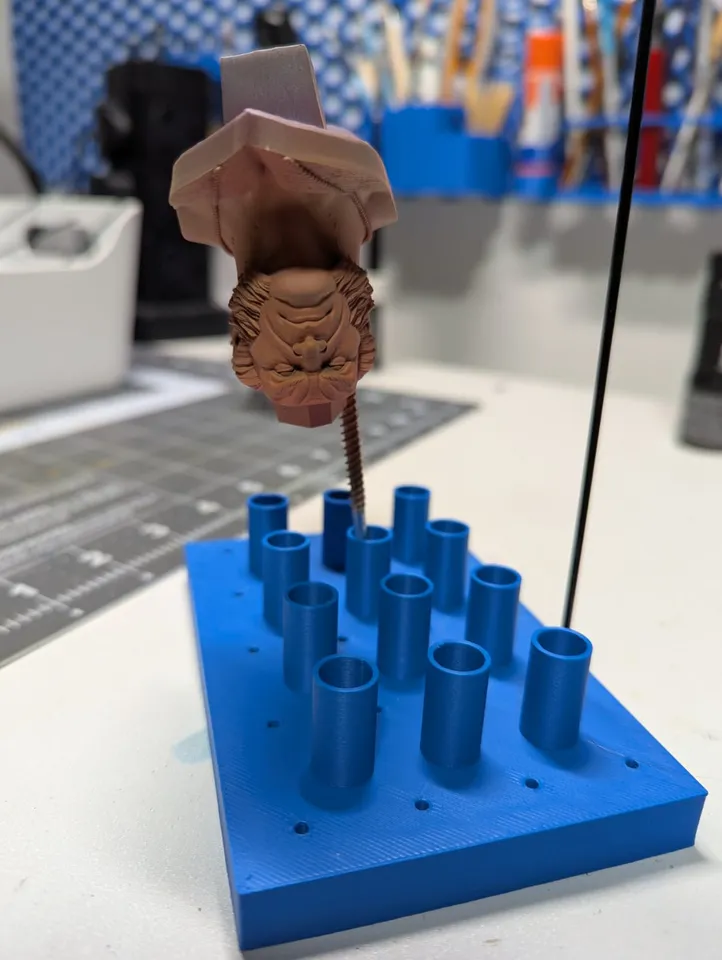
A wet subassembly is often most vulnerable after the brushwork is done, not before it starts. That is where klanderso’s new drying tray earns its keep: it gives miniature painters a dedicated place to move painted parts off the workbench without balancing them on cardboard, a kitchen table, or whatever flat surface happens to be nearby.
A tray built for the messy middle of painting
The project is not a display piece or a finished model in the usual sense. It is a workflow tool for craft, painting, art, and miniature work, designed around a problem every batch painter knows well: once a piece is painted, where do you put it while it dries without touching it or tipping it over?
The backstory is telling. The tray grew out of the creator’s habit of moving painted Stargate chevron pieces on cardboard, only to have a household member keep tossing the cardboard out. That kind of small domestic friction is exactly how useful hobby tools are born. The result is a tray that treats the “where do I park this?” question as part of the painting process, not an afterthought.
What the tray actually offers
The main body of the tray is described as 2 mm thick, which puts it in the sweet spot between light enough to handle and sturdy enough to carry small parts safely. It comes in small, medium, or large hex-hole versions, plus a solid version with a lip. That gives painters a choice between a more open, breathable surface and a more contained one for delicate bits.
The design is meant to be flexible enough to carry light objects while still rigid enough not to dump everything on the floor when you lift it. For miniature painters, that balance matters. You are not trying to warehouse whole armies here. You are trying to move heads, shields, banners, weapon swaps, scenic pieces, and basing fragments from one stage of the desk to another without touching fresh paint.
Why modular matters at the hobby desk
The real strength of this tray is not just that it exists, but that it can grow with the way you paint. The project includes snap-on accessories that add edge lips, raised corner pieces that can stack for extra height, connectors for joining trays edge-to-edge or corner-to-corner, and a handle that can also act as a riser when flipped upside down.
That modularity turns one tray into a small system. A painter can keep tiny infantry heads separated, line up shields in a safe row, or organize terrain bits before basing. If you batch paint, that kind of flexibility matters as much as the model itself, because the bottleneck is rarely the brushstroke. It is the movement between steps.
A setup like this can do a few practical things at once:
- keep wet parts off a crowded desk
- reduce accidental smudges while moving pieces around the room
- let you sort subassemblies by stage, color, or unit
- make it easier to carry multiple fragile parts in one trip
- free up your painting surface for the next batch
A familiar problem in miniature painting
This tray fits neatly into a longer hobby pattern. In 2019, a miniature drying and display rack was shared because terrain and miniature painters needed somewhere to dry pieces that would not crowd the work surface. In 2025, another drying rack for painting was made to speed up drying times for painted items. The details change, but the need stays the same: painters want a cleaner handoff between “finished this coat” and “safe to touch again.”
That is what makes this tray feel less like a novelty and more like a practical upgrade. It addresses the part of the hobby that usually gets improvised with scraps of cardboard, foam, and whatever happens to be flat. A purpose-built tray saves time because it removes decision-making from the drying phase. It saves space because the parts are corralled instead of spread across the desk. And it saves paint jobs, because fewer pieces are getting nudged while they are still vulnerable.
Why Stargate fans will recognize the logic immediately
The chevron backstory also makes perfect sense in the context of Stargate fandom. Multi-part Stargate builds often use separate chevron components and LED-friendly elements, which means there are plenty of small pieces that need to be painted, handled, and staged in sequence. The same kind of project that asks you to paint dozens of tiny details also asks you to move those details safely before assembly.
That is why a drying tray belongs in this corner of the hobby. It is not only for one franchise or one kind of build. It is for any workflow where a painted part is still a part in transit, not yet glued down and not yet safe from an elbow, a sleeve, or a badly timed cleanup pass.
Where this model sits now
The Thingiverse listing was published on June 11, 2026 and is released under Creative Commons Attribution-NonCommercial. It also points painters to Printables for updates, where the same project appears as “Craft / painting / art / miniature drying random tray.” That matters because it signals an actively maintained tool, not a one-off upload that will be forgotten after the first wave of downloads.
For painters, that maintenance angle is part of the appeal. A drying tray only becomes more useful when its accessories evolve with the kinds of parts you are actually handling. If your bench already has paints, wet palettes, clippers, tweezers, and half-finished bases competing for space, a tray like this gives the drying stage its own lane.
The smartest thing about the design is how ordinary its problem is. It does not promise a dramatic new technique or a flashy result. It simply makes the most awkward part of batch painting safer, cleaner, and easier to repeat, which is exactly the kind of upgrade that keeps a desk moving when the wet parts start piling up.
This article was produced by Prism’s automated news system from verified source data, official records, and press releases, then run through automated quality and moderation checks before publishing. The system is built and supervised by the people who set the standards it runs under. Read our full AI policy.
Did this article answer your question?