Thousand Sons rules spotlight their sorcerous, visually striking armies
The Thousand Sons faction focus turns sorcery into a painter’s brief: blue armor, gold trim, warp glow, and mutation all feel central to the army’s identity.
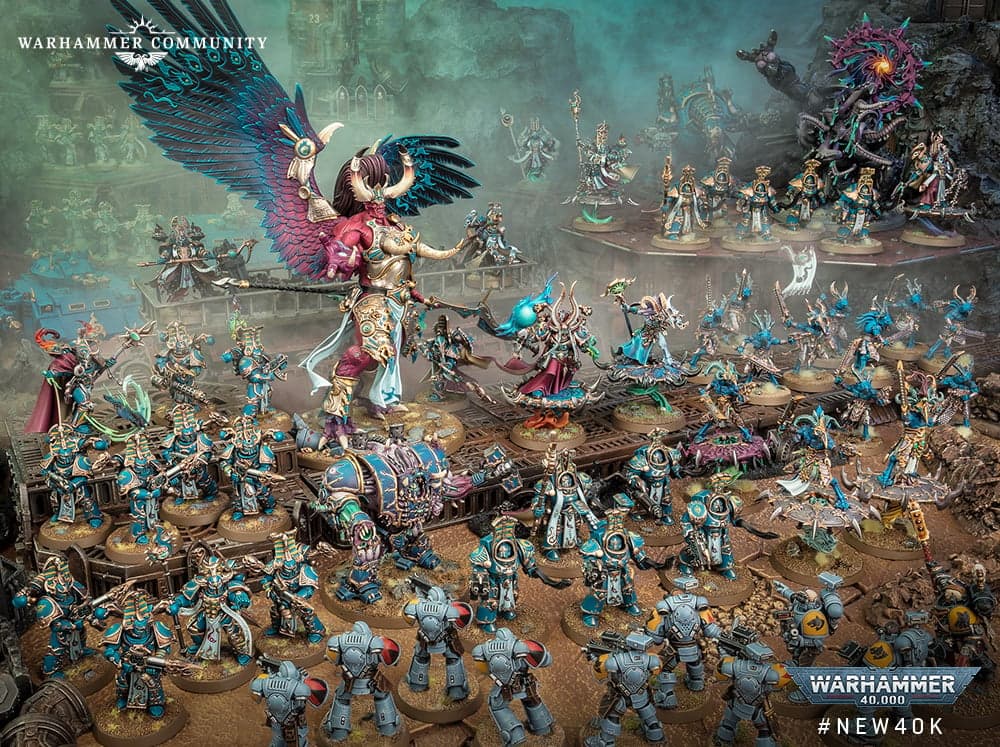
The army’s rules now read like a paint plan
The biggest takeaway from the Thousand Sons faction focus is simple: this army wants to look like magic made visible. The new edition puts Thousand Sons Psyker units at the center of the force, and that shift matters just as much on the painting desk as it does on the tabletop. When the faction’s identity is built around sorcery, rituals, and resilience, every model becomes an excuse to push glow, trim, runes, and corruption harder than you might in a more conventional Space Marine force.
That is why the Thousand Sons remain one of the easiest armies in Warhammer 40,000 to recognize from across the room. The visual language is already strong, with blue armor, gold trim, dust-filled Rubricae shells, and impossible warp effects doing most of the storytelling before a unit even moves. The rules spotlight only sharpens that identity, making the army feel like a fully coherent project instead of a loose collection of models.
Sorcery is the centerpiece, not the garnish
The faction focus makes it clear that the Thousand Sons are being framed around ritual and psychic power, not just as a faction with a few wizard-like characters. That matters for how you approach the army visually. If Psyker units are the backbone, then your most important paint decisions should live there first: the luminous armor plates, the deliberate gold edging, the arcane script, and the energy effects that make every sorcerer feel like the source of the army’s will.
That also gives you a very readable hierarchy across the force. Your sorcerers should feel richer, brighter, and more charged than the rank-and-file. Your Rubricae should look like sealed vessels for that power, all hard edges and ancient plate, while the whole army shares a common palette that says ritual, discipline, and warp-charged menace.
Build the palette around blue, gold, and glow
Thousand Sons painting works best when the army looks ornate without becoming busy. The classic blue armor and gold trim remain the anchor, and the new rules only reinforce why that combination works so well. Blue gives you a cold, mystical base, while gold trim catches the eye and makes every panel look like it has been relic-etched and consecrated by hand.
From there, the glow work becomes the real personality test. Energy effects on staves, eyes, weapons, and rune details should feel like the army is permanently mid-incantation. Bright turquoise, vivid teal, or a hotter magical hue all sit naturally against the blue-and-gold scheme, and the more saturated your glow source, the more the model looks like it is actively channeling the rituals the faction focus puts at the center of the army.
Let the rules suggest the effects
The clever part of this faction focus is that its mechanics suggest painterly choices without ever becoming a painting tutorial. Ritual of Regeneration, which lets a friendly Thousand Sons Psyker unit heal D3 wounds after successfully manifesting a Ritual, immediately reads as a visual cue for sustained magical resilience. That can translate into a model that looks repaired by sorcery rather than merely armored against damage, with brighter runes, cleaner highlights, or a subtle visual “pulse” of energy around the caster.
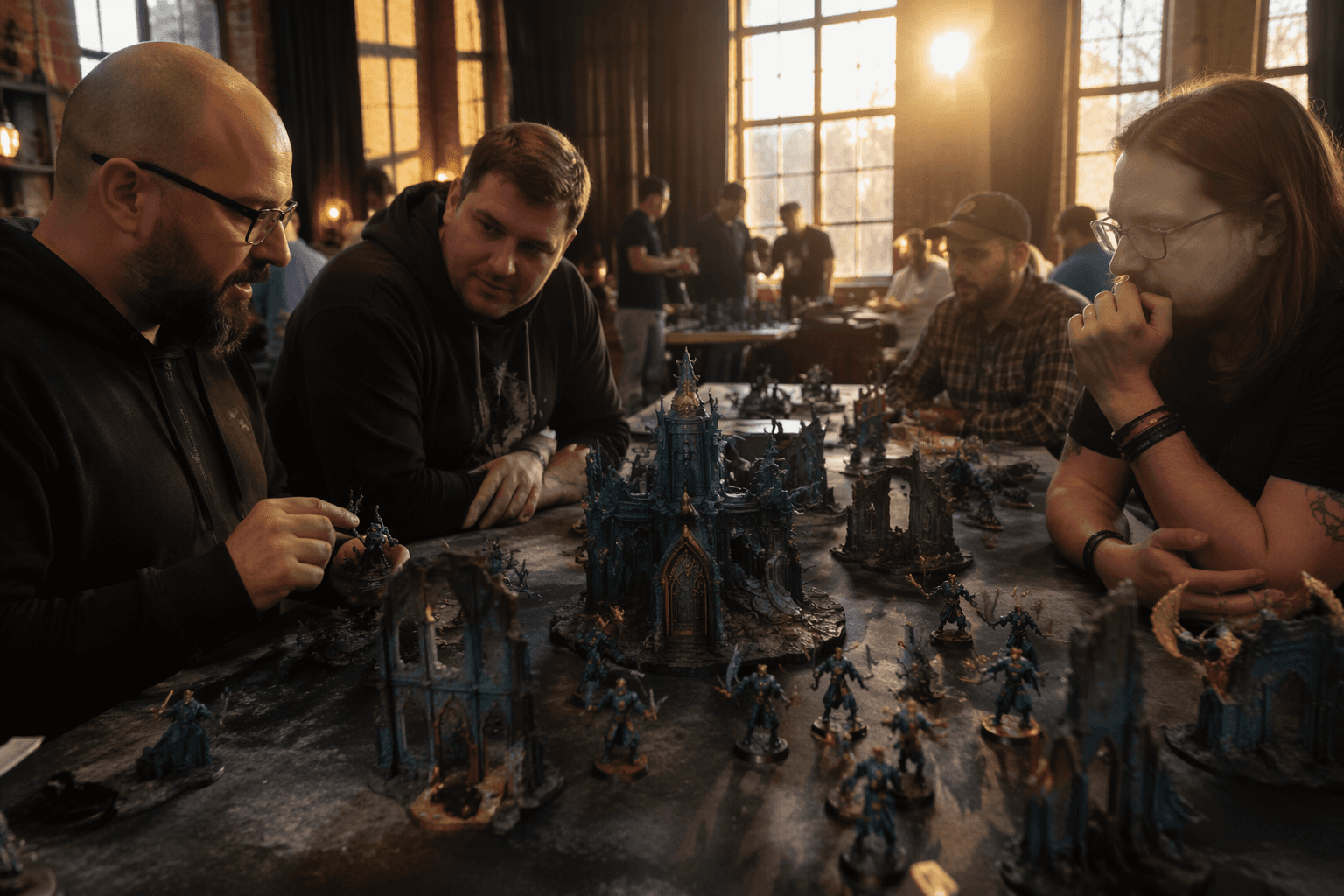
Eruption of Vitality pushes in an even more dramatic direction, since it allows a slain model to return with wounds remaining. That kind of rule practically begs for a visible restoration moment: a half-formed warp shimmer, a model with one side more intact than the other, or a returning warrior whose armor still shows the scars of destruction. The important thing is that the return feels unnatural, like the model has been reassembled by force of will rather than healed in any ordinary sense.
Mutagenic Magicks is the most grotesque of the three, turning enemy units into warped mutations after contact with the sorcerous blast. For painters, that is the green light for corruption details, flesh tones pushed toward the uncanny, and conversion work that makes the army feel as though reality itself is breaking around the spell. Even a single mutated trophy or a corrupted familiar can echo that rule across the whole force.
Make the characters look like the ritual engine
Because the faction’s backbone is psychic rather than purely martial, your characters should look like the engines that make the army function. This is where you can lean hardest into extra script, layered robes, ornate shoulder trim, and brighter energy sources. A Thousand Sons leader should not just read as a commander; he should look like the person holding the ritual together.
That same thinking helps when you work through individual units. The more ordinary the silhouette, the more important the surface treatment becomes. Rubricae should feel like ancient vessels sealed in dust and lacquered armor, while your sorcerers can carry the visual weight through hand-painted glyphs, talismans, and staff effects that appear to spill off the model.
Use basing and conversions to finish the story
The army’s rules point toward endurance, mutation, and warp interference, so your bases should support that mood instead of competing with it. Cracked stone, scorched ground, fragments of arcane ruin, and other unstable surfaces all fit the feeling of a force sustained by ritual instead of biology. If you want the army to feel even more strange, let the basing echo the color language of your glow effects so the whole model feels like it is standing inside the aftermath of a spell.
Conversions can go even further. Extra runes, warped armor edges, corrupted trophies, and subtle bodily mutations all reinforce what the faction focus is saying mechanically: this is an army where change is power and power is visible. The best Thousand Sons collections make that idea obvious even before the dice start rolling.
The new spotlight does not just tell you what the Thousand Sons do. It tells you how they should look while they do it, and that is the kind of signal painters can build an entire army around.
Know something we missed? Have a correction or additional information?
Submit a Tip

