Ultramarines Horus Heresy feature offers heraldry cues for painters
The Black Books feature doubles as a paint guide, with azurite blue, gold banding, veteran white panels, and Calth-era heraldry cues.

Warhammer Community published its newest Black Books feature on the Ultramarines on June 25, 2026, drawing on The Horus Heresy: Book 5: Tempest, first published in 2015. For anyone building XIII Legion models, the article is less about rules and more about the visual logic that makes a force read as Ultramarines: heraldry, armour tone, and the way the legion presents itself across the Heresy era.
Black Books as a visual map
The Horus Heresy sits 10,000 years before Warhammer 40,000 and pits 18 Space Marine Legions against one another for the Emperor or Chaos. That scale is exactly why old Black Books pages are useful on the painting desk: they preserve iconography and era-specific cues that newer box art can flatten. The Ultramarines entry traces the XIII Legion from the end of the Unification Wars, through the discovery of Roboute Guilliman, and into the creation of Ultramar, so you can place your army in a clear visual moment instead of painting every squad as if it belongs to the same undefined age.
If you are working on Horus Heresy Ultramarines, a successor chapter, or even a display model that needs to feel tied to Macragge, this kind of reference material helps you decide where to put emphasis before the brush ever touches the mini.
Lock in the core scheme first
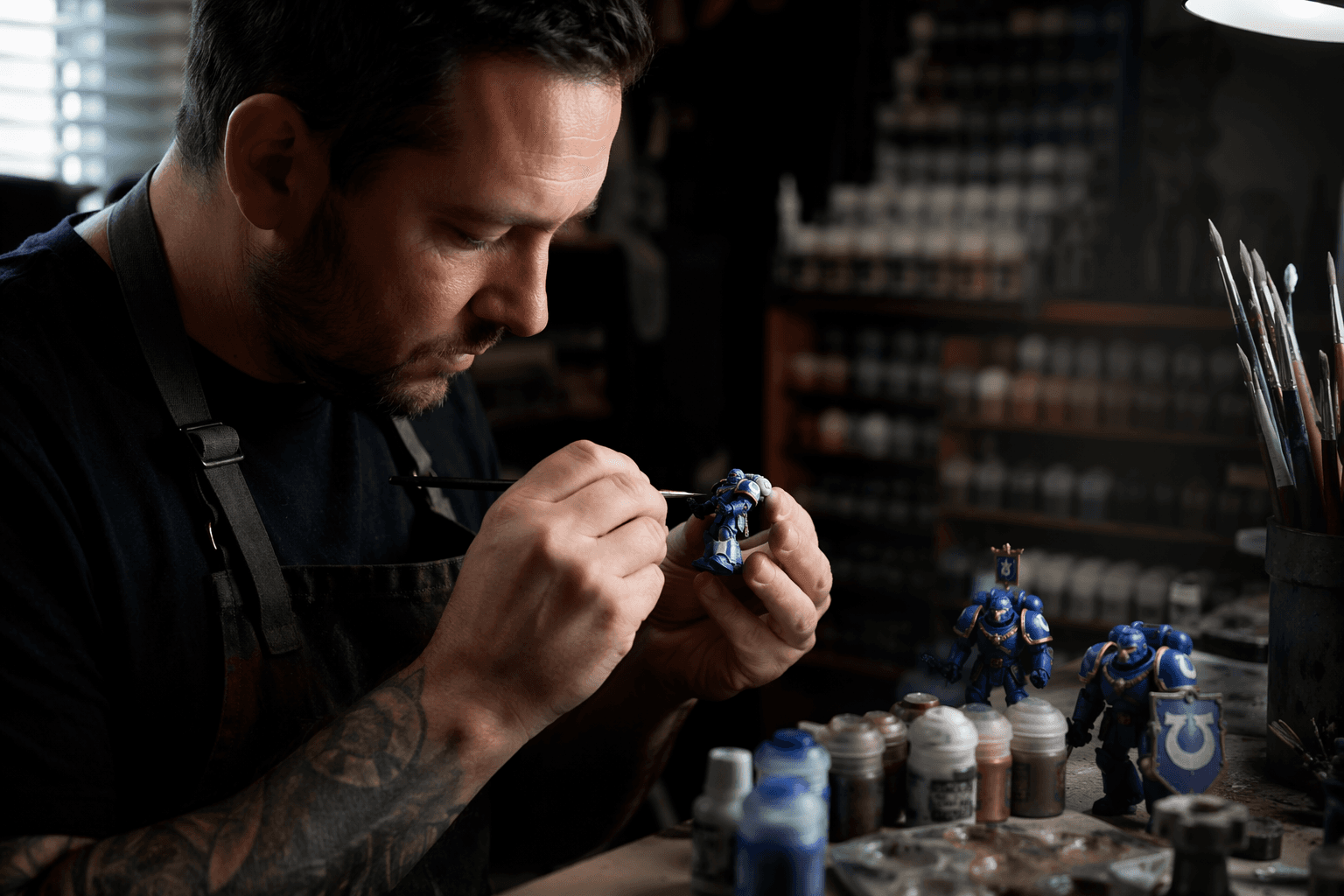
Azurite blue battle plate, gold banding, and white or black insignia form the core Ultramarines recipe in Warhammer’s official Horus Heresy painting guide. That gives you a clear base to plan from, because the legion should read as disciplined and ceremonial before you add weathering or personal markings. If the blue is doing the heavy lifting, the gold and insignia are there to keep the silhouette legible at arm’s length.
Veterans commonly add white armour segments, and ceremonial finishes can use a striated armourial effect. That is a practical gift for painters, because it lets you push rank and character without inventing a new scheme for every unit. A line company can stay clean and unified in blue, while veterans, sergeants, and command models gain white accents that instantly change how the unit reads on the table.
Let Calth decide how ornate the model becomes
The Horus Heresy: Book Five - Tempest is anchored on the Word Bearers’ attack on Calth. Warhammer Community’s 2022 Calth Underworld War coverage tied that story directly back to Tempest and to Black Library’s Mark of Calth anthology. That gives you a specific painting choice: build a Calth-era force with a sense of war-footing and heraldic pressure, rather than treating every Ultramarine as a parade-ground model.
That becomes especially useful if you are painting Remus Ventanus, the 2021 miniature released as the first Ultramarines counter-attacker on Calth. The model is covered in the symbols and insignia of the XIII Legion, which shows how far you can push heraldry while keeping the miniature readable.
Use Ultramar’s scale to shape the force
In Warhammer Community’s January 2026 look at the 500 Worlds, Ultramar covers a vast swathe of Imperial space in Ultima Segmentum, and Guilliman later shrank the amount of space directly controlled by Macragge and the Ultramarines after the Heresy. He rebuilt the realm with a council of tetrarchs and nine Ultramarines successor Shield Chapters. That broader structure leaves plenty of room for Ultramarines iconography across different kinds of armies and collections.
The Ultramarines are exemplars of the Codex Astartes and founders of a vast successor-chapter network across the Eastern Fringe. In hobby terms, that means the faction is unusually reference-rich. You can keep the legion markings consistent, then use rank, ceremony, and unit role to create variety.
This article was produced by Prism’s automated news system from verified source data, official records, and press releases, then run through automated quality and moderation checks before publishing. The system is built and supervised by the people who set the standards it runs under. Read our full AI policy.
Did this article answer your question?