Updated Buyer’s Guide Ranks Top Airbrushes for Miniature Painting 2026
An updated buyer's guide released Dec 30, 2025 ranks the best airbrushes for miniature painting in 2026 and lays out practical setup, nozzle, and maintenance advice for hobby use. The guide's Top 10 editor picks prioritize versatility and control, helping painters decide whether to add airbrushing to their workflow or upgrade existing gear.

A comprehensive buyer's guide updated Dec 30, 2025 has put a spotlight on airbrushing options for miniatures, naming the Harder & Steenbeck Ultra 2024 the top overall pick for budget and pro use. The guide presents an ordered Top 10 list with commentary on strengths and ideal uses, including the Evolution AL, Iwata Eclipse HP-CS, Harder & Steenbeck Infinity/CR Plus, and a range of Badger models among the editors' recommendations. That ranking frames practical choices for different budgets and painting goals.
The guide moves quickly from recommendations to the hardware that supports them. Compressor advice spans budget units for entry-level painters through to premium tanked compressors for larger workflows that demand steady pressure and quieter operation. For miniatures, nozzle and needle size is central: the guide recommends staying in the 0.15–0.35mm range, with smaller sizes for fine detail and larger sizes for basecoating and coverage. Those size ranges balance atomization and paint flow when working at miniature scale.
Maintenance and accessory choices get equal emphasis. Regular cleaning routines and proper needle care are highlighted as the most effective ways to avoid clogging and preserve spray consistency. The guide recommends on-brush PSI valves for quick pressure control, dedicated cleaning kits, and intake and line filters to keep contaminants out of the system. Those investments reduce downtime and extend the useful life of needles and nozzles.
Practical painting techniques for miniature work are included to help painters integrate airbrushing into their workflow. The guide outlines which airbrush setups excel at fine detail versus coverage and gives thinning guidance for acrylics and metallics, stressing that viscosity adjustments and test sprays are essential before committing to a model. For metallics, careful thinning and agitation reduce spatter and improve atomization; for standard acrylics, modest thinning to a milky consistency often produces good flow without over-wetting the surface.
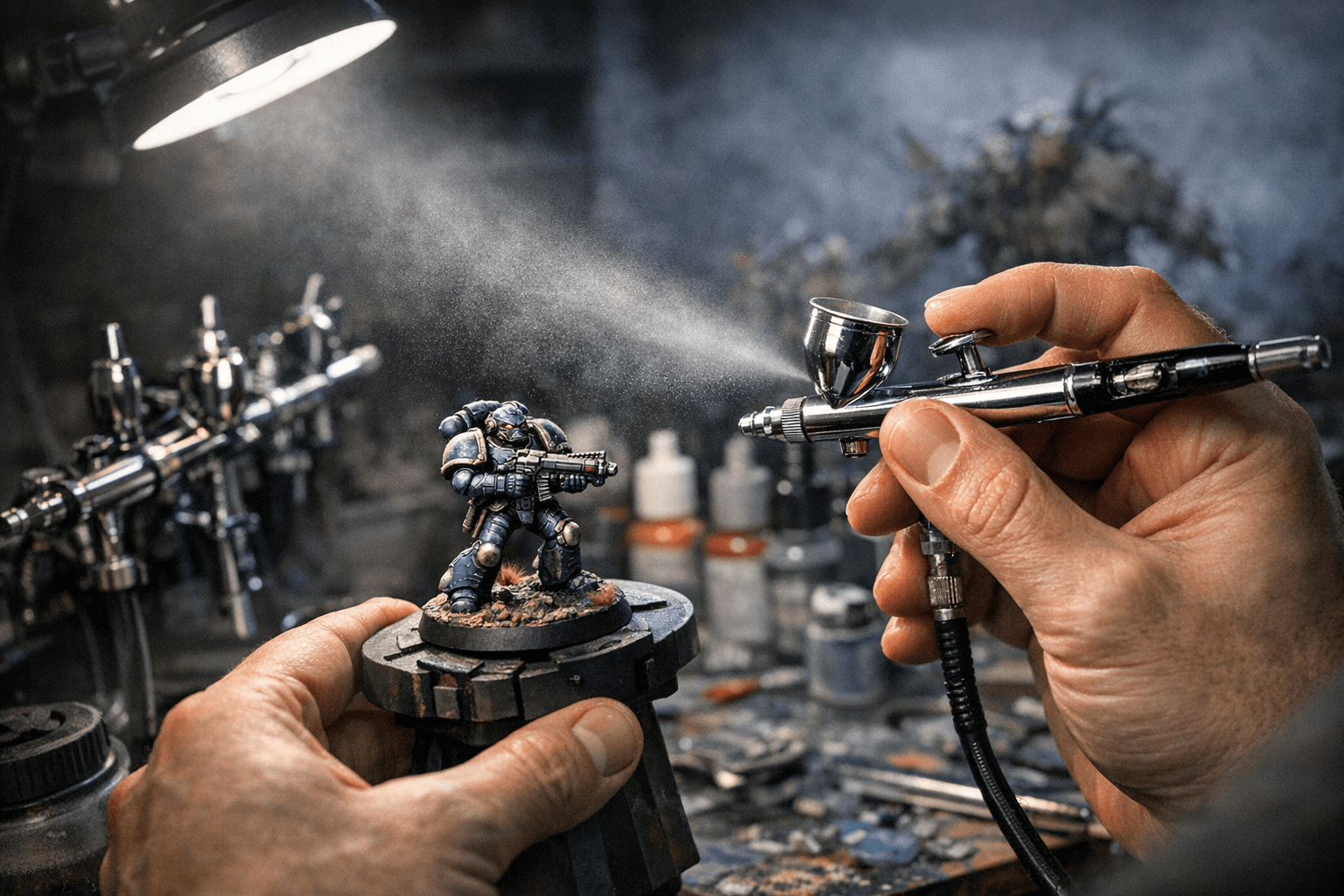
Quick troubleshooting tips round out the advice. Clean and inspect the needle regularly, check the nozzle seating, and adjust air pressure if atomization softens or spits appears. If the spray becomes inconsistent, empty and run cleaner through the head, then retest on scrap to dial in pressure and paint viscosity.
For painters weighing whether to buy an airbrush or upgrade, the guide offers a practical framework: match nozzle size and compressor capability to the primary task, prioritize maintenance tools and filters, and test thinning and pressure in small steps. The result is a roadmap that helps painters add airbrushing with confidence or improve the reliability of an existing setup.
This article was produced by Prism’s automated news system from verified source data, official records, and press releases, then run through automated quality and moderation checks before publishing. The system is built and supervised by the people who set the standards it runs under. Read our full AI policy.
Did this article answer your question?