Wargames Atlantic Shows Late Roman Artillery Painting Progress in Hobby Corner Update
Wargames Atlantic's Max painted late Roman artillery pieces for the studio's Hobby Corner blog, showing modelling and painting progress useful for any historical miniatures painter.
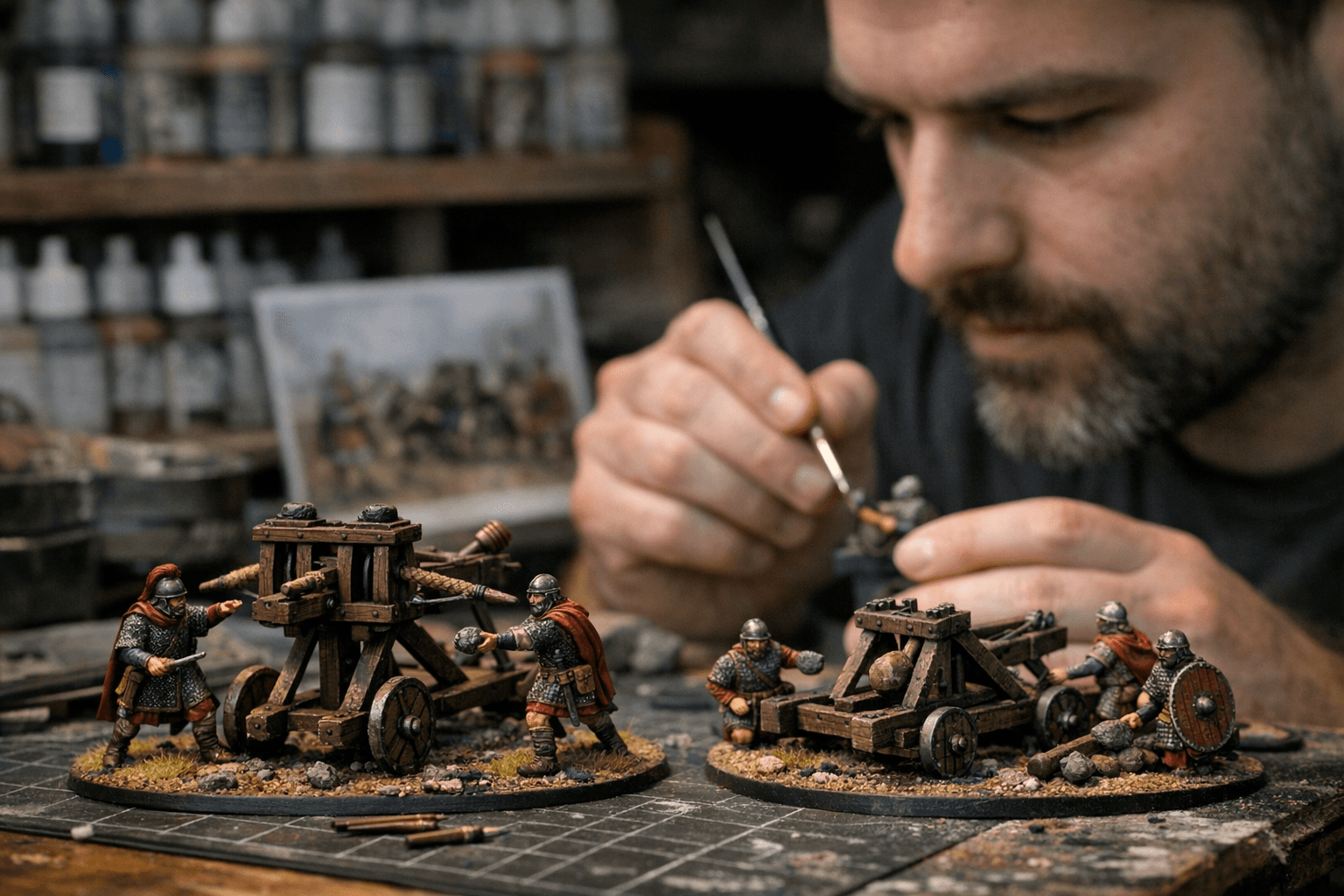
Wargames Atlantic's March 23 Hobby Corner post opened, as they always do, with a "Greetings Wargamers!" from a studio that describes itself as always tinkering with new projects. This time, team member Max took the lead, showing off artillery pieces from the late Roman period.
The Hobby Corner series is where the studio pulls back from product announcements and gives readers a genuine window into bench time, surfacing the kinds of painting experiments and modelling notes that don't fit neatly into a release post. That distinction matters. Product pages tell you what to buy; Hobby Corner tells you what the people making the kits are actually painting on a Tuesday.
Max's artillery project is a compelling subject for historical painters precisely because siege and field artillery of the late Roman period sits at the intersection of several painting disciplines at once. A multi-part artillery piece demands careful attention to wood grain treatments on the frame, metallic finishes on iron fittings and ratchet mechanisms, and weathered leather on the torsion elements, all before the crew even enters the picture. Getting a unit like this to read as coherent from arm's length while still rewarding close inspection is one of the more satisfying challenges in the historical side of the hobby.
The studio's Hobby Corner philosophy is rooted in exactly that kind of granular, project-level thinking: the team is always working with available and soon-to-come sets, and the posts reflect whatever is live on the bench. For painters, that means studio shots often reveal sprue geometry and assembly sequences before a kit formally ships, which can help with planning conversions, magnetisation strategies, or basing solutions in advance.
Wargames Atlantic's Decline and Fall range covers the era 284 AD to 476 AD, a span that takes in everything from Diocletian's military reforms through the collapse of the Western Empire. Artillery from that period, whether onagers, ballistae, or the lighter carroballistae mounted for field use, carries the visual weight of an empire under strain: functional, heavily maintained equipment painted and weathered to suggest long campaigns rather than parade-ground pristine.
The Hobby Corner format rewards painters who check back. Wargames Atlantic regularly follows initial posts with gallery updates and linked painting videos that expand on the techniques introduced in the short-form write-up. For anyone working through a late Roman project of their own, those follow-ups are worth tracking: color choices for the ochre-and-red palette associated with the period, approaches to dust and chipping on wooden siege equipment, and how the studio handles basing a crew vignette so that multiple figures feel like a single scene rather than a collection of individuals.
The artillery post is a small but well-timed reminder that some of the most practically useful painting content in the historical hobby comes not from dedicated tutorial channels but from manufacturers who simply show their work.
Know something we missed? Have a correction or additional information?
Submit a Tip

