Beatport mid-year review shows Minimal Techno still has commercial traction
Minimal techno is not leading Beatport’s 2026 story, but it still has a working lane. The charts show a crowded market where dedicated genre pages, clean branding, and DJ support still matter.
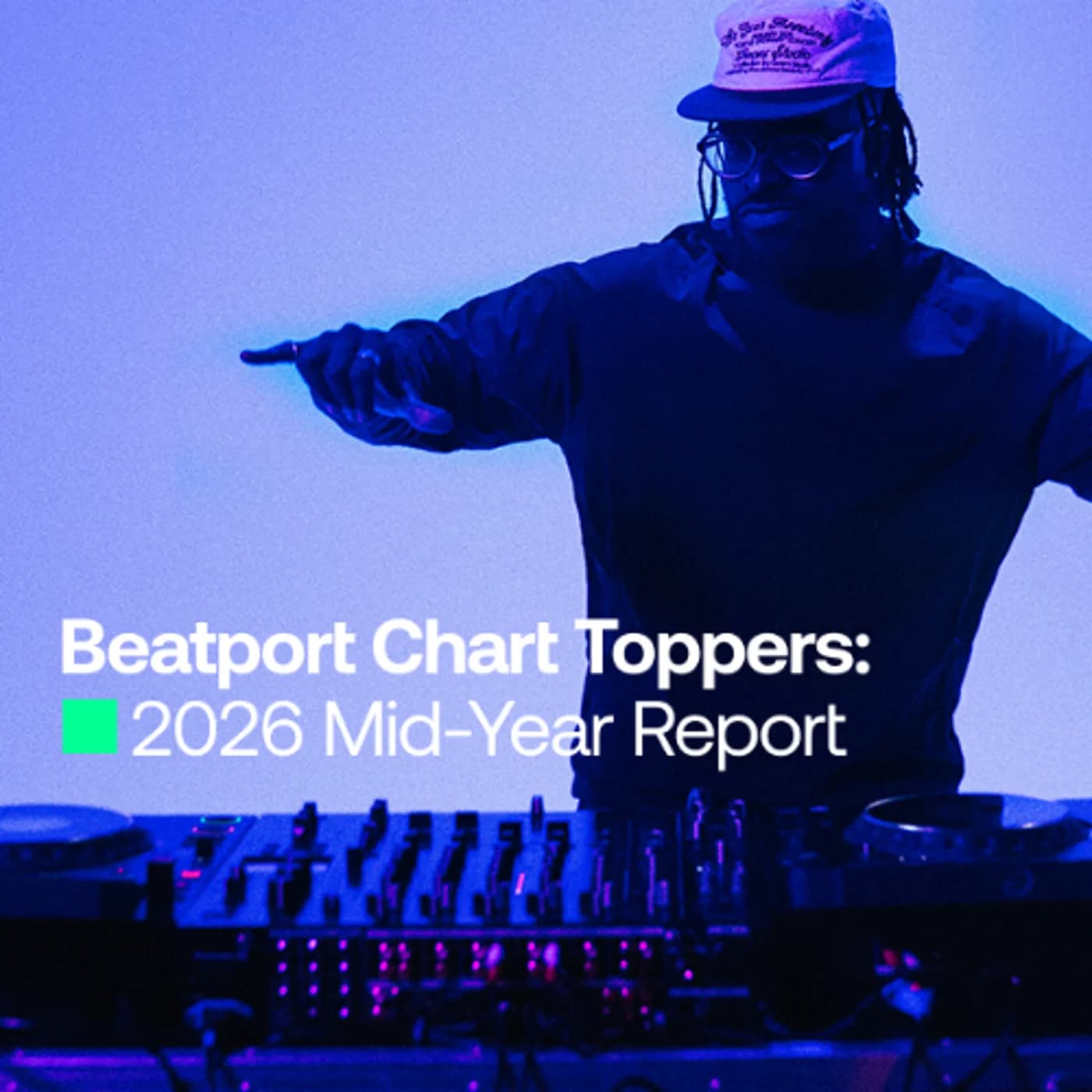
Minimal techno is still in the game because the market around it has not flattened into one monolithic sound. Beatport’s mid-year review shows a faster, busier dance-music ecosystem shaped by social platforms, streaming habits, DJ edits, and local scenes, and that matters for any minimal or deep tech record trying to cut through. The headline styles may be louder, but the infrastructure that keeps a minimal release visible is still there.
The 2026 market is moving faster, not simpler
Beatport’s June 29 mid-year review puts tech house at the center of the first half of 2026, with house acting as the backbone of the wider market. Melodic house & techno is still expanding into larger rooms, while Afro house has moved from side story to major presence. Latin electronic has been added to Beatport’s taxonomy, Brazilian funk is cutting through, and UKG, jungle, drum & bass, hard techno, and psy-techno are all still punching at peak time.
That matters for minimal because it shows where the pressure is coming from. The commercial middle is crowded with styles that borrow from club utility, groove, and low-end function, so minimal no longer competes only with other stripped-back records. It is competing with anything that can land in a DJ set, travel on streaming, and hold attention in a packed market.
Minimal / Deep Tech still has a defined commercial lane
Beatport still maintains a dedicated Minimal / Deep Tech charts page and a top-100 genre page, which is the clearest signal that the style remains a living category inside the store’s sales architecture. That is not just a sorting detail. It means the genre still has a formal place in the marketplace, with enough activity to justify its own browsing route for selectors, buyers, and labels hunting for a specific sound.
Beatport’s broader chart strategy reinforces that point. The platform’s 2025 mid-year report said it adds more than 100,000 tracks each month, and it described its coverage as spanning 34 diverse genre categories. Its annual Chart Toppers package covered 12 essential genres, which shows how seriously Beatport treats segmentation as part of discovery. In practical terms, that means a minimal release is not floating in a generic pool, it is fighting for position inside a named lane that buyers still use.
What the 2025 minimal rankings say about the lane
The best evidence that minimal/deep tech still has a pulse in the commercial ecosystem comes from Beatport’s own 2025 genre roundups. In that year’s Minimal / Deep Tech coverage, Kolter, Julian Fijma, and Jamback were highlighted as top artists, while tszr and Solid Grooves were singled out among the labels keeping the underground moving. Those names matter because they show how the lane works: a mix of forward-facing producers and labels with a clear identity, not just isolated tracks.
Beatport’s 2025 chart-toppers package also placed Minimal / Deep Tech alongside House, Tech House, Melodic House & Techno, Drum & Bass, Techno, Trance, and UK Garage / Bassline. That list is important for context. Minimal was not treated as a leftover niche, but as one of the store’s essential sales genres, sitting inside the same commercial frame as larger, more obviously dominant styles.
Visibility now depends on clarity, not just quality
For smaller labels, the market creates two hard truths at once. First, the field is more crowded than ever, so clear branding, disciplined catalog management, and strong DJ support matter more than they used to. Second, genre categories still function as navigational tools, which means a minimal/deep tech release can still find a real audience if it is packaged cleanly and placed where selectors can actually find it.
That is the practical lesson hidden inside Beatport’s review. The genre is not the headline of 2026, and it does not need to be. It just needs to stay legible inside a market where tech house dominates attention and crossover sounds constantly raid the same dance floors. In that environment, minimal’s advantage is precision: fewer elements, stronger identity, and a direct path to DJs who already know what they are looking for.
How this plays out for crate-diggers and working DJs
For crate-diggers, the value of Beatport’s structure is that it still separates the signal from the noise. A dedicated Minimal / Deep Tech page means you can still shop the lane without wading through every broader tech-house release that borrows a similar groove. That helps when you are building sets around texture, space, and momentum instead of chasing whatever is currently the loudest.
For working DJs, the 2026 review says the lane still earns bookings in the mix, but it has to justify itself against bigger crossover styles. The strongest records are the ones that can live in a minimal set and still survive a peak-time room surrounded by tech house, Afro house, and harder late-night pressure. That is the commercial reality now: minimal survives by staying useful.
The bottom line for the scene
Beatport’s mid-year picture does not read like a burial notice for minimal techno. It reads like proof that the genre still has commercial traction inside a much wider, faster, more crowded marketplace. The big story is tech house’s dominance and the rise of crossover styles, but the deeper story is that Minimal / Deep Tech still has its own charts, its own sellers, and its own buyers.
That is why the June 29 review lands the way it does. The scene around minimal is louder, busier, and more competitive than ever, yet the lane itself is still intact, and that gives the genre a real place in the modern club economy.
This article was produced by Prism’s automated news system from verified source data, official records, and press releases, then run through automated quality and moderation checks before publishing. The system is built and supervised by the people who set the standards it runs under. Read our full AI policy.
Did this article answer your question?