Dr.Nojoke Delivers Intimate Minimal Techno on Klangscheiben's Tegli EP
Dr.Nojoke's Tegli landed on Klangscheiben's catalogue as one of his more intimate releases, five tracks trading dancefloor momentum for midrange texture.
The Berlin label Klangscheiben called it intimate, and in the language of minimal techno, that is a precise technical claim. Tegli, catalogued as KSR077 and released April 3, arrived as five tracks from Dr.Nojoke that position themselves against the genre's more confrontational instincts: less high-frequency sheen, more midrange detail, slower modulation curves, and reverb tails long enough to let the space inside each sound become audible. The result is music that feels close-up rather than projected.
That shift is meaningful in context. Dr.Nojoke's previous Klangscheiben outings have leaned toward the outward and imagined. Kakawawa (KSR047, 2017) was built around invented geography, a four-track parable on dystopia and uncertainty. Oiroa (KSR067, February 2022) was framed as "a danceable portrait of a fictive island," five tracks with what the label described as a "light and airy feel, simple and complex at the same time." Tegli's five titles, 'Debo', 'Klimt', 'Yvu', 'Aharam', and 'Loti', carry a similar economy of naming, but the frame has turned inward. Less island, more interior.
That interiority is sonic as much as conceptual. Intimate minimal techno achieves its effect by trading loudness and spectral width for depth of field: pulling the mix off the ceiling and into the midrange, where the small decisions in synthesis and arrangement become audible. Slower LFO rates nudge sounds rather than drive them. Narrower dynamic ranges mean tracks sustain rather than peak and drop. This is the territory that rewards a patient listener and a patient DJ, and it is where Tegli plants itself.
Dr.Nojoke is a Berlin producer whose output spans 150-plus releases across his CLIKNO imprint and a wide range of international labels. His relationship with Klangscheiben has produced some genuinely off-centre work: the Glass Study project (KSR040) built its foundational sounds from an empty IKEA glass, which is a more direct illustration of what Resident Advisor described as his mastery of "rethinking ordinary musicality and procuring new uses for the everyday" than any genre tag could provide.
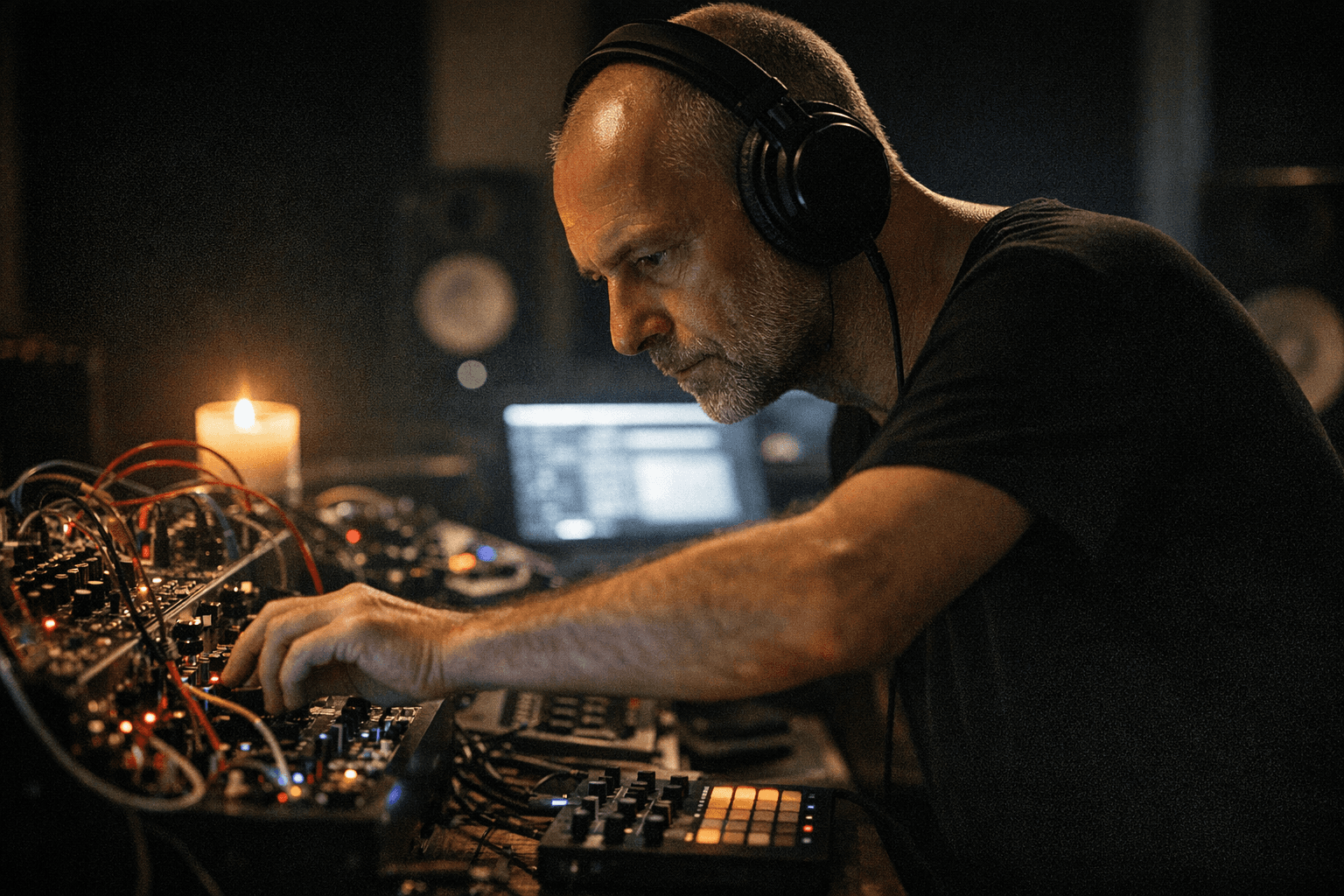
Klangscheiben has operated since summer 2004, originating in the forests of Thuringia before settling in Berlin. In those 22 years the label has extended its reach to collaborators from Canada to Japan and Argentina to Tunisia, while staying grounded in what it calls "dedication to the mini-funk with maximum effect."
For selectors, Tegli earns its place in the parts of a night that require trust from the audience: a late warm-up slot where the room is still finding its temperature, or an afterhours stretch when energy is metabolising rather than climbing. On headphones it holds up equally well, since the midrange detailing that makes these tracks work is often the first casualty of a loud system. The records that sit alongside it most naturally share the same unhurried logic, the slower end of the Perlon catalogue, microhouse selections that accumulate rather than announce, anything that earns its place across several minutes rather than declaring itself in the opening bars.
This article was produced by Prism’s automated news system from verified source data, official records, and press releases, then run through automated quality and moderation checks before publishing. The system is built and supervised by the people who set the standards it runs under. Read our full AI policy.
Did this article answer your question?