KÉNYA maps machine tension across 11-track Overload release
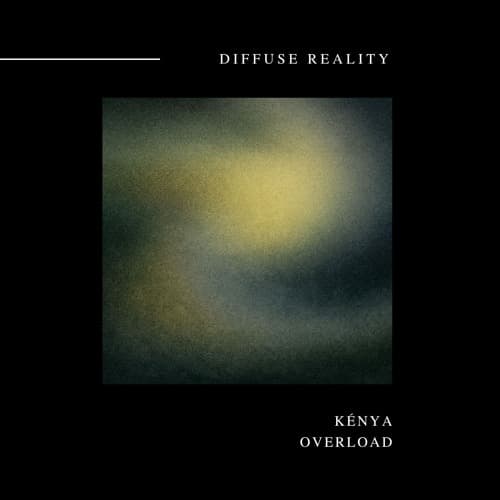
KÉNYA stretches Overload into an 11-track pressure chamber, where minimal-techno discipline keeps meeting electro sparks and ambient drift.
Phase One
KÉNYA opens Overload like a machine coming online, and the first impression is control, not chaos. Released by Diffuse Reality Records on May 7, 2026, the 11-track set is built from titles that move from initiation to shutdown, and the track lengths, mostly between 5:01 and 6:24, give each piece enough room to breathe without losing the club-floor grip. The label’s Bandcamp page lists the digital album at €13 or more in 16-bit/44.1kHz, while the catalog count, already at 1,696 releases, places the record inside a heavily worked underground ecosystem rather than a neat standalone statement.
Pillar
If Phase One feels like ignition, Pillar locks the frame into place. That title matters, because the record keeps returning to structural language, and this is where KÉNYA starts making the case that tension can be built from restraint as much as from drive. In minimal-techno terms, that is the first real clue that Overload is designed as a continuous architecture, not a stack of interchangeable tools.
Anomaly
Anomaly is where the record begins to loosen the straight line and let a little uncertainty into the grid. The title suggests a deviation, and the release’s tagging across electronic, ambient, electro, minimal, rave, techno, and Portugal supports that sense of a border being crossed rather than a style being sealed off. The result is not a break from the core so much as a pressure shift, a reminder that this kind of minimalism often works best when it allows the system to flicker.
Overload
The title track is the record’s obvious fulcrum, and it earns that position by sharpening the sense of escalation already threaded through the sequence. By this point, Overload has stopped sounding like a bundle of individual club cuts and started sounding like a process, with each layer adding strain without tipping into collapse. That balance is the album’s strongest trick, because it keeps the body moving even while the mind starts tracking the machinery.
Akit
Akit pushes the album deeper into functional terrain, where the practical utility of the 5-minute-plus runtime becomes clear. Tracks this long are perfect for mixing because they can hold a groove, add detail, and still leave enough space for the next transition to land cleanly. KÉNYA uses that format discipline well, letting the track feel usable in a set while still carrying the record’s larger narrative weight.
Body Sequence
Body Sequence is one of the release’s clearest examples of machine vocabulary becoming emotional language. The title sounds clinical, but the track placement turns that clinical edge into tension you can feel, the kind of pressure modern minimal techno often finds when it treats rhythm like a system of signals. Here, the electro-adjacent tag feels especially useful, because the track seems to lean into circuitry and pulse without giving up the album’s low-key hypnosis.
Stahlregen
Stahlregen gives Overload one of its hardest surfaces, even before the listener knows exactly how the piece will behave. The title has a metallic snap to it, and the record uses that kind of imagery to keep the sequence from settling into soft-focus repetition. What matters here is not heaviness for its own sake, but the way KÉNYA keeps the pulse disciplined while still implying abrasion, a classic minimal-techno move when it wants to stay physical and not just cerebral.
Tristesse
Tristesse is the clearest emotional detour on the record, and it deepens the arc rather than weakening it. The title brings a reflective, almost melancholy temperature into a set that has been leaning on structure and stress, and that shift into ambient pressure gives the album a much-needed interior dimension. This is where Overload proves it is more than club functionality, because the record can slow the emotional light without letting the rhythm lose its backbone.
Terminal One
Terminal One tightens the narrative again, and the title suggests arrival, processing, or a final checkpoint before the last descent. That sense of an endpoint is important to the album’s pacing, because it keeps the sequence from feeling endless and gives the listener a real sense of travel through the set. In a release this focused, the small shifts matter, and this track helps keep the momentum from flattening into pure loop-state repetition.
Sakhli
Sakhli widens the map by reminding you that Overload sits inside a transnational circuit, not a single-city scene. The release is tagged Portugal, while Diffuse Reality itself is identified as an independent label founded in 2013, with Discogs placing it as originally from Buenos Aires and based in Barcelona. That background helps explain the record’s poise, because it feels informed by a broad European techno network without losing the rough, underground economy that keeps minimal records moving.
Tunnel Code
Tunnel Code closes the record with the kind of title that makes the whole album click into place. It sounds like a route, a signal path, and a test of endurance all at once, which is exactly how Overload has operated from the start: as a stamina exercise in album form, where minimal-techno tension is stretched over 11 tracks without sacrificing club function. Beatport’s separate listing under catalog number DRSS1401, with an April 9, 2026 release date, only adds to that sense of a record already circulating through the system before landing in its full Bandcamp form, and by the end, KÉNYA has made the case that hypnotic pressure can survive the long haul when the sequence knows how to breathe.
This article was produced by Prism’s automated news system from verified source data, official records, and press releases, then run through automated quality and moderation checks before publishing. The system is built and supervised by the people who set the standards it runs under. Read our full AI policy.
Did this article answer your question?