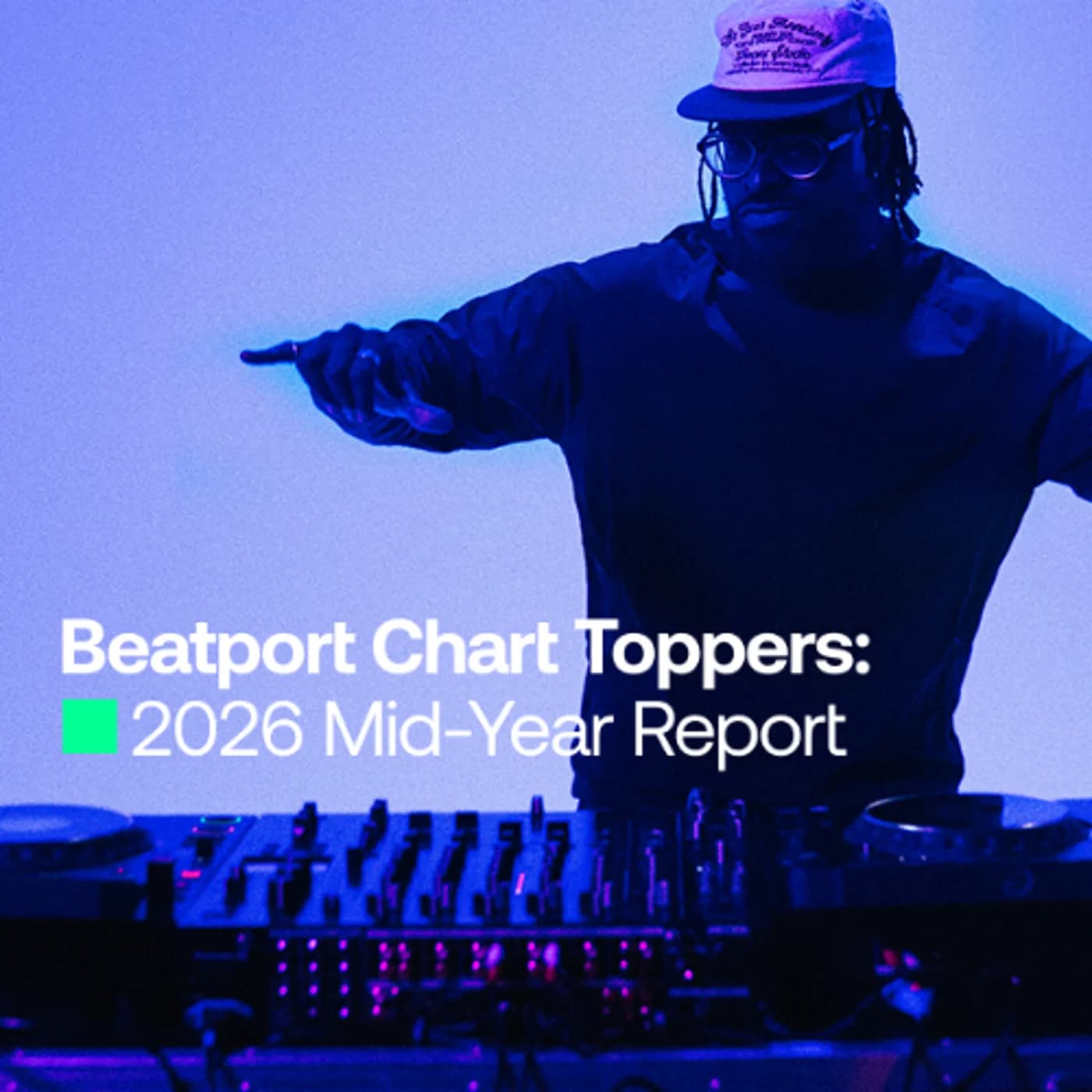
landman’s Weathering champions rough edges, memory, and human noise in techno
landman’s Weathering treats roughness as techno’s memory bank, from Detroit lineage to M3’s DIY circuit. Its nine tracks turn dust, distortion, and human noise into a statement of intent.
1. A manifesto for friction
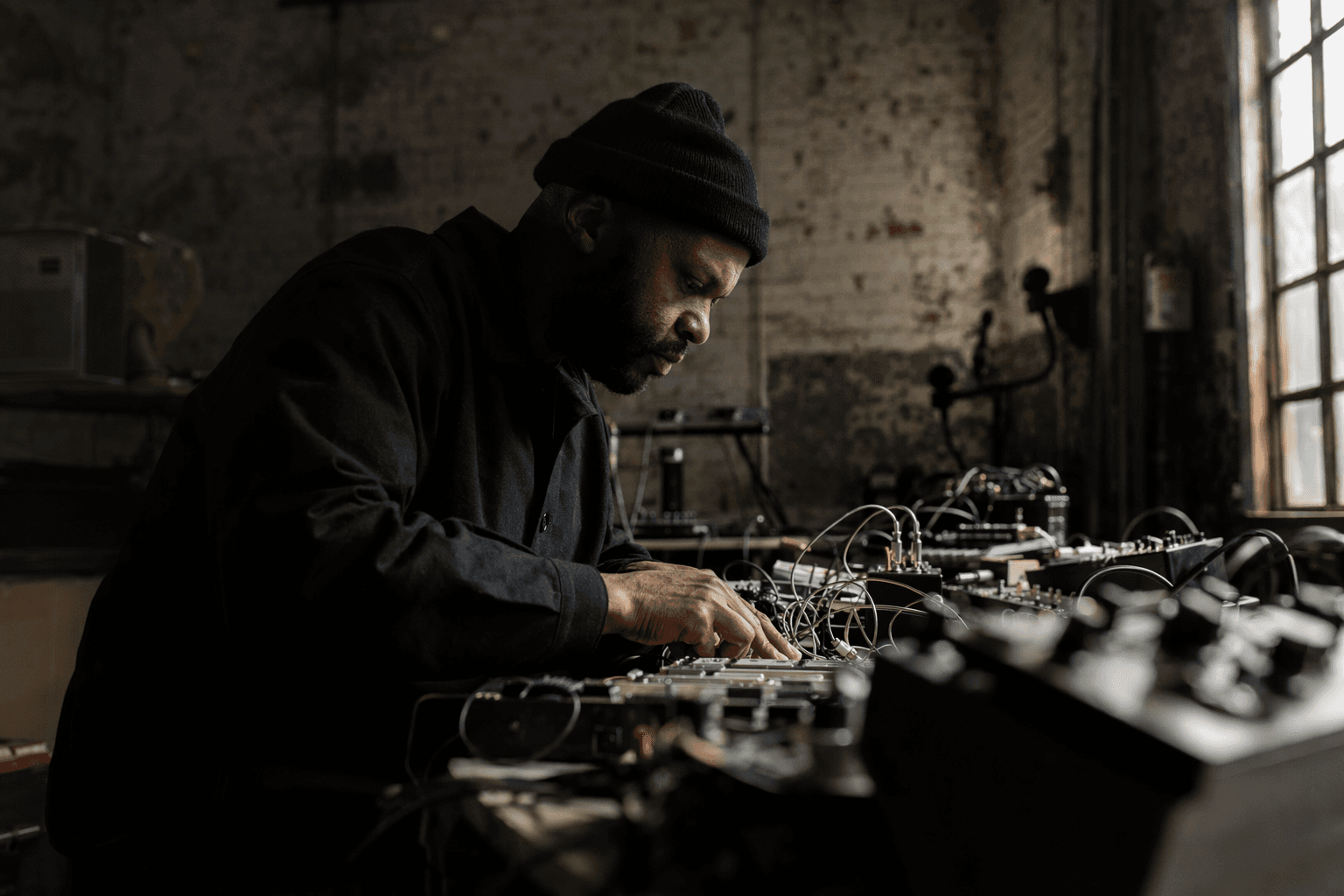
landman’s Weathering does not argue for nostalgia as decoration; it argues for roughness as a working principle. The release opens with the line, “Weathering is a lost technology of Techno,” and everything around it pushes that idea further: techno loses something when every beat is polished into sameness. Instead of treating imperfections as errors to be cleaned away, the record frames them as part of the genre’s living memory.
2. Nine tracks, one clear attitude
Weathering arrives as a nine-track set built from E, Pausing, Hum, Kraken, Siren, Trepanation, Weathered, Cache, and Dawn, Dusk. That sequence matters because it gives the project the shape of a complete statement rather than a loose batch of club tools. The titles themselves feel tactile and bodily, which fits a record that is interested in decay, residue, and the small physical gestures that still survive inside machine-driven music.
3. The sound world it protects
The Bandcamp text around the release makes a direct case for older techno’s freer structure, where rough edges, poor sound quality, and the accidental grain of physical formats were part of the experience. Dust, scratches, warped records, and low-bitrate files are not presented as clutter to be discarded; they are treated as techno history. That position gives Weathering its force: it is less about retro styling than about defending texture as a musical value.
4. What it pushes back against now
The release reads like a response to a cleaner underground, where beats are more meticulously calculated and genre boundaries are more rigid than they used to be. The old dance floor, in this framing, kept moving even when the fidelity was imperfect and the edges were raw. Weathering asks what gets lost when techno becomes too optimized, and the answer is not abstract: it is tension, surprise, and the human noise that once made the music feel dangerous.
5. Detroit’s long shadow
That argument lands because techno’s history already includes abrasion and invention. Techno emerged in the United States in the 1980s and became globally popular in the 1990s, with Detroit techno strongly associated with Juan Atkins, Derrick May, and Kevin Saunderson. In that lineage, machine precision has never meant sterility; it has always lived beside industrial pressure, post-recession grit, and a distinctly human desire to make rhythm carry more than just function.
6. Minimal techno as the bridge
Weathering also speaks directly to minimal techno, which is commonly traced to early-1990s Detroit producers Robert Hood and Daniel Bell, with Richie Hawtin standing as another key name in the wider minimal conversation. That history matters here because minimal techno was never just about subtraction for its own sake; it was about revealing the pressure points inside a stripped-down framework. landman’s record feels like it understands that lineage and uses it to argue that minimalism should preserve abrasion, not erase it.
7. Kanazawa, Japan, and the local frame
The release is tagged with 90s techno, Detroit techno, electronic, Japan, electro, minimal techno, techno, and Kanazawa, which gives it a very specific scene map. Kanazawa is not just a location marker here; it signals that Weathering belongs to a Japanese context where historical listening and forward-facing production often sit side by side. That local framing helps the record feel grounded rather than abstract, as if its philosophy is tied to a place where scene memory still matters.
8. Arrule, ARLE-0005, and the DIY chain
Weathering is catalogued as ARLE-0005 and credited to landman for composing and mixing all tracks, with Ar handling mastering and landman creating the artwork. The release also sits within Arrule’s orbit, and Arrule identifies itself as a Japan-based techno and electronic project tied to landman releases. That gives the record the feel of a carefully built self-contained object, where the art direction, the sonics, and the label identity all reinforce the same rough-hewn aesthetic.
9. Why the M3 setting makes the statement sharper
The release’s timing matters just as much as its philosophy. Weathering lined up with M3-2026, the 57th edition of M3, which took place on 2026-04-26 at the Tokyo Ryutsu Center in Tokyo, Japan. M3 is a twice-yearly independent music media-mix market, and the spring event is built around self-produced audio works with listening and screening areas, which makes Weathering part of a broader DIY ecosystem rather than a conventional retail campaign.
That setting also clarifies the release format: an Arrule preview said Weathering would be sold there as a CD-R plus download code for 1,000 yen. In a culture built around hand-to-hand circulation, that packaging fits the record’s philosophy perfectly. Weathering does not just sound like it values human noise and texture; it arrives through a scene where those values still have a physical form.
This article was produced by Prism’s automated news system from verified source data, official records, and press releases, then run through automated quality and moderation checks before publishing. The system is built and supervised by the people who set the standards it runs under. Read our full AI policy.
Did this article answer your question?