Minesku returns as Omul Invizibil, a rebirth in Romanian minimal techno
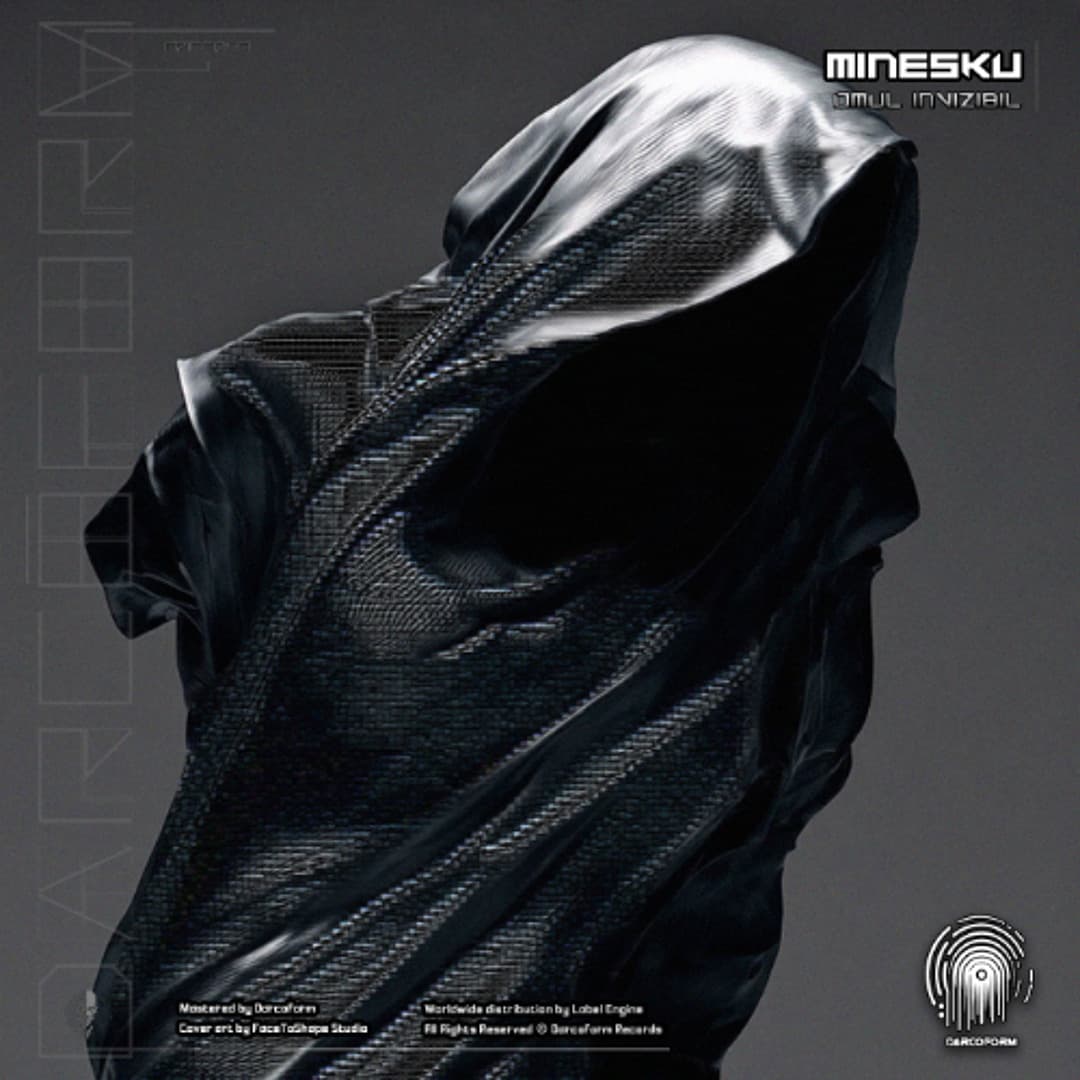
Minesku’s Omul Invizibil lands as a comeback with debut energy, turning a three-track EP into a full-scale reintroduction. Darcoform frames it as Romanian minimal with memory, depth, and a new identity.
A return that feels like a first statement
Omul Invizibil is not just another Bandcamp add-on for Darcoform, it is a reintroduction with weight. Minesku arrives here as Panfil Pîrvulescu from Timișoara, Romania, and the label makes the identity shift part of the story: this is Minesku after years of silence, but it is also the first clear statement under a fresh name. That tension between return and debut gives the release its emotional pull, because it is built on history while still feeling newly unlocked.
Darcoform says Minesku was previously known as Neuro N, with roots reaching back to the early 2000s. That matters in minimal techno, where a project’s lineage is often as important as its current form. Omul Invizibil plays like a formal re-entry into the scene, not a reset, and that is exactly why it lands with more scene value than a routine EP drop.
Why Darcoform’s framing matters
The label’s endorsement is doing real work here. Darcoform presents itself as a pioneering imprint active in the dark and deep Ro-Minimal and Micro-House lane, so when it welcomes Minesku, it is not simply hosting a release, it is placing him inside a very specific aesthetic lineage. That framing makes Omul Invizibil feel like a continuation of an established conversation around restraint, detail, and low-end pressure rather than a one-off detour.
Darcoform’s own catalog helps sharpen that context. Its first release, DARC000, was described as a label support track built around the curator and the label’s minimal concept, which signals that the imprint has long treated identity and sound as linked ideas. Later, Relics Vol. 1 arrived on October 16, 2023 as a vinyl 12-inch EP tagged deep techno and minimal techno, showing that the label’s output already moves comfortably between deeper techno pressure and minimal precision. Against that backdrop, DARC043 feels like another carefully placed marker in a wider run, not a standalone upload.
Inside Omul Invizibil
The EP is compact and deliberate. DARC043 is a three-track release made up of Lumineaza, Omul Invizibil, and Poveste, and Darcoform offers it as three digital files in WAV, AIFF, FLAC, and MP3 formats. The catalog number and format choices matter because they position the music for both collectors and working DJs who still need clean, flexible delivery from a minimal release.
Track length also tells part of the story. The title track runs 6:46, while Poveste is 6:21, which fits the patient, unhurried feel implied by the project’s presentation. Darcoform pitches the EP as a refined, introspective move into rominimal, microhouse, and deep textures, and that description lines up with a release built around groove, depth, and constant evolution rather than big gestures. The title Omul Invizibil, meaning the invisible man, only deepens the sense of music that is subtle, atmospheric, and just slightly hidden, like a pulse heard from behind a curtain.
How this sits inside the Romanian minimal lineage
The word rominimal still carries a specific charge. Rominimal.club describes it as Romanian minimal techno from Bucharest, tied to Raresh, Rhadoo, Petre Inspirescu, and the Sunwaves ecosystem, which anchors the style in a real scene history rather than a vague genre tag. That context gives Omul Invizibil a clear placement: it is working inside a Romanian continuum shaped by discipline, repetition, and microscopic detail.
At the same time, the label and the release both reflect the way that continuum has spread beyond its original center. Rominimal has travelled widely, and there is still debate over whether the term fully captures the music anymore. Omul Invizibil enters that conversation from the inside, with enough regional specificity to feel grounded and enough stylistic control to read as part of the music’s current evolution.
A long arc, not a sudden appearance
The strongest reason this release matters is the length of the road behind it. Darcoform says Minesku’s roots stretch back to the early 2000s, and that claim is supported by another piece of the project history: Discogs lists Neuro N’s Vara EP as a 2013 file release. That means Omul Invizibil is not the beginning of an artist’s life in minimal techno, but the formal return of someone who has already been building for years under another name.
That long arc changes how the EP should be heard. Instead of treating it as a brand-new project breaking in, the smarter reading is to hear it as a matured re-entry from an artist whose language was already developing across trance, psy-trance, deep house, tech house, and minimal techno before settling into this new identity. The shift to Minesku turns that history into something legible, and the release becomes a checkpoint in a much larger personal timeline.
Why listeners should care now
For minimal techno listeners, Omul Invizibil offers the kind of story that stays with a record long after the first play. It is rooted in Timișoara, endorsed by a label with a clear dark-and-deep minimal identity, and tied to a lineage that reaches from early-2000s project history to current rominimal culture. That combination gives the EP practical and emotional value at once.
It also fits the part of the scene that responds to nuance over spectacle. This is music for listeners who pay attention to internal motion, to texture, to the feeling that a track is evolving from within rather than announcing itself from the outside. In that sense, Omul Invizibil is exactly what its name suggests: a presence that reveals itself slowly, and a return that carries the force of a debut because the artist behind it has already lived enough scene history to make the new name mean something.
This article was produced by Prism’s automated news system from verified source data, official records, and press releases, then run through automated quality and moderation checks before publishing. The system is built and supervised by the people who set the standards it runs under. Read our full AI policy.
Did this article answer your question?