TXCRZR pushes hardware-driven minimal techno and electro on Hardware Soundstage Series Vol. II
TXCRZR’s new EP turns hardware-only restriction into the whole aesthetic, from elastic electro snaps to tight minimal-techno grooves. The seven-release project now reads like a working method, not a gimmick.
Hardware is the message here
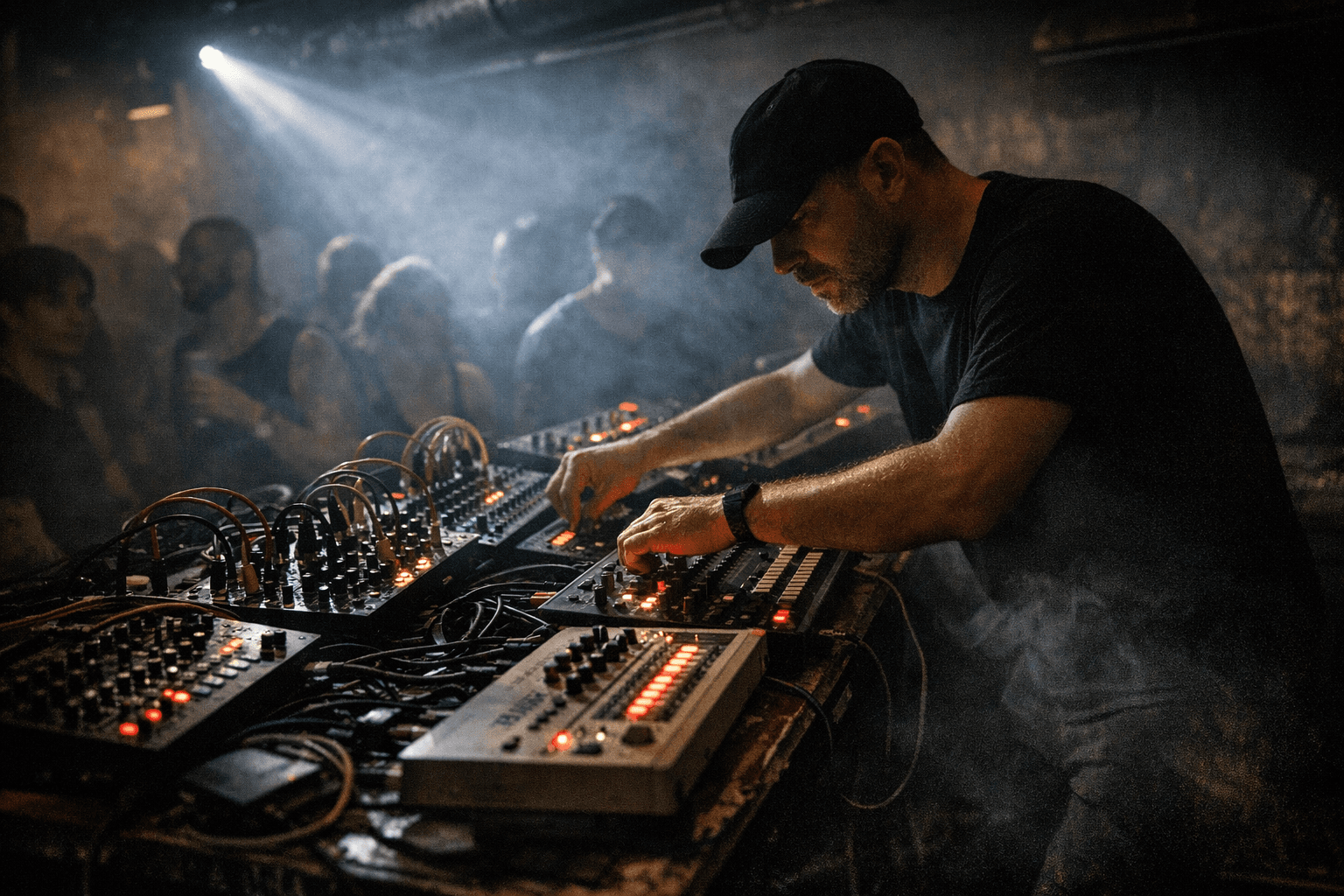
TXCRZR’s *Hardware Soundstage Series Vol. II* lands as a compact argument for why all-hardware minimal techno still matters. The release is built around a simple but stubbornly persuasive idea: when the machines are doing the work, the groove has to earn its place. Instead of smoothing everything into software perfection, the record leans into the friction, pressure, and discipline that come from physical instruments shaping the music in real time.
That matters because the EP is not just using hardware as a badge. It is framed as minimal techno and electro made exclusively with hardware equipment, and the credits back that claim with a dense, very specific setup: Eowave Quadrantid Swarm, Behringer Kobol Expander, Pittsburgh Modular Voltage Lab 2, Korg Electribe EMX-1, Korg Volca FM, Erica Synths, and LXR-02. Taken together, those machines point to a process-oriented record where tone, sequencing, and pattern movement matter more than polished arrangement tricks.
What the three tracks are really doing
The tracklist is short, and that is part of the point. *Minimal Drift* runs 2:28, *Megabass* 2:47, and *Audio Circuitry* 3:07, keeping the focus on direct motion rather than extended development. In minimal techno, that kind of brevity can sharpen the listening experience: a pattern appears, locks in, mutates, and exits before the spell breaks.
The titles also tell you how to hear the record. *Minimal Drift* suggests slight movement inside a rigid frame, which is exactly where a lot of hardware-led club music lives. *Megabass* and *Audio Circuitry* move closer to electro’s punch and machine shimmer, giving the EP a rhythm-first character that sits at the intersection of snapped drum programming and reduced techno architecture. This is music built for systems, not spectacle.
Why the hardware-only claim matters in 2026
The all-hardware approach has become more than a technical preference. In a scene where so much club music is assembled invisibly inside a laptop, declaring a hardware-only workflow changes the meaning of the record. It signals that the performance and the composition are happening through a set of constraints that listeners can almost hear: fewer edits, more commitment, more room for the accidental edge that gives a pattern character.
TXCRZR’s own artist bio reinforces that identity. The project is described as working exclusively with hardware analog, digital, modular, and semi-modular synthesizers, drum machines, and sequencers. That is a broad enough palette to cover a lot of electronic territory, but the exclusivity matters more than the variety. It suggests a producer who treats limitation as a compositional tool, not a compromise.
In minimal techno, that discipline is part of the craft. Hardware workflows force decisions earlier. They reward repetition with variation, not endless revision. They also make texture a structural element, because a filter sweep, a sequencer push, or a drum machine accent can become the whole dramatic arc of a tune. On *Hardware Soundstage Series Vol. II*, the machine constraints are not hidden. They are the point of contact between process and dancefloor function.
A series, not a one-off concept
This EP also works because it arrives inside a clearly developing series. *Hardware Soundstage Series Vol. I* came out on January 22, 2026, and it, too, was described as minimal techno and electro vibes relying exclusively on hardware equipment. That earlier volume included *Techlab*, *Old-School 309*, and *New Jungle*, giving the series a stronger identity than a standalone drop ever could.
The continuity is important in scene terms. Series releases let you hear method evolve across records, and here that evolution seems tied to both gear choices and rhythmic emphasis. Vol. II feels like a refinement of the same idea, not a reset. The name alone, *Hardware Soundstage*, suggests a controlled environment where machines are not just tools but the actual stage on which the music performs.
That framing also fits the way the release is presented on Bandcamp, where it is listed as TXCRZR’s seventh release. A project with seven releases is still nimble, but it is no longer tentative. The full digital discography price is listed at €5.60 EUR or more, which gives the whole operation a modest, self-contained feel rather than the scale of a major imprint machine. It reads like a working practice being documented in public, track by track.
The broader TXCRZR identity behind the record
The release makes even more sense when you place it inside the wider TXCRZR profile. The project’s Bandcamp bio names the practice as electronic music production, sound design, and composition, all done through hardware. That language matters because it describes a producer’s mindset, not just a gear fetish. Sound design and composition are being treated as one continuous act, with hardware as the medium that binds them together.
The project is also linked to a larger artist history through Toxic Razor, who is associated on Discogs with projects including Paradox Obscur, Beatbox Machinery, Hardware Pulse, and MDMA. That context helps explain why the sound lands with such a specific underground confidence. It is coming from a musician identity that already sits inside a network of related electronic projects, where machine-led production is part of the artistic grammar.
For listeners inside minimal techno, that background matters because it points to continuity of taste and method. TXCRZR is not presenting hardware as a novelty or a nostalgia play. The record reads as another chapter in a longer conversation between electro snap, minimal groove, and analog-digital sequencing practice. The result is a release that feels functional in the best club sense: tight, durable, and built to move.
Why it resonates on the floor
What makes *Hardware Soundstage Series Vol. II* compelling is not volume or complexity. It is the way the record trusts reduction. The three tracks are short, the palette is machine-heavy, and the release copy explicitly positions the music around minimal techno and electro vibes. That combination produces a very specific kind of tension, where every kick pattern, accent, and texture has to justify itself.
In a year when software workflows can make electronic music feel infinitely editable, TXCRZR’s hardware-only approach gives the grooves a body. The machines set the tempo of the ideas. The limitations shape the performance. And the series format turns that process into a document worth following, release by release, as the hardware soundstage keeps expanding without ever losing its edge.
This article was produced by Prism’s automated news system from verified source data, official records, and press releases, then run through automated quality and moderation checks before publishing. The system is built and supervised by the people who set the standards it runs under. Read our full AI policy.
Did this article answer your question?